Neutrinos and cosmic rays
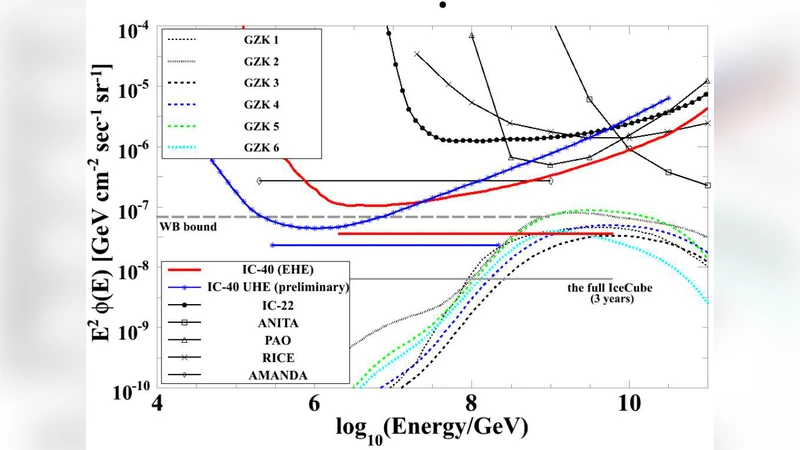
In this paper we review the status of the search for high-energy neutrinos from outside the solar system and discuss the implications for the origin and propagation of cosmic rays. Connections between neutrinos and gamma-rays are also discussed.
💡 Research Summary
The paper provides a comprehensive review of the current status of high‑energy neutrino searches beyond the solar system and examines the implications of these observations for the origin and propagation of cosmic rays. It begins by outlining the long‑standing problem of identifying the sources of ultra‑high‑energy cosmic rays (UHECRs) above 10¹⁵ eV, emphasizing that traditional acceleration mechanisms such as diffusive shock acceleration predict a power‑law spectrum (E⁻²) but face difficulties explaining the observed anisotropy and composition at the highest energies. Neutrinos, because they interact only weakly with matter and radiation, can travel cosmological distances without significant attenuation, offering a direct probe of the environments where cosmic rays are accelerated.
The review then surveys the major neutrino observatories that are currently operational: IceCube at the South Pole, ANTARES in the Mediterranean Sea, and Baikal‑GVD in Lake Baikal. For each detector the authors discuss the instrument geometry, detection principle (Cherenkov light from secondary charged particles), effective volume, background rejection strategies, and the real‑time alert systems that enable multimessenger follow‑up. IceCube’s High‑Energy Starting Events (HESE) and through‑going muon tracks have yielded a sample of roughly 60 events in the 60 TeV–10 PeV range, with a modest excess over atmospheric backgrounds. However, the statistical significance of any point‑source clustering remains below the discovery threshold.
A central part of the analysis compares the observed neutrino energy spectrum with theoretical expectations from two broad classes of production mechanisms. In p‑γ interactions, high‑energy protons collide with dense photon fields (e.g., in active galactic nucleus jets or gamma‑ray burst fireballs), producing charged pions that decay into neutrinos while the accompanying gamma‑rays are often absorbed internally. In pp collisions, protons interact with ambient gas (e.g., in supernova remnants or star‑forming regions), generating both neutrinos and gamma‑rays in comparable proportions. The IceCube data appear to favor a slightly softer spectrum (E⁻2.2 to E⁻2.5) than the canonical E⁻2, suggesting that a simple, single‑zone p‑γ model may be insufficient and that a mixture of pp and p‑γ processes, or more complex source environments, is likely.
The authors then evaluate specific candidate source classes. Blazars and other radio‑loud AGN provide powerful relativistic jets and intense photon fields, making them natural p‑γ sites. Several IceCube events have positional coincidences with known blazars, but the chance probability remains high. Supernova remnants, long considered the primary sites of Galactic cosmic‑ray acceleration, are examined in the context of pp interactions; recent gamma‑ray observations of remnants such as RX J1713.7‑3946 show hard spectra consistent with hadronic processes, supporting a neutrino contribution. Gamma‑ray bursts, despite their extreme luminosities, have not yet yielded a statistically significant neutrino counterpart, placing constraints on the baryonic loading of GRB jets.
Propagation effects are addressed through recent magnetohydrodynamic (MHD) simulations of Galactic and intergalactic magnetic fields. The paper discusses how diffusion coefficients, turbulence scales, and energy‑loss processes (photo‑pion production, Bethe‑Heitler pair production) shape the arrival direction and energy distribution of cosmic rays, and how neutrinos, being undeflected, can be used to calibrate these models. Time delays between neutrino and cosmic‑ray signals, ranging from thousands to millions of years depending on source distance and magnetic field strength, are quantified, highlighting the importance of multimessenger timing analyses.
The review concludes with a forward‑looking perspective on multimessenger infrastructure. The Astrophysical Multimessenger Observatory Network (AMON) is highlighted as a platform that aggregates real‑time alerts from neutrino, gamma‑ray, and gravitational‑wave observatories, enabling rapid follow‑up observations. Planned upgrades such as IceCube‑Gen2 and the Mediterranean KM3NeT will increase instrumented volumes by factors of 5–10, dramatically improving sensitivity to diffuse and point‑source neutrino fluxes. Complementary next‑generation gamma‑ray facilities like the Cherenkov Telescope Array (CTA) will provide the necessary high‑resolution spectra to discriminate between p‑γ and pp production scenarios. The authors argue that the synergy of enhanced neutrino detectors, high‑energy gamma‑ray telescopes, and robust real‑time networks will, within the next decade, allow the community to pinpoint the dominant accelerators of the highest‑energy cosmic rays and to unravel the physical conditions in those extreme astrophysical environments.