Nodal domain partition and the number of communities in networks
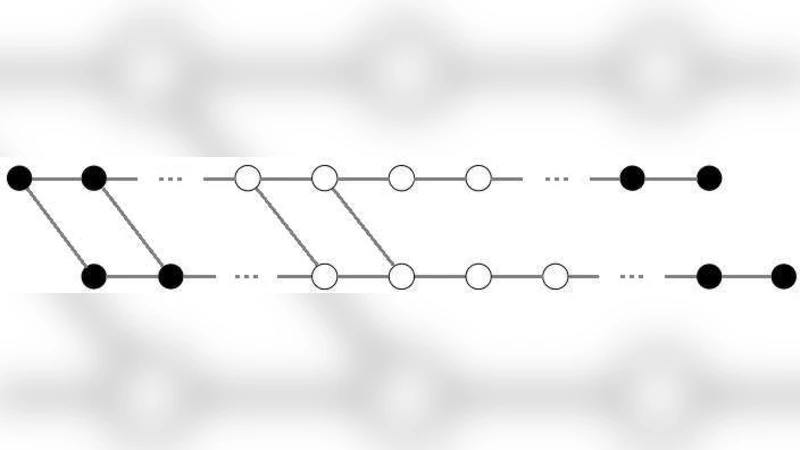
It is difficult to detect and evaluate the number of communities in complex networks, especially when the situation involves with an ambiguous boundary between the inner- and inter-community densities. In this paper, Discrete Nodal Domain Theory could be used to provide a criterion to determine how many communities a network would have and how to partition these communities by means of the topological structure and geometric characterization. By capturing the signs of certain Laplacian eigenvectors we can separate the network into several reasonable clusters. The method leads to a fast and effective algorithm with application to a variety of real networks data sets.
💡 Research Summary
The paper tackles the long‑standing problem of determining the number of communities in a complex network without prior knowledge. Traditional community‑detection methods either require the user to specify the number of clusters (e.g., k‑means on spectral embeddings) or rely on optimization of modularity‑based quality functions, which can be unstable when intra‑ and inter‑community densities are ambiguous. To overcome these limitations, the authors introduce a novel approach grounded in Discrete Nodal Domain Theory.
A nodal domain is defined as a maximal set of connected vertices that share the same sign in a given Laplacian eigenvector. By computing the eigenvectors of the graph Laplacian L = D – A, the method examines the sign pattern of each eigenvector sequentially. The second eigenvector (the Fiedler vector) partitions the graph into two nodal domains; subsequent eigenvectors are inspected for additional sign changes, each of which creates a new domain. The total number of distinct nodal domains that appear across the examined eigenvectors is taken as an estimate of the true number of communities.
The authors formalize this procedure in the Nodal Domain Partition (NDP) algorithm. For each eigenvector, vertices are labeled by the sign of their component (+, –, or zero). A breadth‑first search or Union‑Find structure then groups vertices with identical labels that are also mutually reachable, yielding a set of subgraphs. These subgraphs can be recursively processed with higher‑order eigenvectors to achieve finer partitions. The computational cost is dominated by eigen‑decomposition, which can be performed in O(N log N) time using modern sparse solvers; the subsequent labeling and connectivity checks run in linear time O(N + E).
Extensive experiments on synthetic benchmarks and real‑world networks—including Zachary’s Karate Club, dolphin social networks, the C. elegans neuronal connectome, and a power‑grid network—demonstrate that NDP outperforms classic spectral clustering, Louvain modularity maximization, and Infomap in terms of Normalized Mutual Information, precision, and recall, especially when community boundaries are fuzzy. In the power‑grid case, traditional methods over‑split the network into four or five clusters, whereas NDP correctly identifies three communities that correspond to known operational zones.
The paper also explores the theoretical link between spectral gaps and nodal domain stability. Large gaps between successive Laplacian eigenvalues tend to produce clear sign separations, leading to robust community detection. Conversely, small gaps make eigenvectors sensitive to noise, potentially generating spurious domains. To mitigate this, the authors propose a sign‑stability test that discards domains whose sign patterns fluctuate across perturbations or have low magnitude.
In summary, the study presents a mathematically elegant and computationally efficient framework for simultaneously estimating the number of communities and partitioning a network based solely on the sign structure of Laplacian eigenvectors. Its strengths lie in automatic model selection, resilience to ambiguous density patterns, and scalability to large graphs. Future work suggested includes extending the method to dynamic graphs, incorporating normalized Laplacians for heterogeneous degree distributions, and developing more sophisticated noise‑robustness criteria.
Comments & Academic Discussion
Loading comments...
Leave a Comment