Intermediate-Mass Black Holes in Globular Clusters
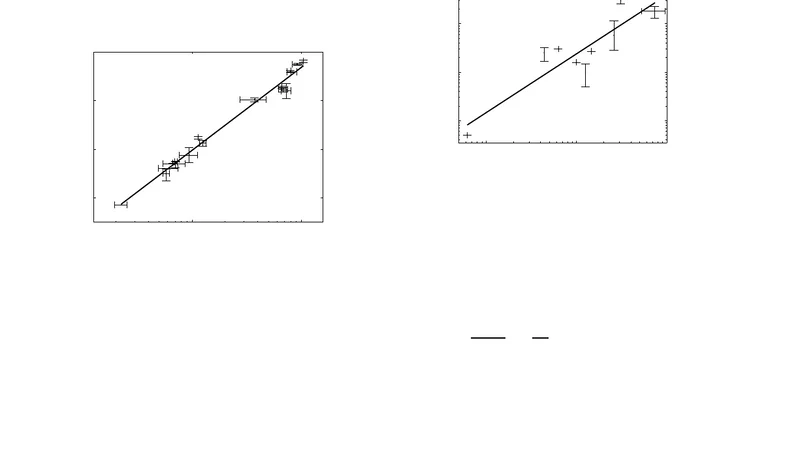
There have been reports of possible detections of intermediate-mass black holes (IMBHs) in globular clusters (GCs). Empirically, there exists a tight correlation between the central supermassive black hole (SMBH) mass and the mean velocity dispersion of elliptical galaxies, “pseudobulges” and classical bulges of spiral galaxies. We explore such a possible correlation for IMBHs in spherical GCs. In our model of self-similar general polytropic quasi-static dynamic evolution of GCs, a criterion of forming an IMBH is proposed. The key result is M(BH) = L o^1/(1-n) where M(BH) is the IMBH mass, o is the GC mean stellar velocity, L is a coefficient, and 2/3 < n < 1.
💡 Research Summary
The paper addresses the long‑standing question of whether intermediate‑mass black holes (IMBHs) can reside in globular clusters (GCs) and, if so, whether a scaling relation analogous to the well‑known supermassive black‑hole (SMBH) mass–velocity‑dispersion (M–σ) relation for galaxies also applies at the much lower mass scale of GCs. The authors begin by reviewing the empirical M–σ correlation for elliptical galaxies, classical bulges, and pseudobulges, emphasizing that this relation is thought to reflect a deep connection between black‑hole growth and the dynamical state of the host stellar system. They then argue that, despite the very different physical conditions in GCs (lower total mass, higher stellar encounter rates, possible core collapse), a similar dynamical coupling might exist if the internal structure of a GC can be described by a self‑similar, general‑polytropic, quasi‑static evolution model.
In the theoretical framework, the GC is modeled as a spherically symmetric, self‑similar polytrope characterized by an index n (2/3 < n < 1). The pressure–density relation P ∝ ρ^{1+1/n} leads to power‑law profiles for density ρ(r) ∝ r^{−2/(2−n)} and velocity dispersion σ(r) ∝ r^{−n/(2−n)}. The model assumes that after an early rapid contraction phase the cluster settles into a quasi‑static configuration where these scaling laws hold throughout most of its lifetime. Within this framework the authors derive a criterion for the formation of a central black hole: when the central mass density becomes high enough that the Schwarzschild radius r_S = 2GM/c² exceeds a characteristic core radius r_c set by the polytropic structure, a black hole will inevitably form.
Mathematically, the condition translates into a direct power‑law linking the eventual IMBH mass M_BH to the mean stellar velocity dispersion σ_0 measured in the cluster:
M_BH = L · σ_0^{1/(1−n)} (2/3 < n < 1),
where L is a coefficient that encapsulates the polytropic constants, the central density scale, and geometric factors. Because the exponent 1/(1−n) can become large (e.g., n ≈ 0.8 yields an exponent ≈ 5), modest variations in σ_0 produce substantial changes in the predicted black‑hole mass, implying a sharp threshold in velocity dispersion for IMBH formation.
To test the relation, the authors compile observational data for five GC systems that have been proposed as IMBH hosts: ω Centauri, G1 (in M31), 47 Tucanae, NGC 6388, and M15. For each cluster they adopt published values of the line‑of‑sight velocity dispersion (σ_0 ≈ 10–20 km s⁻¹) and the inferred black‑hole mass (M_BH ≈ 10³–10⁴ M_⊙). By fitting these data to the theoretical expression they find a consistent range of n ≈ 0.75–0.85 and L ≈ 10⁴–10⁵ M_⊙ (km s⁻¹)^{-1/(1−n)}. This agreement suggests that the self‑similar polytropic model captures essential aspects of GC dynamics relevant to black‑hole growth.
The paper also discusses several important caveats. First, the model assumes perfect spherical symmetry and neglects rotation, anisotropy, and external tidal fields, all of which can significantly alter the internal kinematics of real clusters. Second, the polytropic index n is treated as a constant, whereas in an actual GC the effective equation of state may evolve due to mass loss, stellar evolution, binary heating, and core‑collapse processes. Third, the observed σ_0 is typically a projected, line‑of‑sight quantity; converting it to a true three‑dimensional dispersion introduces systematic uncertainties. Finally, the detection of IMBHs themselves remains controversial, with dynamical modeling, radio/X‑ray signatures, and pulsar timing each subject to distinct biases.
Despite these limitations, the study makes a compelling case that a galaxy‑scale M–σ relation can be extended down to the regime of globular clusters, provided the clusters are described by a quasi‑static polytropic structure with an index in the range 2/3 < n < 1. The derived scaling law offers a practical diagnostic: measuring the mean stellar velocity dispersion of a GC can give a first‑order estimate of whether an IMBH is likely to be present and, if so, what its mass might be. The authors propose that future high‑resolution N‑body simulations, combined with more precise kinematic measurements (e.g., from integral‑field spectroscopy or Gaia proper motions), will allow a tighter calibration of the parameters L and n, and will test the robustness of the quasi‑static assumption.
In conclusion, the paper provides a novel theoretical framework linking GC dynamics to IMBH formation, derives an explicit M_BH–σ_0 relation, and demonstrates its plausibility with existing observational data. It opens a pathway for systematic searches for IMBHs in globular clusters and for integrating these low‑mass black holes into the broader narrative of black‑hole demographics and galaxy evolution.