Clouds and red giants interacting with the base of AGN jets
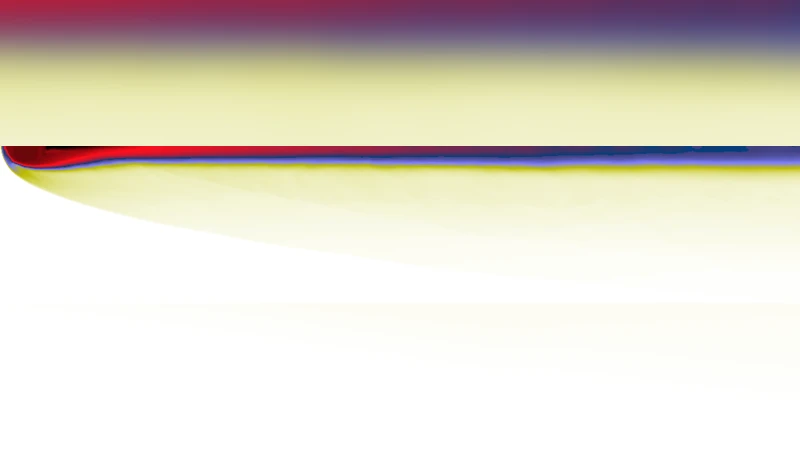
Extragalactic jets are formed close to supermassive black-holes in the center of galaxies. Large amounts of gas, dust, and stars cluster in the galaxy nucleus, and interactions between this ambient material and the jet base should be frequent, having dynamical as well as radiative consequences. This work studies the dynamical interaction of an obstacle, a clump of matter or the atmosphere of an evolved star, with the innermost region of an extragalactic jet. Jet mass-loading and the high-energy outcome of this interaction are briefly discussed. Relativistic hydrodynamical simulations with axial symmetry have been carried out for homogeneous and inhomogeneous obstacles inside a relativistic jet. These obstacles may represent a medium inhomogeneity or the disrupted atmosphere of a red giant star. Once inside the jet, an homogeneous obstacle expands and gets disrupted after few dynamical timescales, whereas in the inhomogeneous case, a solid core can smoothen the process, with the obstacle mass-loss dominated by a dense and narrow tail pointing in the direction of the jet. In either case, matter is expected to accelerate and eventually get incorporated to the jet. Particles can be accelerated in the interaction region, and produce variable gamma-rays in the ambient matter, magnetic and photon fields. The presence of matter clumps or red giants into the base of an extragalactic jet likely implies significant jet mass-loading and slowing down. Fast flare-like gamma-ray events, and some level of persistent emission, are expected due to these interactions.
💡 Research Summary
The paper investigates the dynamical and radiative consequences of interactions between the innermost regions of relativistic extragalactic jets and dense obstacles such as gas clouds or the extended atmospheres of red‑giant stars that populate galactic nuclei. Motivated by the fact that supermassive black holes are surrounded by a rich mixture of gas, dust, and stars, the authors argue that collisions between this ambient material and the jet base should be frequent and potentially important for jet evolution and high‑energy emission.
To explore the problem quantitatively, the authors perform two‑dimensional axisymmetric relativistic hydrodynamic (RHD) simulations using a high‑resolution shock‑capturing code. The jet is initialized with a bulk Lorentz factor of γ≈10, a pressure and density that are an order of magnitude higher than the surrounding medium, and a radius R_jet that defines the computational domain. Two types of obstacles are introduced: (i) a homogeneous spherical cloud with radius R_obstacle≈0.1 R_jet, constant density and pressure, and (ii) an inhomogeneous “red‑giant” model consisting of a dense core (ρ_core≈10 ρ_jet) surrounded by a lower‑density envelope. Both obstacles are initially at rest and are placed directly in the jet’s path.
The simulations reveal a clear dichotomy in the evolution of the two obstacle classes. The homogeneous cloud is rapidly compressed by the jet‑driven bow shock, then expands under the high internal pressure and is shredded after a few dynamical timescales (t_dyn≈R_obstacle/c). The disruption produces strong vortices and a turbulent mixing layer that entrains roughly 30 % of the cloud mass into the jet flow. In contrast, the inhomogeneous red‑giant model retains a compact core that survives the initial impact. A narrow, dense tail forms downstream of the core, aligned with the jet axis. This tail remains overpressured and continues to feed material into the jet, resulting in a higher mass‑loading efficiency of about 50 % of the original obstacle mass. The tail also sustains a persistent shear layer that can act as a site for particle acceleration.
Particle acceleration is addressed qualitatively. The authors argue that the strong electric fields and turbulence generated at the shock front and within the tail can accelerate electrons and protons up to ∼1 TeV. Accelerated particles then interact with the jet’s magnetic field, the intense photon fields of the red‑giant (infrared radiation), and the dense gas of the obstacle. Through synchrotron radiation, inverse‑Compton scattering, Bethe‑Heitler pair production, and proton‑photon pion production, high‑energy γ‑rays are produced. Because the tail is dense, the interaction probability is high, leading to short, intense γ‑ray flares on timescales of hours or less. A more modest, quasi‑steady γ‑ray component is also expected from the continuous entrainment of material and the associated ongoing particle acceleration.
The mass‑loading results have important dynamical implications. A single obstacle contributes roughly 10⁻³–10⁻² of the jet’s total mass‑flux (ṁ_jet). If many clouds or red giants intersect the jet over its lifetime, the cumulative effect can appreciably decelerate the flow, reducing its Lorentz factor and kinetic power. This gradual slowing could manifest observationally as a widening of the radio/X‑ray jet, a decrease in apparent super‑luminal motions, and a shift in the spectral energy distribution toward lower frequencies.
In summary, the study demonstrates that interactions between dense clumps or stellar atmospheres and the base of AGN jets are an efficient mechanism for jet mass‑loading, deceleration, and the production of variable high‑energy emission. The results provide a natural explanation for fast γ‑ray flares observed in some blazars and for a baseline level of persistent γ‑ray output. The authors suggest that future work should extend the simulations to three dimensions, incorporate full radiative transfer, and compare synthetic spectra with multi‑wavelength observations to further test the obstacle‑jet interaction scenario.