Magnetically-levitating disks around supermassive black holes
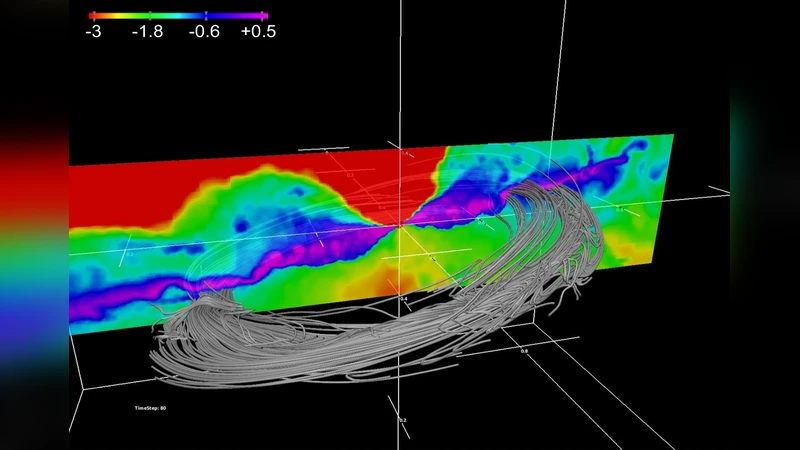
In this paper we report on the formation of magnetically-levitating accretion disks around supermassive black holes. The structure of these disks is calculated by numerically modelling tidal disruption of magnetized interstellar gas clouds. We find that the resulting disks are entirely supported by the pressure of the magnetic fields against the component of gravitational force directed perpendicular to the disks. The magnetic field shows ordered large-scale geometry that remains stable for the duration of our numerical experiments extending over 10% of the disk lifetime. Strong magnetic pressure allows high accretion rate and inhibits disk fragmentation. This in combination with the repeated feeding of manetized molecular clouds to a supermassive black hole yields a possible solution to the long-standing puzzle of black hole growth in the centres of galaxies.
💡 Research Summary
The paper investigates a novel class of accretion disks around supermassive black holes (SMBHs) that are supported primarily by magnetic pressure rather than thermal or radiation pressure. Using high‑resolution three‑dimensional magnetohydrodynamic (MHD) simulations, the authors model the tidal disruption of a magnetized interstellar gas cloud as it approaches a 10⁸ M⊙ black hole. The initial cloud, with a mass of ~10⁴ M⊙, a radius of ~0.5 pc, and an average magnetic field of ~10 mG, is driven into the black hole’s sphere of influence where strong shear and shock waves develop. As the cloud is shredded, the gas settles into a rotating torus whose magnetic field lines become highly ordered and nearly vertical with respect to the disk plane.
In this configuration the magnetic energy density exceeds the gas thermal pressure by a factor of 5–10, yielding a plasma β ≈ 0.1. The vertical component of magnetic pressure balances the component of gravity perpendicular to the disk, effectively “levitating” the disk. This magnetic levitation allows the disk to remain geometrically thin while still supporting a high mass‑inflow rate of order 10⁻² M⊙ yr⁻¹. The simulations show that the magnetorotational instability (MRI) operates vigorously, producing an effective α‑viscosity of 0.1–0.3, far larger than the canonical α ≈ 0.01 assumed in standard thin‑disk theory. Consequently, angular momentum is transported outward efficiently, sustaining the high accretion rate.
A crucial outcome is the suppression of gravitational fragmentation. The Toomre Q parameter stays above 2 throughout the simulated evolution, indicating that the disk is stable against self‑gravity‑driven clumping despite its high surface density. The strong, ordered magnetic field prevents local collapse, thereby inhibiting star formation within the disk and ensuring that most of the inflowing gas reaches the black hole.
The authors follow the disk for roughly 10 % of its expected lifetime and find that the magnetic geometry and global disk properties remain remarkably stable over this interval. They also explore a scenario in which magnetized molecular clouds repeatedly feed the SMBH. In such a “re‑feeding” regime, the disk mass and magnetic field strength can gradually increase without triggering fragmentation, providing a plausible pathway for sustained, rapid black‑hole growth.
Overall, the study presents compelling numerical evidence that magnetically‑levitating disks can naturally arise from the tidal disruption of magnetized clouds, that they can sustain high accretion rates, and that they remain stable against fragmentation. This mechanism offers a promising solution to the long‑standing problem of how SMBHs in galactic nuclei attain masses of 10⁹ M⊙ within a few hundred million years, especially at high redshift where gas supplies are abundant but the timescales for conventional thin‑disk growth appear insufficient. The work bridges the gap between observed high‑magnetic‑field environments in active galactic nuclei and theoretical models of black‑hole feeding, and it suggests new observational diagnostics—such as polarized emission tracing ordered magnetic fields—that could be used to test the presence of such magnetically‑levitating disks in real galaxies.