Ubiquitous equatorial accretion disc winds in black hole soft states
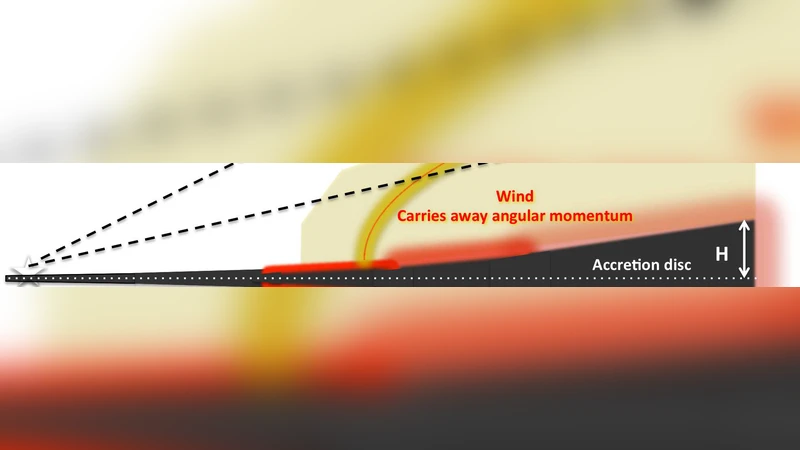
High resolution spectra of Galactic Black Holes (GBH) reveal the presence of highly ionised absorbers. In one GBH, accreting close to the Eddington limit for more than a decade, a powerful accretion disc wind is observed to be present in softer X-ray states and it has been suggested that it can carry away enough mass and energy to quench the radio jet. Here we report that these winds, which may have mass outflow rates of the order of the inner accretion rate or higher, are an ubiquitous component of the jet-free soft states of all GBH. We furthermore demonstrate that these winds have an equatorial geometry with opening angles of few tens of degrees, and so are only observed in sources in which the disc is inclined at a large angle to the line of sight. The decrease in Fe XXV / Fe XXVI line ratio with Compton temperature, observed in the soft state, suggests a link between higher wind ionisation and harder spectral shapes. Although the physical interaction between the wind, accretion flow and jet is still not fully understood, the mass flux and power of these winds, and their presence ubiquitously during the soft X-ray states suggests they are fundamental components of the accretion phenomenon.
💡 Research Summary
The authors present a comprehensive study of highly ionised absorption lines in Galactic black‑hole (GBH) X‑ray spectra, focusing on the relationship between these features, the soft (thermal‑dominant) accretion state, and the disappearance of the compact radio jet. Using high‑resolution data from Chandra/HETGS, XMM‑Newton/RGS, Suzaku and other observatories, they systematically search for Fe XXV (6.70 keV) and Fe XXVI (6.97 keV) absorption in a sample of well‑studied GBH that span a range of inclinations and accretion rates.
The key observational result is that, whenever a source is in a jet‑free soft state, the Fe XXV/XXVI lines are present, whereas they are absent (or extremely weak) in the hard state where a steady compact jet is detected. This dichotomy holds across all sources examined, indicating that a disc wind is an intrinsic component of the soft state rather than an occasional phenomenon. The authors further demonstrate that the wind is equatorial: it is only seen in systems with high disc inclinations (i ≈ 60°–80°). Low‑inclination sources, even when in the soft state, show no wind signatures, implying a narrow opening angle of roughly 20°–40° measured from the disc plane.
By analysing the line ratios, they find that the Fe XXV/Fe XXVI ratio declines as the Compton temperature (a proxy for spectral hardness) increases. This trend suggests that harder soft‑state spectra produce a more highly ionised wind, consistent with photo‑ionisation models where the ionisation parameter ξ = L/(n r²) rises with the luminosity‑weighted spectral shape.
To quantify the wind’s impact, the authors combine measured velocities (300–3000 km s⁻¹), column densities, and an assumed wind geometry to estimate mass‑outflow rates. Their calculations yield ṁ_wind values comparable to or exceeding the inner accretion rate ṁ_accr. The kinetic power carried by the wind (P_wind ≈ 0.5 ṁ_wind v²) can reach 5–20 % of the observed X‑ray luminosity, implying that the wind can remove a substantial fraction of the inflowing mass and energy.
The paper then discusses the possible causal link between the wind and jet quenching. In the soft state, the massive, equatorial outflow may alter the magnetic field configuration and pressure balance in the inner disc, suppressing the conditions required for launching a steady compact jet. Conversely, when the wind weakens (as the spectrum hardens), the magnetic field can re‑establish a collimated outflow, producing the observed hard‑state jet. While this scenario is attractive, the authors acknowledge that direct evidence of wind‑jet interaction is still lacking and call for simultaneous multi‑wavelength monitoring and three‑dimensional magnetohydrodynamic simulations to test the hypothesis.
In summary, the study provides robust evidence that equatorial disc winds are a ubiquitous, fundamental component of the jet‑free soft states of all Galactic black holes. Their geometry, ionisation behaviour, and energetics suggest they play a central role in the accretion‑ejection cycle, potentially governing the transition between jet‑producing hard states and jet‑suppressed soft states. The work sets a solid observational foundation for future theoretical and computational efforts aimed at unraveling the complex interplay between disc winds, accretion flows, and relativistic jets.