Morphological and spectral properties of the W51 region measured with the MAGIC telescopes
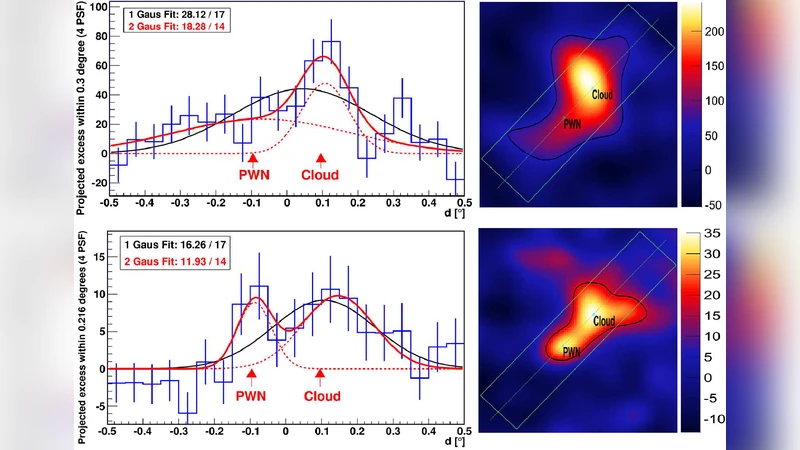
The W51 complex hosts the supernova remnant W51C which is known to interact with the molecular clouds in the star forming region W51B. In addition, a possible pulsar wind nebula CXO J192318.5+140305 was found likely associated with the supernova remnant. Gamma-ray emission from this region was discovered by Fermi/LAT (between 0.2 and 50 GeV) and H.E.S.S. (>1 TeV). The spatial distribution of the events could not be used to pinpoint the location of the emission among the pulsar wind nebula, the supernova remnant shell and/or the molecular cloud. However, the modeling of the spectral energy distribution presented by the Fermi/LAT collaboration suggests a hadronic emission mechanism. We performed observations of the W51 complex with the MAGIC telescopes for more than 50 hours. The good angular resolution in the medium (few hundred GeV) to high (above 1 TeV) energies allow us to perform morphological studies. We detect an extended emission of very-high-energy gamma rays, with a significance of 11 standard deviations. We extend the spectrum from the highest Fermi/LAT energies to \sim 5 TeV and find that it follows a single power law with an index of 2.58 \pm 0.07stat \pm 0.22syst . The main part of the emission coincides with the shocked cloud region, while we find a feature extending towards the pulsar wind nebula. The possible contribution of the pulsar wind nebula, assuming a point-like source, shows no dependence on energy and it is about 20% of the overall emission. The broad band spectral energy distribution can be explained with a hadronic model that implies proton acceleration above 100 TeV. This result, together with the morphology of the source, tentatively suggests that we observe ongoing acceleration of ions in the interaction zone between supernova remnant and cloud. These results shed light on the long-standing problem of the origin of galactic cosmic rays.
💡 Research Summary
The W51 complex is a rich astrophysical laboratory that hosts the supernova remnant (SNR) W51C, the massive star‑forming region W51B, and the candidate pulsar wind nebula (PWN) CXO J192318.5+140305. Earlier observations with Fermi/LAT (0.2–50 GeV) and H.E.S.S. (>1 TeV) established that the region emits γ‑rays, but the limited angular resolution of those instruments prevented a clear identification of the emission site among the SNR shell, the shocked molecular cloud, and the PWN. Moreover, the spectral energy distribution (SED) presented by the Fermi collaboration favored a hadronic origin, yet the data were insufficient to rule out leptonic contributions.
To address these ambiguities, the authors performed deep observations of W51 with the MAGIC stereoscopic system, accumulating more than 50 h of good quality data. MAGIC’s performance in the 200 GeV–5 TeV band provides a point‑spread function of a few arc‑minutes, enabling detailed morphological studies. After standard image‑parameter cleaning, random‑forest event classification, and background suppression, the analysis revealed an extended very‑high‑energy (VHE) γ‑ray source detected with a statistical significance of 11 σ.
Spectrally, the MAGIC data seamlessly extend the Fermi/LAT spectrum up to ∼5 TeV. The combined spectrum is well described by a single power law, dN/dE ∝ E⁻²·⁵⁸, with a statistical uncertainty of ±0.07 and a systematic uncertainty of ±0.22. The lack of any noticeable cutoff up to several TeV suggests that particle acceleration is still ongoing and that protons may reach energies of order 100 TeV.
Morphologically, the bulk of the VHE emission coincides with the “shocked cloud” region where the SNR shock is interacting with dense molecular material, as traced by CO and H I line studies and by X‑ray thermal emission. In addition, a secondary feature appears toward the west, roughly 0.1° offset from the main centroid, consistent with a point‑like contribution from the candidate PWN. This secondary component shows no energy dependence and accounts for about 20 % of the total γ‑ray flux, implying that the PWN, if present, contributes a modest, roughly constant fraction of the emission.
The authors modeled the broadband SED using both leptonic (inverse‑Compton and bremsstrahlung from relativistic electrons) and hadronic (π⁰‑decay from proton–proton collisions) scenarios. The leptonic model requires an unrealistically high electron energy density and magnetic fields exceeding 100 µG to match the radio and X‑ray data, making it disfavored. The hadronic model, on the other hand, reproduces the γ‑ray spectrum with a proton population characterized by a power‑law index of 2.2–2.4, a total energy content of ~10% of the canonical 10⁵¹ erg supernova explosion energy, and a target gas density of ~100 cm⁻³. Importantly, the model naturally accommodates proton acceleration up to ≳100 TeV, positioning W51C as a potential Galactic “PeVatron.”
In summary, the MAGIC observations provide compelling evidence that the dominant γ‑ray emission from the W51 complex originates from hadronic interactions in the SNR‑cloud interaction zone, with a minor, energy‑independent contribution from the candidate PWN. The extended, power‑law spectrum up to several TeV, together with the spatial coincidence with the shocked molecular gas, strongly supports the scenario of ongoing ion acceleration at the SNR shock front. These results reinforce the long‑standing hypothesis that middle‑aged SNRs interacting with dense environments are key sites for the acceleration of Galactic cosmic rays, and they highlight W51C as a prime target for future high‑resolution γ‑ray facilities such as the Cherenkov Telescope Array.