Revealing Gamma-Ray Binaries
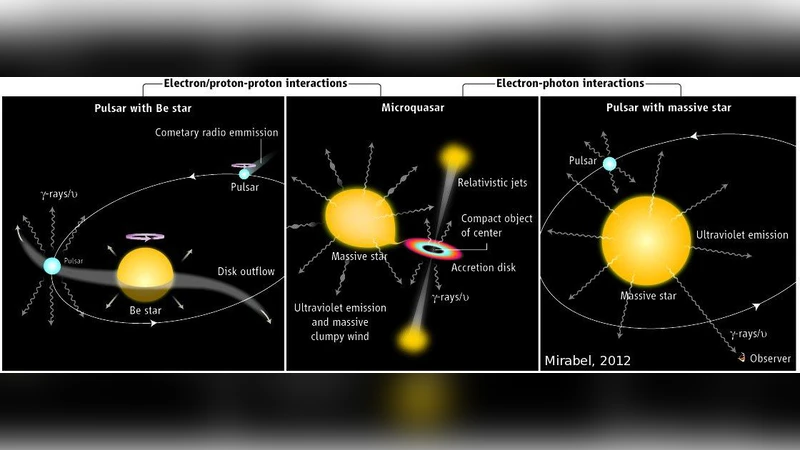
Recent ground based and space telescopes that detect high energy photons from a few up to hundreds of gigaelectron volts (GeV) have opened a new window on the universe. However, because of the relatively poor angular resolution of these telescopes, a large fraction of the thousands of sources of gamma-rays observed remains unknown. Compact astrophysical objects are among those high energy sources, and in the Milky Way there is a particular class called “Gamma-Ray Binaries”.
💡 Research Summary
The paper provides a comprehensive review of gamma‑ray binaries (GRBs), a rare class of high‑energy Galactic sources that emit most of their radiative power in the MeV–GeV band and often extend into the TeV regime. It begins by outlining the capabilities and limitations of the current generation of gamma‑ray observatories. Space‑based instruments such as the Fermi Large Area Telescope (LAT) deliver continuous sky coverage from ~100 MeV to >300 GeV with a point‑spread function of roughly 0.1°, while ground‑based imaging atmospheric Cherenkov telescopes (IACTs) – H.E.S.S., MAGIC, and VERITAS – reach energies up to several tens of TeV but suffer from a comparable angular resolution (0.05°–0.1°) and limited duty cycles. Because of these resolution constraints, the Galactic plane is densely populated with thousands of unidentified gamma‑ray sources, and only a handful can be securely associated with known astrophysical objects.
Against this backdrop, the authors focus on the subset of sources that show clear orbital modulation of their gamma‑ray flux, a hallmark of a binary system in which a compact object (either a rotation‑powered pulsar or an accreting black hole/neutron star) interacts with a massive stellar companion (typically an O‑type or Be star). The paper defines three criteria for classifying a source as a gamma‑ray binary: (1) a spectral energy distribution (SED) that peaks between 0.1 GeV and a few TeV, (2) statistically significant periodic variability tied to the orbital period, and (3) independent identification of the massive companion at optical, infrared, or radio wavelengths.
Two principal physical models are examined in depth. The first, the pulsar‑wind–stellar‑wind interaction model, posits that a relativistic wind of electrons, positrons, and possibly ions emitted by a young, energetic pulsar collides with the dense outflow from the massive star. The resulting shock accelerates particles to multi‑TeV energies. Gamma‑rays are produced via inverse‑Compton scattering of stellar photons (dominant at GeV energies) and via neutral‑pion decay from hadronic collisions (dominant at higher energies). Because the geometry of the wind–wind collision zone changes dramatically over an eccentric orbit, the model naturally predicts strong orbital modulation, with flux peaks near periastron where the interaction surface is largest.
The second model, the microquasar or jet scenario, applies when the compact object is an accreting black hole or a low‑magnetic‑field neutron star. Accretion powers a relativistic jet that can either interact with the stellar wind (external shock) or develop internal shocks where faster ejecta overtake slower material. In this case, gamma‑rays arise from synchrotron self‑Compton processes within the jet and from hadronic interactions if protons are accelerated. The jet model predicts a stronger dependence on the observer’s line of sight, potentially leading to Doppler‑boosted flares and a less regular orbital modulation compared with the pulsar‑wind case.
The authors systematically compare these theoretical expectations with the observational data from the seven confirmed Galactic gamma‑ray binaries: LS 5039, LS I +61°303, PSR B1259‑63, HESS J0632+057, 1FGL J1018.6‑5856, LMC P3, and 4FGL J1405.1‑6119. For LS 5039, the nearly circular orbit produces modest flux variations, yet the GeV and TeV light curves are out of phase, suggesting a hybrid scenario where both pulsar‑wind and jet contributions coexist. LS I +61°303 and HESS J0632+057 display delayed gamma‑ray peaks relative to periastron, consistent with the presence of a dense, asymmetric Be‑star decretion disc that modulates the wind interaction geometry. PSR B1259‑63, the prototype pulsar‑wind system, shows two sharp GeV/TeV flares bracketing periastron, directly supporting the wind‑collision picture.
Multi‑wavelength campaigns are highlighted as essential for disentangling the competing mechanisms. Radio interferometry (ATCA, VLA) maps extended synchrotron structures and can reveal jet morphology; optical spectroscopy (Hα monitoring) tracks the density and orientation of Be‑star discs; X‑ray observations (XMM‑Newton, Chandra, NuSTAR) probe the high‑energy tail of the particle distribution and the cooling timescales. Correlated variability across these bands often coincides with gamma‑ray outbursts, reinforcing the notion that a single acceleration site (either the wind shock or the jet base) dominates the emission.
Looking forward, the paper outlines the transformative potential of next‑generation facilities. The Cherenkov Telescope Array (CTA) will improve angular resolution to ≤0.03° and increase sensitivity by an order of magnitude, enabling the detection of fainter orbital modulations and the resolution of crowded regions in the Galactic plane. CTA’s broad energy coverage (20 GeV–300 TeV) will allow precise measurement of the spectral break between inverse‑Compton‑dominated GeV emission and hadronic‑dominated TeV emission, a key discriminator between the two models. In the MeV domain, proposed missions such as AMEGO and e‑ASTROGAM will fill the current observational gap, delivering high‑resolution spectra of the 0.2–100 MeV band where the π⁰‑decay bump and low‑energy inverse‑Compton components reside. Together, these instruments are expected to increase the known population of gamma‑ray binaries from the current handful to several dozens, providing a statistically robust sample for population synthesis studies.
In conclusion, the authors argue that gamma‑ray binaries serve as natural laboratories for studying particle acceleration to extreme energies, wind–wind and jet–wind interactions, and the feedback of compact objects on their stellar environments. While only a few systems are presently confirmed, the synergy of improved gamma‑ray instrumentation, coordinated multi‑wavelength observations, and refined theoretical modeling promises rapid progress. The expanded census will not only clarify the dominant emission mechanisms but also illuminate the role of these binaries in the broader context of Galactic high‑energy astrophysics, including their contribution to the diffuse gamma‑ray background and to the population of Galactic cosmic‑ray accelerators.