Seismic topographic scattering in the context of GW detector site selection
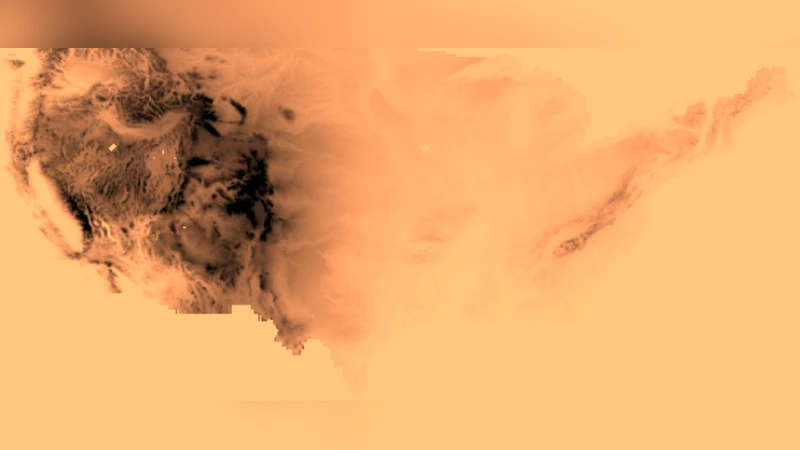
In this paper, we present a calculation of seismic scattering from irregular surface topography in the Born approximation. Based on US-wide topographic data, we investigate topographic scattering at specific sites to demonstrate its impact on Newtonian-noise estimation and subtraction for future gravitational-wave detectors. We find that topographic scattering at a comparatively flat site in Oregon would not pose any problems, whereas scattering at a second site in Montana leads to significant broadening of wave amplitudes in wavenumber space that would make Newtonian-noise subtraction very challenging. Therefore, it is shown that topographic scattering should be included as criterion in the site-selection process of future low-frequency gravitational-wave detectors.
💡 Research Summary
The paper addresses a subtle but potentially dominant source of low‑frequency noise for future ground‑based gravitational‑wave (GW) observatories: Newtonian noise (NN) generated by seismic density fluctuations near the test masses. While advanced detectors already employ sophisticated seismic isolation, NN cannot be shielded and must instead be estimated from seismic measurements and subtracted from the GW data stream. The authors argue that the heterogeneity of the seismic field caused by scattering from irregular surface topography is a key factor that can limit the accuracy of such NN estimates, especially for detectors aiming at sensitivity down to a few hertz.
The theoretical framework is built on the Born approximation for elastic wave scattering. Starting from the free‑surface traction‑free boundary condition, the authors linearize the condition about a nominal flat surface (z = 0) and treat the actual topography s(x, y) as a small perturbation. By rotating the local surface normal and performing a first‑order Taylor expansion of the stress tensor, they derive explicit expressions for the perturbed stress components τ_s xz, τ_s yz, and τ_s zz in terms of s, its gradients, and the unperturbed stress field τ_0. The unperturbed displacement field ξ_0 is decomposed into a scalar potential φ (compressional P‑waves) and a vector potential ψ (shear S‑waves), allowing the stress to be expressed via the Lamé parameters λ and μ. The scattered field ξ_s is then obtained by solving the elastic wave equation with the derived surface loads as boundary conditions.
A key result is that a sinusoidal surface component with wavevector κ adds or subtracts from the horizontal component of the incident wavevector k_0h, producing scattered waves with horizontal wavevectors k_sh = k_0h ± κ. Because both P‑ and S‑waves are generated at the interface, each incident mode gives rise to four scattered modes (two polarizations, two signs). The scattering coefficients C (compressional) and S (shear) depend strongly on the ratio κ/k_0h. When κ ≫ k_0h the scattering is predominantly at large angles; when κ ≪ k_0h the scattered energy remains close to the specular direction. The formalism also reveals resonant enhancements at the zeros of the Rayleigh function R(k_h), the so‑called Rayleigh poles, where the Born approximation formally diverges. In realistic terrain, the continuous κ‑spectrum smooths these singularities, but the poles still indicate frequencies and directions where scattering is especially efficient.
To assess the practical impact, the authors use the USGS National Elevation Dataset to extract topographic maps over 10 km × 10 km tiles across the United States. They compute the two‑dimensional Fourier spectra of the elevation field, obtaining the distribution of κ vectors for each site. Two representative locations are examined in detail: a relatively flat site in Oregon and a more rugged site in Montana. For each site, the authors calculate the scattering coefficients for incident P‑ and SV‑waves at 10 Hz, assuming unit amplitude for both the incident seismic wave and the surface sinusoid. The Oregon site exhibits a κ‑spectrum concentrated at low values; consequently the scattered wavevectors k_sh remain close to the incident ones, and the resulting scattered displacement amplitudes are small (order 10⁻³ of the incident amplitude). This implies that a modest seismic array (spacing of a few hundred metres) would be sufficient to monitor the relevant ground motion for NN subtraction.
In contrast, the Montana site shows significant power at higher κ, reflecting steep hills and ridges. The scattered wavevectors spread over a wide range of horizontal wavenumbers, producing a broad “halo” of energy in k‑space. Moreover, for certain κ values the scattering coefficients approach the Rayleigh poles, leading to resonant amplification of non‑Rayleigh surface modes with short wavelengths. These modes cannot be captured adequately by a sparse array, and their contribution to NN would remain largely unmodeled, degrading subtraction performance. The authors therefore conclude that, even for underground detectors where the bulk medium is more homogeneous, surface‑induced scattering can inject high‑spatial‑frequency components into the seismic field that propagate down to depth and affect NN.
The paper’s broader implication is that site‑selection studies for next‑generation low‑frequency GW detectors (e.g., Einstein Telescope, Cosmic Explorer) must incorporate a quantitative metric of topographic scattering, not merely the overall seismic amplitude. The authors propose using the integrated scattering coefficient over the relevant frequency band as a figure‑of‑merit. Sites with low integrated scattering would allow NN to be estimated and subtracted with realistic sensor deployments, while sites with high scattering would demand either prohibitively dense arrays or alternative mitigation strategies (e.g., deeper underground placement, active cancellation of surface‑generated modes).
In summary, the work provides (i) a clear analytical description of seismic topographic scattering in the Born approximation, (ii) a practical method to compute scattering from real topographic data, and (iii) a compelling case study demonstrating that topographic scattering can be a decisive factor in the feasibility of Newtonian‑noise subtraction. By highlighting this previously under‑appreciated effect, the authors add an essential criterion to the toolbox of GW detector designers and underscore the need for comprehensive geophysical characterization in the quest for ever‑lower detection thresholds.
Comments & Academic Discussion
Loading comments...
Leave a Comment