PSR J1841-0500: a radio pulsar that mostly is not there
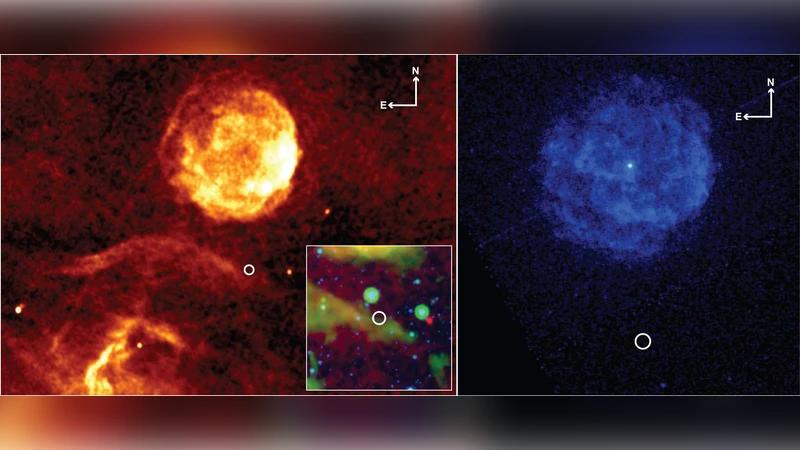
In a search for radio pulsations from the magnetar 1E 1841-045, we have discovered the unrelated pulsar J1841-0500, with rotation period P=0.9 s and characteristic age 0.4 Myr. One year after discovery with the Parkes telescope at 3 GHz, radio emission ceased from this bright pulsar. After 580 days, emission resumed as before. The P-dot during both on states is 250% of the average in the off state. PSR J1841-0500 is a second example of an extremely intermittent pulsar, although with a much longer off period and larger ratio of spin-down rates than PSR B1931+24. The new pulsar is hugely scattered by the ISM, with a fitted timescale referenced to 1 GHz of tau_1=2 s. Based on polarimetric observations at 5 GHz with the Green Bank Telescope, the intrinsic pulse profile has not obviously changed between the two on states observed so far, although relatively small variations cannot be excluded. The magnitude of its rotation measure is the largest known, RM=-3000 rad/m^2, and with a dispersion measure DM=532 pc/cc implies a large electron-weighted average magnetic field strength along the line of sight, 7 microG.
💡 Research Summary
In a targeted search for radio pulsations from the magnetar 1E 1841‑045, the authors serendipitously discovered an unrelated radio pulsar, PSR J1841‑0500, with a spin period of 0.912 s and a dispersion measure (DM) of 532 pc cm⁻³. The pulsar was first detected in 2008 with the Parkes telescope at a central frequency of 3 GHz. Follow‑up timing observations with the Green Bank Telescope (GBT) at 2 GHz began in early 2009, yielding a phase‑connected timing solution over a one‑year interval (MJD 54830–55204).
Approximately one year after discovery the source vanished from all subsequent GBT observations. Between 2010 January 19 and 2011 July 26 the pulsar was not detected in any of 28 observing sessions, implying an “off” interval of about 580 days (≈1.5–1.6 yr). On 2011 August 11 the pulsar re‑appeared with its original flux density (≈2 mJy at 2 GHz) and pulse shape. Timing the source after the re‑appearance gave a spin‑frequency derivative (˙ν) that is 2.47 ± 0.04 times larger than the average ˙ν inferred for the off‑state, confirming a dramatic change in the external torque between the two states. The ratio could be as high as 2.65 if the off‑state ended slightly earlier than the first detection after the gap.
The pulsar’s scattering properties are extraordinary. Fitting the pulse broadening at 2 GHz yields a 1‑e scattering timescale τ₁ = 2.29 ± 0.02 s when referenced to 1 GHz, the largest value measured for any known pulsar (except possibly the magnetar 1E 1547.0‑5408). This is about two orders of magnitude larger than predicted by the NE2001 electron‑density model (Cordes & Lazio 2002). The frequency dependence of the scattering appears slightly shallower than the canonical ν⁻⁴ law, suggesting a spectral index γ < 4, consistent with other highly scattered, high‑DM pulsars.
Polarimetric observations at 5 GHz and 9 GHz reveal a rotation measure (RM) of –3000 rad m⁻², the most extreme value measured for any pulsar. Combined with the DM, this implies an electron‑weighted average magnetic field along the line of sight of ≈7 µG, indicating a region of strong, ordered magnetic field in the inner Galaxy. The pulse profile consists of three Gaussian components: a dominant central component and two weaker outer components separated by ≈0.042 P on either side. Linear polarization is moderate (≈10–30 % in the central component) and essentially absent in the outer wings; circular polarization is present only in the central component. The position‑angle (PA) swing is complex, showing at least two orthogonal mode jumps and deviating significantly from a simple rotating‑vector model (RVM). The authors attribute these irregularities to a combination of residual scattering, possible emission from multiple heights, and orthogonal polarization mode transitions.
During the long off‑state the pulsar was never detected, but a brief “null” episode was observed on 2009 December 11, when the source switched off for a period between 10 minutes and 2.7 hours within a single day. This suggests that the off‑state may consist of very low‑level emission or extreme scattering rather than a complete cessation of radio activity.
A second frequency derivative (ν̈) is detected at the 6σ level in the 2009 timing solution, likely reflecting timing noise or contamination between on‑ and off‑state torque values. The authors discuss the possibility that the observed frequency offset could be interpreted as a small glitch (Δν/ν ≈ 10⁻⁶), but argue that such a glitch would not normally produce a total disappearance of the radio beam.
Overall, PSR J1841‑0500 joins PSR B1931+24 as an “intermittent” pulsar, but it extends the phenomenology in three important ways: (1) an exceptionally long off‑state (≈1.5 yr), (2) a much larger torque change between states (≈2.5×), and (3) extreme scattering and the highest known RM. These properties make the source a valuable laboratory for probing the coupling between magnetospheric currents, spin‑down torque, and radio emission mechanisms, as well as for studying the turbulent interstellar medium toward the inner Galaxy.
Future work should include (i) high‑frequency (>10 GHz) timing to reduce scattering bias and improve torque measurements, (ii) dense monitoring to resolve the exact durations of on/off transitions and to test whether short nulls occur during the long off‑state, (iii) broadband polarimetry to model the complex PA swing and disentangle scattering from intrinsic mode changes, and (iv) multi‑wavelength campaigns (X‑ray, γ‑ray) to search for correlated high‑energy variability that could shed light on magnetospheric state changes.
Comments & Academic Discussion
Loading comments...
Leave a Comment