Background Simulations of the Wide Field Imager of the ATHENA X-Ray Observatory
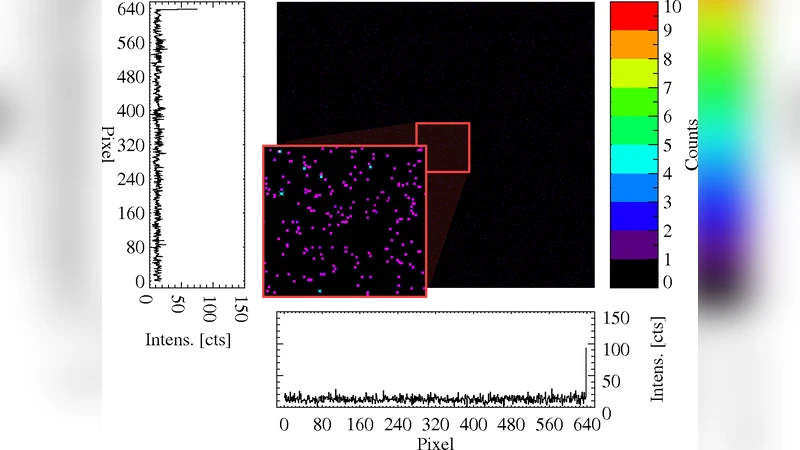
The ATHENA X-ray Observatory-IXO is a planned multinational orbiting X-ray observatory with a focal length of 11.5m. ATHENA aims to perform pointed observations in an energy range from 0.1 keV to 15 keV with high sensitivity. For high spatial and timing resolution imaging and spectroscopic observations the 640x640 pixel^2 large DePFET-technology based Wide field Imager (WFI) focal plane detector, providing a field of view of 18 arcsec will be the main detector. Based on the actual mechanics, thermal and shielding design we present estimates for the WFI cosmic ray induced background obtained by the use of Monte-Carlo simulations and possible background reduction measures.
💡 Research Summary
The paper presents a comprehensive Monte‑Carlo study of the cosmic‑ray induced background expected for the Wide Field Imager (WFI) on the upcoming ATHENA X‑ray Observatory. ATHENA, a large‑area, high‑throughput mission with an 11.5 m focal length, aims to perform pointed observations over 0.1–15 keV with unprecedented sensitivity. The WFI, based on a 640 × 640 DePFET pixel array, provides an 18 arcmin field of view and must achieve a background rate below ~10⁻⁴ counts keV⁻¹ cm⁻² s⁻¹ to meet the mission’s science goals.
Simulation Framework
The authors built a detailed Geant4 model of the entire WFI assembly, incorporating the detector wafer, front‑end ASICs, graded‑Z shielding (multiple layers of high‑Z and low‑Z materials), the “cold‑finger” thermal interface, and surrounding structural elements. The graded‑Z shield is designed to absorb fluorescence from outer layers, thereby suppressing line emission that plagued earlier missions (XMM‑Newton, Suzaku, Chandra). Primary particles were generated from a spherical source 50 m in diameter, with an angular distribution that tightly encloses the model geometry, and a spectral shape derived from the CREME96 solar‑minimum cosmic‑ray model. Simulations used 10⁸ primary particles for the baseline configuration and 2.5 × 10⁷ for some variant runs.
Background Composition
The resulting background spectrum is dominated (≈90 %) by secondary electrons produced when high‑energy cosmic‑ray protons and heavier ions interact with the spacecraft and shielding materials. Secondary gammas, positrons, alphas, and primary protons contribute at a much lower level. The only intrinsic line that remains is the Si Kα fluorescence at 1.74 keV, which originates from the detector silicon itself and cannot be eliminated by external shielding. All other fluorescence lines (e.g., Cu Kα, Sn Kα) are effectively suppressed by the graded‑Z layers, as demonstrated in the plotted spectra.
Pattern Recognition and MIP Rejection
To further reduce the background, the authors implemented a pattern‑recognition algorithm that identifies tracks characteristic of minimum ionizing particles (MIPs) and complex charge‑sharing events. The algorithm flags events with long, linear charge deposits and masks only the affected pixels plus a 10‑pixel radius around them, rather than discarding the entire frame. This approach yields a >99 % rejection efficiency for MIPs while incurring a dead‑time of less than 1 % (the effective loss of active pixels per frame). The WFI’s high frame rate (≈1560 fps) ensures that the remaining data loss does not compromise scientific throughput.
Design Variants and Comparative Results
Table I compares three configurations: (1) the baseline design with graded‑Z shielding only, (2) the baseline plus a cold‑finger made of SiC, and (3) a previous IXO‑style simulation. The background rates after pattern and MIP rejection are 9.77 ± 0.23 × 10⁻⁴, 9.39 ± 0.22 × 10⁻⁴, and 9.97 ± 0.46 × 10⁻⁴ cts keV⁻¹ cm⁻² s⁻¹ respectively. The modest improvement with the cold‑finger (≈4 % reduction) indicates that the dominant background source—secondary electrons from the shielding—remains largely unchanged by the thermal interface material.
Energy Spectrum Comparison with Existing Missions
Figure 5 juxtaposes the simulated ATHENA background (red) with measured dark‑moon background spectra from XMM‑Newton EPIC (green) and Suzaku (front‑ and back‑illuminated CCDs, blue‑green and light‑blue). ATHENA’s spectrum is 1–2 orders of magnitude lower across the 0.2–2 keV band, and it is essentially free of fluorescence lines except for the unavoidable Si Kα. This demonstrates that the combination of graded‑Z shielding and sophisticated on‑board event filtering can deliver a “clean” background superior to current observatories, even under solar‑minimum conditions when cosmic‑ray flux is at its peak.
Conclusions and Outlook
The study concludes that the present WFI design satisfies the stringent background requirement for ATHENA, with room for further improvement. The dominant secondary‑electron component suggests that future work should focus on optimizing the shielding composition (e.g., adjusting low‑Z layer thicknesses, exploring alternative materials, surface treatments) to reduce electron production without compromising fluorescence suppression. Additionally, a more detailed thermal‑mechanical analysis of the cold‑finger will be needed to balance heat‑load management against any residual background contribution. Validation through prototype testing and refined cosmic‑ray spectral models (including solar‑cycle variations) will be essential to confirm the simulation predictions before final hardware integration.
Overall, the paper provides a solid quantitative foundation for the WFI background budget, demonstrates effective mitigation strategies, and outlines clear pathways for achieving the high‑sensitivity performance required for ATHENA’s ambitious scientific program.
Comments & Academic Discussion
Loading comments...
Leave a Comment