Anisotropy of TeV Cosmic Rays and the Outer Heliospheric Boundaries
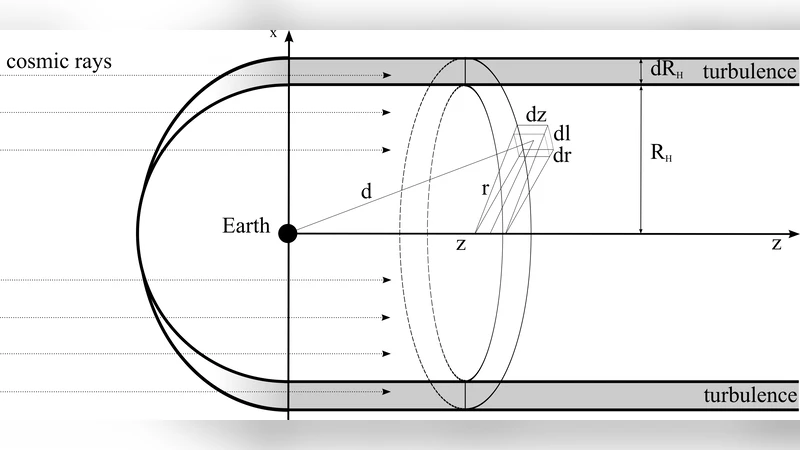
Cosmic rays in the energy range from about 10’s GeV to several 100’s TeV are observed on Earth with an energy-dependent anisotropy of order 0.01-0.1%, and a consistent topology that appears to significantly change at higher energy. The nearest and most recent galactic cosmic ray sources might stochastically dominate the observation and possibly explain a change in orientation of the anisotropy as a function of energy. However, the diffusion approximation is not able to explain its non-dipolar structure and, in particular, the significant contribution of small angular scale features. Particle propagation within the mean free path in the local interstellar medium might have a major role in determining the properties of galactic cosmic rays, such as their arrival distribution. In particular, scattering on perturbations induced in the local interstellar magnetic field by the heliosphere wake, may cause a re-distribution of anisotropic cosmic rays below about 100 TeV toward the direction of the elongated heliotail and of the local interstellar magnetic field in the outer heliosphere. Such scattering processes are considered responsible of the observed TeV cosmic ray global anisotropy and its fine angular structure.
💡 Research Summary
The paper addresses the long‑standing puzzle of the energy‑dependent anisotropy observed in Galactic cosmic rays (CRs) from tens of GeV up to several hundred TeV. Measurements from a variety of ground‑based detectors (Tibet‑ASγ, Milagro, ARGO‑YBJ in the northern sky and IceCube/IceTop in the southern sky) consistently reveal three salient features: (i) a small but measurable fractional intensity (10⁻⁴–10⁻³) that is far from a simple dipole; (ii) a broad excess region roughly between right ascensions 18 h and 8 h, with a complementary deficit elsewhere; and (iii) distinct, localized excesses (“hot spots”) on angular scales of a few to tens of degrees, especially prominent below ∼10 TeV. Moreover, a clear change in the large‑scale pattern occurs around 100 TeV, suggesting a transition in the dominant physical mechanism.
The authors argue that the conventional diffusion picture and the Compton‑Getting effect alone cannot account for the observed non‑dipolar structure and the small‑scale features. They propose that, for CRs with energies ≲100 TeV, the heliosphere and its interaction with the surrounding Local Interstellar Magnetic Field (LIMF) play a decisive role. The solar system moves through the partially ionized Local Interstellar Cloud (LIC) at ~26 km s⁻¹, generating a termination shock (~100 AU) and a heliopause (~200 AU). Downstream, the heliotail extends for several thousand AU and can be as wide as ~600 AU. The solar magnetic field, modulated by the 11‑year cycle and the 26‑day rotation, creates alternating unipolar sectors that are advected into the tail. Charge‑exchange between interstellar neutrals and solar wind protons, together with Rayleigh‑Taylor‑type instabilities, drives strong turbulence in the wake of the heliosphere. The Reynolds number in this region is enormous (Re ≈ 10¹⁴), implying that the flow is highly turbulent rather than laminar.
The turbulence is injected at the heliotail thickness scale (≈ 600 AU) and follows a Kolmogorov‑like cascade (δVₗ ∝ l^{1/3}) down to smaller scales. Because the interstellar Alfvén speed (V_A ≈ 13–17 km s⁻¹) is lower than the bulk flow speed (V_h ≈ 23–26 km s⁻¹), the cascade is initially super‑Alfvénic for scales larger than ~80–250 AU and becomes sub‑Alfvénic at smaller scales, where magnetic tension starts to dominate. The resulting magnetic perturbations can reach δB/B ≈ 1, effectively draping the LIMF around the heliosphere and creating a turbulent “wake” that trails downstream.
Cosmic‑ray particles with gyroradii R_g ≈ 80 AU · (E/TeV) therefore experience significant scattering off these magnetic irregularities when E ≲ 100 TeV. The scattering redistributes the particles’ arrival directions, imprinting the large‑scale excess aligned with the heliotail/LIMF direction and generating the observed small‑scale hot spots as localized over‑densities produced by resonant interactions with the turbulent spectrum. This mechanism naturally explains why the excess is roughly centered near the downstream interstellar flow direction and why the fine structure appears correlated with the global anisotropy.
When the particle energy exceeds ∼100 TeV, the gyroradius becomes comparable to or larger than the heliotail dimensions, so the heliospheric turbulence no longer influences the particle trajectories. The anisotropy then reflects more distant Galactic processes, such as the stochastic distribution of recent nearby supernova remnants or large‑scale gradients in the Galactic CR sea. This transition matches the observed change in phase and amplitude around 100 TeV.
The paper’s strengths lie in its integration of heliospheric MHD simulations, realistic estimates of turbulence spectra, and a coherent explanation for both the large‑scale and small‑scale anisotropy components. It also offers a testable prediction: the orientation of the excess should correlate with the direction of the heliotail and the inferred LIMF orientation, and the transition energy should shift if the heliospheric size or local interstellar conditions change.
However, the model remains qualitative in several respects. The exact turbulent power spectrum, the efficiency of resonant scattering for different particle rigidities, and the role of ion‑neutral damping are not quantified. Moreover, the treatment of charge‑exchange‑driven instabilities is based on earlier work and lacks direct validation against contemporary high‑resolution simulations. Future work should involve (a) high‑resolution, multi‑fluid MHD‑kinetic simulations of the heliosphere‑LIMF interaction, (b) particle‑in‑cell or test‑particle studies to compute scattering rates across the relevant scales, and (c) coordinated multi‑energy observations (e.g., HAWC, LHAASO, IceCube‑Gen2) to refine the energy at which the anisotropy phase transition occurs.
In summary, the authors present a plausible and physically motivated scenario in which the heliosphere’s turbulent wake reshapes the arrival direction distribution of sub‑100 TeV cosmic rays, thereby accounting for the observed non‑dipolar global anisotropy and the embedded small‑scale features. This work bridges heliospheric physics and Galactic cosmic‑ray propagation, highlighting the importance of local plasma environments in interpreting high‑energy astrophysical observations.
Comments & Academic Discussion
Loading comments...
Leave a Comment