Molecular processes from the AGB to the PN stage
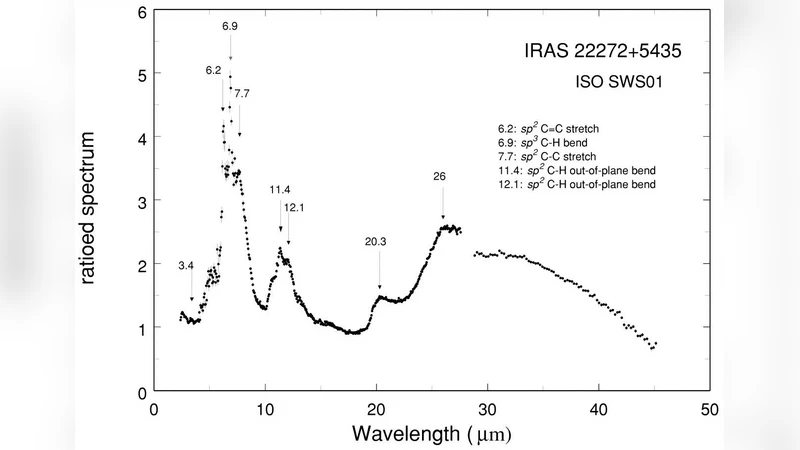
Many complex organic molecules and inorganic solid-state compounds have been observed in the circumstellar shell of stars (both C-rich and O-rich) in the transition phase between Asymptotic Giant Branch (AGB) stars and Planetary Nebulae (PNe). This short (~100-10.000 years) phase of stellar evolution represents a wonderful laboratory for astrochemistry and provides severe constraints on any model of gas-phase and solid-state chemistry. One of the major challenges of present day astrophysics and astrochemistry is to understand the formation pathways of these complex organic molecules and inorganic solid-state compounds (e.g., polycyclic aromatic hydrocarbons, fullerenes, and graphene in the case of a C-rich chemistry and oxides and crystalline silicates in O-rich environments) in space. In this review, I present an observational review of the molecular processes in the late stages of stellar evolution with a special emphasis on the first detections of fullerenes and graphene in PNe.
💡 Research Summary
This review paper provides a comprehensive observational synthesis of the molecular and solid‑state chemistry that occurs during the brief (~10²–10⁴ yr) transition from the Asymptotic Giant Branch (AGB) to the planetary nebula (PN) phase. The author first outlines the classic nucleosynthesis pathways that differentiate low‑mass (O‑rich), intermediate‑mass (C‑rich via the ¹³C neutron source), and high‑mass (O‑rich again because of Hot Bottom Burning) AGB stars, emphasizing how metallicity modulates third‑dredge‑up efficiency and HBB activation.
In O‑rich environments, ISO and Spitzer spectra reveal strong amorphous silicate emission in AGB winds, weak crystalline silicate features (olivine, pyroxene) in high‑mass OH/IR stars, and water‑ice bands. Two competing crystallisation scenarios are discussed: high‑temperature annealing at the end of the AGB mass‑loss episode, and low‑temperature crystallisation within long‑lived circumbinary disks. Spitzer observations of extragalactic O‑rich AGB stars show that low metallicity reduces dust production and favours amorphous silicate emission, while O‑rich PNe become rare in metal‑poor systems such as the Magellanic Clouds.
C‑rich chemistry is dominated by small hydrocarbons (C₂H₂, HCN, C₃) that appear already in the AGB phase. Their infrared signatures include the 11.5 µm SiC band, a broad 30 µm feature (traditionally attributed to MgS but now more plausibly linked to hydrogenated amorphous carbon, HAC), and a series of aliphatic bands at 3.4, 6.9, 7.3 µm together with the classic aromatic infrared bands (AIBs) at 3.3, 6.2, 7.7, 8.6, 11.3 µm. The evolution from aliphatic‑dominated spectra in AGB stars to aromatic‑dominated spectra in PNe is interpreted as a UV‑driven photochemical processing that converts HAC‑type material into PAHs.
The paper also discusses the still‑unidentified 21, 26, and 30 µm features, arguing that carbonaceous carriers such as HAC, nano‑diamonds, or hydrogenated fullerenes are the most plausible candidates, while the MgS hypothesis for the 30 µm band is increasingly disfavoured.
A major highlight is the first detection of fullerenes (C₆₀, C₇₀) and graphene‑like structures (trans‑C₆₄) in circumstellar environments. Initial expectations placed fullerenes in H‑deficient objects (e.g., R Coronae Borealis stars), yet Spitzer surveys found C₆₀ only in two RCBs that still contain some hydrogen, and in five normal‑hydrogen PNe (including the prototypical Tc 1). The co‑presence of PAH features with fullerenes suggests a common evolutionary pathway: HAC grains, when exposed to intense UV radiation and moderate heating, decompose into PAHs and, subsequently, into closed‑cage fullerenes and possibly graphene fragments. This challenges earlier paradigms that required extreme H‑deficiency for fullerene formation.
Mixed‑chemistry sources—objects that display both C‑rich (PAH, SiC) and O‑rich (silicates) dust signatures—are examined. While early work linked them to long‑lived circumbinary disks around Wolf‑Rayet central stars, recent Spitzer data show a high incidence of mixed chemistry in the Galactic bulge, independent of binary status. Proposed explanations include very late thermal pulses, dense UV‑irradiated tori fostering carbon chemistry, or metallicity‑driven variations in dust production.
In summary, the transition from AGB to PN is a unique laboratory where gas‑phase reactions, dust grain growth, photochemical processing, and solid‑state transformations occur on human‑observable timescales. The combined ISO and Spitzer datasets provide stringent constraints on models of dust crystallisation, hydrocarbon polymerisation, and the emergence of complex carbon nanostructures such as fullerenes and graphene. The findings underscore the need to incorporate metallicity effects, binary interactions, and UV radiation fields into any comprehensive astrochemical model of late‑stage stellar evolution.
Comments & Academic Discussion
Loading comments...
Leave a Comment