The XMM-Newton view of Supergiant Fast X-ray Transients: the case of IGRJ16418-4532
We report on a 40 ks long, uninterrupted X-ray observation of the candidate supergiant fast X-ray transient (SFXT) IGRJ16418-4532 performed with XMM-Newton on February 23, 2011. This high mass X-ray binary lies in the direction of the Norma arm, at an estimated distance of 13 kpc. During the observation, the source showed strong variability exceeding two orders of magnitudes, never observed before from this source. Its X-ray flux varied in the range from 0.1 counts/s to about 15 counts/s, with several bright flares of different durations (from a few hundreds to a few thousands seconds) and sometimes with a quasi-periodic behavior. This finding supports the previous suggestion that IGRJ16418-4532 is a member of the SFXTs class. In our new observation we measured a pulse period of 1212+/-6 s, thus confirming that this binary contains a slowly rotating neutron star. During the periods of low luminosity the source spectrum is softer and more absorbed than during the flares. A soft excess is present below 2 keV in the cumulative flares spectrum, possibly due to ionized wind material at a distance similar to the neutron star accretion radius. The kind of X-ray variability displayed by IGRJ16418-4532, its dynamic range and time scale,together with the sporadic presence of quasi-periodic flaring, all are suggestive of a transitional accretion regime between pure wind accretion and full Roche lobe overflow. We discuss here for the first time this hypothesis to explain the behavior of IGRJ16418-4532 and, possibly, of other SFXTs with short orbital periods.
💡 Research Summary
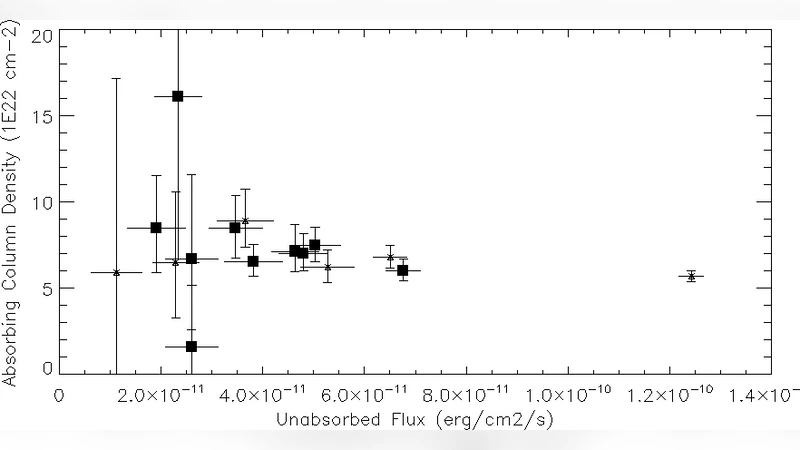
The authors present a 40 ks uninterrupted XMM‑Newton observation of the candidate supergiant fast X‑ray transient (SFXT) IGR J16418‑4532 performed on 23 February 2011. The source, located in the Norma arm at an estimated distance of ~13 kpc, displayed extreme variability, with count rates ranging from ~0.1 to ~15 cts s⁻¹, corresponding to a dynamic range of more than two orders of magnitude—unprecedented for this object. Several bright flares, lasting from a few hundred to a few thousand seconds, were observed; some intervals showed quasi‑periodic flaring, supporting its classification as an SFXT. Timing analysis revealed a coherent pulsation at 1212 ± 6 s, confirming the presence of a slowly rotating neutron star. Spectrally, the source is softer and more absorbed during low‑luminosity intervals, while during flares the absorption column drops (N_H ≈ 8 × 10²² cm⁻²) and the power‑law photon index remains around Γ ≈ 1.3. The cumulative flare spectrum exhibits a soft excess below 2 keV. This excess can be modeled either with a blackbody component (kT ≈ 0.17 keV, radius ≈ 250 km) or with an ionized absorber (N_H,abs ≈ 5 × 10²² cm⁻², ionization parameter ξ ≈ 125 erg cm s⁻¹). The ionized absorber likely represents wind material ionized by the X‑ray source at a distance comparable to the neutron‑star accretion radius. The low‑intensity spectrum is harder and more absorbed (N_H ≈ 1–2 × 10²³ cm⁻²), but can be fitted with the same ionized‑absorber model, indicating that the ionized wind persists even outside flares. The authors argue that the observed variability, dynamic range, and quasi‑periodic flaring are inconsistent with pure wind accretion and instead point to a transitional accretion regime between pure wind capture and full Roche‑lobe overflow. Given the short orbital period (~3.74 days) and the slow neutron‑star spin, IGR J16418‑4532 likely occupies an intermediate state where a nascent accretion disc or enhanced stream of material intermittently forms, producing the observed flares. This “transitional” scenario may also apply to other SFXTs with short orbital periods, offering a new perspective on the diversity of accretion mechanisms in high‑mass X‑ray binaries.
Comments & Academic Discussion
Loading comments...
Leave a Comment