Multiple dynamical time-scales in networks with hierarchically nested modular organization
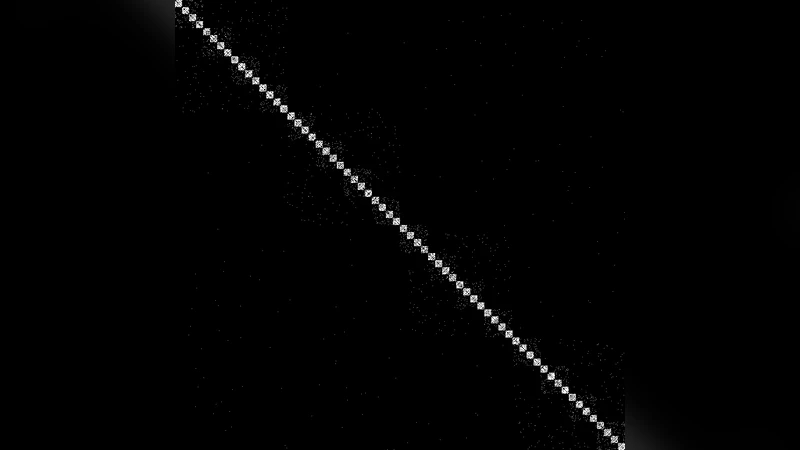
Many natural and engineered complex networks have intricate mesoscopic organization, e.g., the clustering of the constituent nodes into several communities or modules. Often, such modularity is manifested at several different hierarchical levels, where the clusters defined at one level appear as elementary entities at the next higher level. Using a simple model of a hierarchical modular network, we show that such a topological structure gives rise to characteristic time-scale separation between dynamics occurring at different levels of the hierarchy. This generalizes our earlier result for simple modular networks, where fast intra-modular and slow inter-modular processes were clearly distinguished. Investigating the process of synchronization of oscillators in a hierarchical modular network, we show the existence of as many distinct time-scales as there are hierarchical levels in the system. This suggests a possible functional role of such mesoscopic organization principle in natural systems, viz., in the dynamical separation of events occurring at different spatial scales.
💡 Research Summary
The paper investigates how hierarchical modular organization in complex networks influences dynamical processes, focusing on the synchronization of coupled oscillators. The authors introduce a generative model for hierarchically nested modular networks. At the lowest level (ℓ = 0) the network consists of M modules, each containing n nodes, with intra‑module connection probability ρ₁. Higher levels (ℓ = 1,…,hₗₑᵥ) are built by grouping m, q,… modules into meta‑modules, meta‑meta‑modules, etc., with inter‑level connection densities decreasing by a factor r (0 ≤ r ≤ 1). When r = 0 the network is a set of isolated modules; when r = 1 it reduces to a homogeneous Erdős‑Rényi graph. The model is controlled by a few parameters: average degree ⟨k⟩, hierarchical depth hₗₑᵥ, and branching factor q.
Dynamics are modeled by identical Kuramoto oscillators (ωᵢ = ω) coupled through the adjacency matrix A with unit coupling strength. The evolution equation is
dθᵢ/dt = ω + (1/kᵢ)∑ⱼ Aᵢⱼ sin(θⱼ − θᵢ).
Starting from random phases, the authors monitor synchronization using a pairwise correlation ρᵢⱼ = ⟨cos(θᵢ − θⱼ)⟩ and a threshold T to construct a binary connectivity matrix D(t). The number of disconnected clusters n_sync(t) in D(t) serves as a proxy for the degree of synchronization.
Simulations reveal a step‑wise reduction of n_sync(t) that mirrors the hierarchical organization. For a network with three levels (hₗₑᵥ = 3), the first rapid drop occurs at time τₘ when each of the 64 lowest‑level modules (16 nodes each) synchronizes internally. A second plateau ends at τₘₘ when groups of four modules (forming a meta‑module of 64 nodes) become synchronized. Finally, at τ_g the four meta‑modules (256 nodes each) merge, leading to global synchronization. The duration of each plateau grows with the level, producing as many distinct time scales as there are hierarchical levels. By varying r, the authors show that stronger inter‑module connectivity (larger r) compresses the time scales, and in the limit r → 1 the plateaus disappear, yielding a smooth transition typical of homogeneous random graphs.
To explain these observations analytically, the authors linearize the dynamics around the synchronized state, obtaining dθ/dt = −L θ, where L is the graph Laplacian. The eigenvalue spectrum of L exhibits gaps (spectral gaps) whose number equals the hierarchical depth. The inverse eigenvalues 1/λ_i, ordered increasingly, show clusters separated by gaps; each gap corresponds to a dynamical time scale associated with a particular hierarchical level. As r decreases, the gaps widen, reinforcing the separation of time scales; as r approaches 1, the gaps shrink and the spectrum becomes continuous.
The paper also cites empirical evidence of hierarchical modularity in cortical connectivity matrices of cat and macaque brains, suggesting that the observed multi‑scale synchronization may be relevant to brain function, where local circuits synchronize quickly while large‑scale networks integrate more slowly. The authors argue that hierarchical modularity provides a structural mechanism for the coexistence of processes operating on distinct temporal scales, which could be advantageous for information processing, selective routing, and preventing pathological over‑synchronization.
In summary, the study demonstrates that (i) hierarchical modular networks inherently generate multiple, well‑separated synchronization time scales, (ii) these scales are directly linked to spectral gaps of the Laplacian, and (iii) tuning the inter‑level connectivity parameter r continuously interpolates between strongly modular, multi‑scale dynamics and homogeneous, single‑scale dynamics. The findings highlight hierarchical modularity as a potentially universal design principle for complex systems that require coordinated activity across spatial and temporal hierarchies. Future work is suggested on heterogeneous oscillator frequencies, non‑linear coupling, and external driving to explore the robustness of the multi‑scale phenomenon.
Comments & Academic Discussion
Loading comments...
Leave a Comment