On the association of ULXs with young superclusters: M82 X-1 and a new candidate in NGC 7479
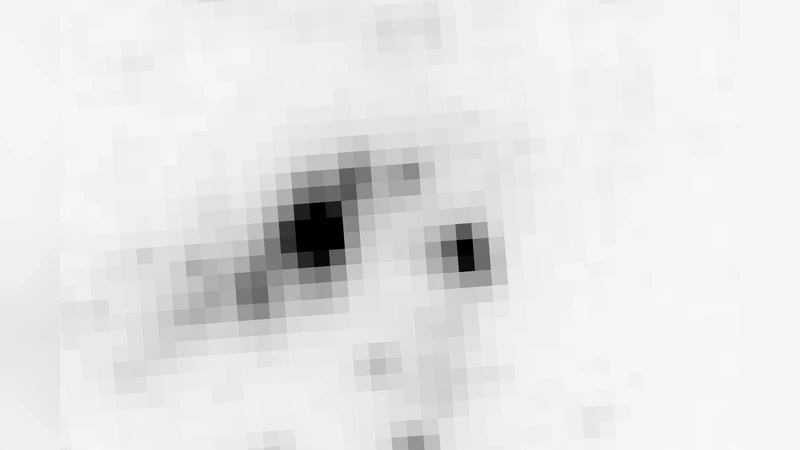
We investigate the spatial coincidence of ultra-luminous X-ray sources (ULXs) with young massive stellar clusters. In particular we perform astrometry on Chandra and HST data of two ULXs that are possibly associated with such clusters. To date M82 X-1 is the only ULX claimed to be coincident with a young massive stellar cluster. We remeasure the position of this source with a high accuracy and find that the position of the X-ray source is 0.65 arcsec away from the stellar cluster, corresponding to an offset significance of 3 sigma. We also report the discovery of a new candidate, based on observations of NGC 7479. One of the ULXs observed in three X-ray observations is found to be spatially coincident (within 1 sigma of the position error) with a young super-cluster observed in the HST images. In the brightest state, the absorbed luminosity of the ULX is a few times $10^{40}$ erg s$^{-1}$, and in the faintest state below the detection limit of $\sim4$ times $10^{39}$ erg s$^{-1}$. The luminosity in the brightest state requires an accreting black hole mass of at least 100 M${\odot}$ assuming isotropic emission. However it is possible that the source is contaminated by X-ray emission from the nearby supernova SN2009jf. In this case the luminosity of the ULX is in a range where it is strongly debated whether it is a super-Eddington stellar mass black hole or an intermediate mass black hole. The colours of the host cluster indicate a young stellar population, with an age between 10 and 100 Myr. The total stellar mass of the cluster is $\sim5\cdot10^{5}$M${\odot}$.
💡 Research Summary
The paper investigates whether ultra‑luminous X‑ray sources (ULXs) are physically associated with young massive stellar clusters, a key question for understanding the nature of ULXs and the formation of intermediate‑mass black holes (IMBHs). The authors focus on two objects: the well‑studied ULX M82 X‑1, previously claimed to coincide with the young cluster MGG‑11, and a newly identified ULX in the barred spiral galaxy NGC 7479 (CXOU J230453.0+121959) that appears to lie within a super‑cluster.
For M82 X‑1, the authors re‑analyse archival Chandra ACIS observations (OBSID 10542 and 10543) and register the X‑ray images to the Sloan Digital Sky Survey (SDSS) using six and five common sources, respectively. This yields an absolute astrometric accuracy of ≈0.2 arcsec. They then match the Chandra positions to HST NICMOS (F160W) and WFC3 (F110W) images, again achieving ≈0.05 arcsec consistency between the two HST datasets. The resulting X‑ray position lies 0.65 arcsec (≈11 pc at the distance of M82) south of the centre of MGG‑11, a displacement significant at the 3‑σ level. Consequently, M82 X‑1 is not co‑located with the cluster but rather offset, suggesting it may have been ejected from the cluster core.
In NGC 7479, the authors identify a ULX that appears in three X‑ray observations (two Chandra, two XMM‑Newton). Because the absolute astrometry of both Chandra and HST images is only accurate to ∼1 arcsec, they use a bright foreground star (visible in both X‑ray and optical images) as a local reference, only 23 arcsec from the ULX, to perform a precise boresight correction. The corrected positions from the two Chandra observations (OBSID 11230 and 10120) have statistical uncertainties of ≈0.3 arcsec, and both positions fall within the 1‑σ error circle of a compact, young super‑cluster seen in HST ACS/WFC F814W images. The cluster’s photometry (V≈19.84 mag, I≈19.46 mag, after Galactic extinction correction) implies an absolute magnitude of M_V≈–12.8 and M_I≈–13.2. Comparing these colours with simple stellar population models yields an age of 10–100 Myr and a total stellar mass between 7 × 10⁵ M_⊙ and 1.8 × 10⁶ M_⊙, with roughly half the mass concentrated in a single unresolved central component.
X‑ray spectral analysis of the NGC 7479 ULX is limited by low counts (≈120 photons in the best Chandra exposure). The authors fit an absorbed power‑law model, fixing the column density to the Galactic value (5.1 × 10²⁰ cm⁻²). The photon index appears to vary from Γ≈1.73±0.19 (OBSID 11230) to Γ≈1.13±0.19 (OBSID 10120), though the change is only marginally significant (≈2 σ). The absorbed 0.3–10 keV luminosity changes from 5 × 10³⁹ erg s⁻¹ in the earlier observation to 1.4 × 10⁴⁰ erg s⁻¹ in the later one. XMM‑Newton data from 2001 detect the source at a lower level (≈3.6 × 10³⁹ erg s⁻¹), while the 2005 observation yields only an upper limit of ≈4.2 × 10³⁹ erg s⁻¹.
A complicating factor is the proximity (≈0.3 arcsec) of the type Ib supernova SN 2009jf, which exploded shortly before the second Chandra observation. Type Ib/c supernovae can reach X‑ray luminosities of ∼10⁴⁰ erg s⁻¹ within months of explosion, comparable to the ULX’s bright state. The authors discuss whether the observed increase in luminosity and spectral hardening could be due to SN 2009jf rather than intrinsic ULX variability. They note that the ULX’s spectrum remains softer than typical early‑time supernova X‑ray spectra and that similar variability is common among ULXs, but they cannot rule out contamination.
In the broader context, the authors point out that among several hundred known ULXs, only four have been reported within or very near young massive clusters: the two Antennae ULXs (now known to be offset by ≈0.6 arcsec), M82 X‑1 (now shown to be offset by 0.65 arcsec), and the new NGC 7479 source. The rarity of such associations, together with the observed offsets, supports scenarios where ULXs form in dense clusters (e.g., via runaway stellar collisions leading to an IMBH) and are subsequently ejected by dynamical interactions or recoil from binary supernova explosions.
The paper concludes that high‑precision astrometry is essential for establishing genuine ULX‑cluster associations, and that the NGC 7479 ULX represents the strongest candidate for a ULX residing within a young super‑cluster, albeit with the caveat of possible supernova contamination. Future observations with improved angular resolution and deeper multi‑wavelength coverage will be required to disentangle these effects and to clarify whether the source harbours an IMBH (≥100 M_⊙) or a super‑Eddington stellar‑mass black hole.
Comments & Academic Discussion
Loading comments...
Leave a Comment