Instability types at ion-assisted alloy deposition: from two-dimensional to three-dimensional nanopattern growth
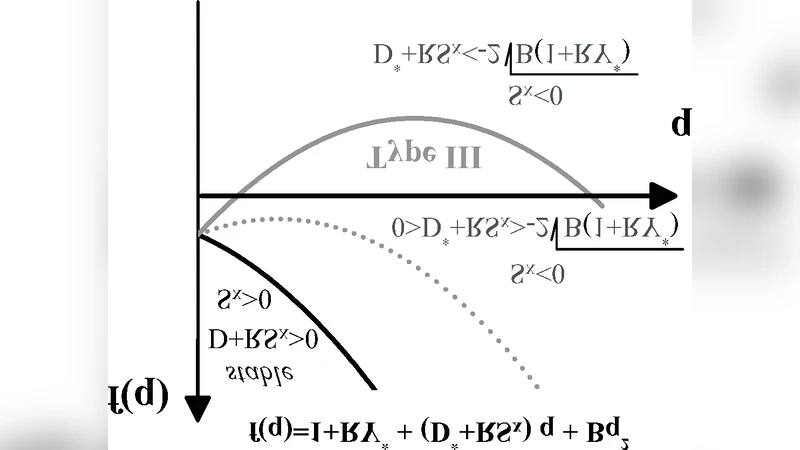
Ion irradiation during film growth has a strong impact on structural properties. Linear stability analysis is employed to study surface instabilities during ion-assisted growth of binary alloys. An interplay between curvature-dependent ion-driven and deposition-driven instabilities is investigated. We demonstrate that ion irradiation of growing binary alloys leads to the formation of composition-modulated surface patterns. It is shown that the ion-to-atom arrival ratio R is the pattern control parameter. Close to the instability threshold we identify different regimes of instabilities driven by ion- or deposition-induced surface roughness processes, or roughness-composition feedback interactions. In particular, the synergistic effects of the curvature-dependent displacement and deposition coupling to the preferential sputtering or to the preferential diffusivity are found to induce instabilities and pattern formation. Depending on the film growth and ion-irradiation conditions, the instabilities show stationary or oscillating behavior. The latter one is exclusively connected with ion irradiation. The corresponding phase diagrams are presented in terms of experimentally accessible parameters. This shows an alternative way to control surface patterning and to grow three-dimensional laterally or vertically ordered nanostructures.
💡 Research Summary
This paper presents a comprehensive linear stability analysis of ion‑assisted growth of binary alloy thin films, focusing on the coupled evolution of surface morphology (height h) and composition (surface atomic fraction c_A of species A). The authors derive two coupled continuity equations that incorporate deposition flux, ion flux, sputtering yields for each species (Y_A, Y_B), curvature‑dependent ion‑induced displacement, and surface diffusion currents. A key control parameter is the ion‑to‑atom arrival ratio R = j_ion / j_at, together with the ion incidence angle θ.
In the planar, homogeneous growth limit the equations reduce to simple expressions for the overall growth rate V and the time evolution of the surface composition. When small perturbations are introduced, a Fourier analysis yields a dispersion relation σ(k) that is a quadratic function of the wavevector k with both real and imaginary parts. The real part determines whether a perturbation grows (instability) or decays (stability); the imaginary part signals oscillatory behavior. The coefficients of σ(k) depend on (i) curvature‑dependent ion displacement (S_c), (ii) differences in sputtering yields (Y_A ≠ Y_B), (iii) differences in surface diffusivities (D_A ≠ D_B), and (iv) the deposition composition c_0 (the fraction of species A in the incoming flux).
Three distinct instability regimes are identified:
-
Ion‑driven stationary instability – Dominated by curvature‑dependent ion redistribution and selective sputtering. When S_c is positive (or negative) the ion flux amplifies height variations on convex (concave) regions, leading to a steady ripple or dot pattern with a well‑defined wavelength set by the balance between destabilizing S_c‑terms and stabilizing surface tension/diffusion terms.
-
Deposition‑driven stationary instability – Arises when the incoming flux composition deviates from 0.5 and/or when D_A ≠ D_B. The composition‑dependent deposition creates a feedback loop: a local enrichment of one species modifies the local sputtering yield and diffusion flux, which in turn accentuates the height modulation.
-
Ion‑driven oscillatory instability – Occurs for sufficiently large ion flux (high R) and oblique incidence (large θ) such that the curvature‑dependent term becomes strong enough to generate a complex growth rate. The surface height and composition then oscillate in time, producing traveling or standing wave patterns. This regime is exclusive to ion irradiation and has no analogue in purely thermal or deposition‑only processes.
The critical ion‑to‑atom ratio R_c, above which any instability appears, is derived analytically; it scales with the ratio of the effective sputtering yield (\bar Y) to the deposition flux. Phase diagrams in the (R, θ) plane are constructed, showing clear boundaries between stable, stationary‑instability, and oscillatory‑instability regions. The diagrams demonstrate that by tuning R and θ one can deliberately select the pattern wavelength, amplitude, and even the dimensionality of the resulting nanostructure.
A particularly important outcome is the mechanism by which a two‑dimensional surface pattern is transferred into the bulk as the film grows. Because the analysis assumes a “frozen bulk” (bulk diffusion negligible), the surface morphology is continuously buried by subsequent deposition, preserving the lateral periodicity in the vertical direction and yielding a three‑dimensional ordered nanostructure (e.g., vertically aligned nanorods or multilayered compositional superlattices).
The authors discuss experimental implications: ion energies in the 1–10 eV per atom range provide sufficient momentum transfer to activate the curvature‑dependent displacement, while the ion flux can be varied over orders of magnitude to adjust R. The incidence angle can be controlled by substrate tilt, allowing fine‑tuning of the curvature coupling. The model predicts that even modest changes in R (e.g., from 0.1 to 0.3) can shift the system from a smooth film to a rippled surface, and further increase can trigger oscillatory behavior observable as periodic thickness modulations in cross‑sectional TEM.
In summary, the paper establishes a unified theoretical framework that links ion‑assisted deposition parameters to the emergence of composition‑modulated surface patterns and their evolution into three‑dimensional nanostructures. By identifying the governing dimensionless groups (R, θ, sputtering yield ratios, diffusivity ratios) and providing analytical instability criteria, it offers a practical roadmap for researchers to engineer nanostructured alloy films via ion‑beam assisted growth, opening pathways to functional materials with tailored optical, magnetic, or catalytic properties.
Comments & Academic Discussion
Loading comments...
Leave a Comment