A magnetar-like event from LS I +61 303 and its nature as a gamma-ray binary
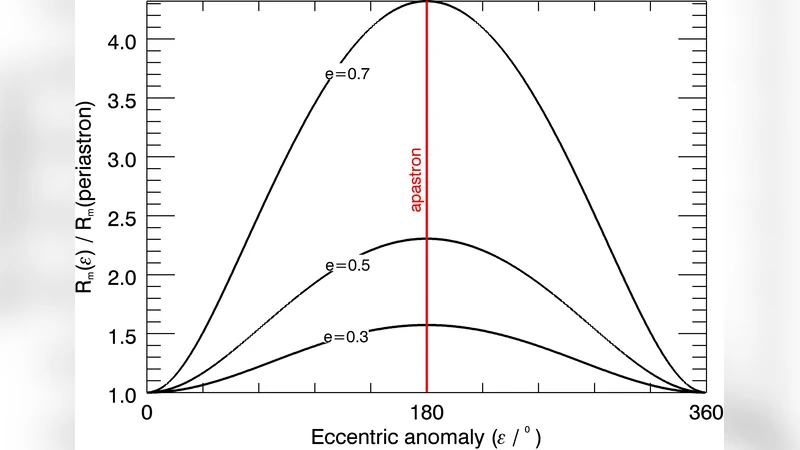
We report on the Swift-BAT detection of a short burst from the direction of the TeV binary LS I +61 303, resembling those generally labelled as magnetar-like. We show that it is likely that the short burst was indeed originating from LS I +61 303 (although we cannot totally exclude the improbable presence of a far-away line-of-sight magnetar) and that it is a different phenomena with respect to the previously-observed ks-long flares from this system. Accepting as a hypothesis that LS I +61 303 is the first magnetar detected in a binary system, we study which are the implications. We find that a magnetar-composed LS I +61 303-system would most likely be (i.e., for usual magnetar parameters and mass-loss rate) subject to a flip-flop behavior, from a rotational powered regime (in apastron) to a propeller regime (in periastron) along each of the LS I +61 303, eccentric orbital motion. We prove that whereas near apastron an inter-wind shock can lead to the normally observed LS I +61 303behavior, with TeV emission, the periastron propeller is expected to efficiently accelerate particles only to sub-TeV energies. This flip-flop scenario would explain the system’s behavior where a recurrent TeV emission was seen appearing near apastron only, the anti-correlation of GeV and TeV emission, and the long-term TeV variability (which seems correlated to LS I +61 303’s super-orbital period), including the appearance of a low TeV-state. Finally, we qualitatively put the multi-wavelength phenomenology in context of our proposed model, and make some predictions for further testing.
💡 Research Summary
The paper reports the detection of a short, hard X‑ray burst by Swift‑BAT on 10 September 2008 in the direction of the γ‑ray binary LS I +61 303. The burst lasted about 0.24 s (T₉₀) in the 15–50 keV band, reached a significance of 11 σ, and its refined position lies within 0.6 arcmin of the known coordinates of LS I +61 303, making an association highly probable. Spectral fitting of the burst yields either a power‑law with photon index ≈2 or a black‑body with temperature ≈7.5 keV; the inferred emitting radius (~0.3 km at 2 kpc) is consistent with the small hot spots typical of magnetar short bursts.
To test whether the burst could be a hard‑X‑ray counterpart of the kilosecond‑scale flares previously observed in LS I +61 303, the authors examined simultaneous RXTE‑HEXTE data. No significant hard X‑ray excess was found during those longer flares, indicating that the BAT burst is not simply a spectral hardening of the known flares but a distinct event. The temporal and spectral properties match those of short magnetar bursts (duration 0.01–0.2 s, thermal‑like spectra, peak luminosities 10³⁸–10⁴¹ erg s⁻¹).
Assuming the burst originates from LS I +61 303, the authors explore the hypothesis that the compact object is a magnetar. Using typical magnetar parameters (magnetic field B≈10¹⁴–10¹⁵ G, spin period P≈2–12 s) together with the stellar wind properties of the Be companion (mass‑loss rate Ṁ≈10⁻⁸ M⊙ yr⁻¹), they find that the interaction regime changes dramatically over the eccentric 26.5‑day orbit. Near apastron the magnetar’s spin‑down power dominates; the pulsar wind collides with the stellar wind, forming a strong inter‑wind shock that can accelerate particles to multi‑TeV energies, producing the observed TeV emission that appears only around apastron. Near periastron, the dense stellar wind compresses the magnetar magnetosphere, pushing the system into a propeller regime where the inflowing material is expelled before reaching the surface. In this state particle acceleration is limited to sub‑TeV energies, explaining the suppression of TeV photons and the dominance of GeV emission during periastron.
This “flip‑flop” behavior—alternating between a rotation‑powered pulsar wind and a propeller mode—naturally accounts for several puzzling observational facts: (1) the orbital modulation of TeV emission (present only near apastron); (2) the anti‑correlation between GeV and TeV fluxes; (3) the long‑term (≈1667 day) super‑orbital modulation of the TeV flux, which can be interpreted as variations in the stellar wind density that shift the transition point between regimes; and (4) occasional low‑TeV states when the propeller regime dominates for a larger fraction of the orbit.
The authors also place the multi‑wavelength phenomenology—radio outbursts, X‑ray flares, GeV and TeV light curves—into this framework, arguing that a magnetar‑pulsar wind model reproduces the data better than traditional microquasar jet models or pure rotation‑powered pulsar wind scenarios. They propose several testable predictions: (i) detection of additional short hard X‑ray bursts coincident with apastron X‑ray flares; (ii) spectral softening of the high‑energy component during periastron passages as the system enters the propeller regime; (iii) a shift in the phase of the TeV peak correlated with the super‑orbital cycle. Future observations with high‑sensitivity instruments such as NICER, CTA, and continued Swift‑BAT monitoring can verify these predictions.
If confirmed, LS I +61 303 would become the first known binary hosting a magnetar, opening a new class of high‑energy binaries and providing a unique laboratory to study magnetar wind physics, particle acceleration under extreme magnetic fields, and the impact of orbital dynamics on high‑energy emission processes.
Comments & Academic Discussion
Loading comments...
Leave a Comment