Disentangling Social and Group heterogeneities: Public Goods games on Complex Networks
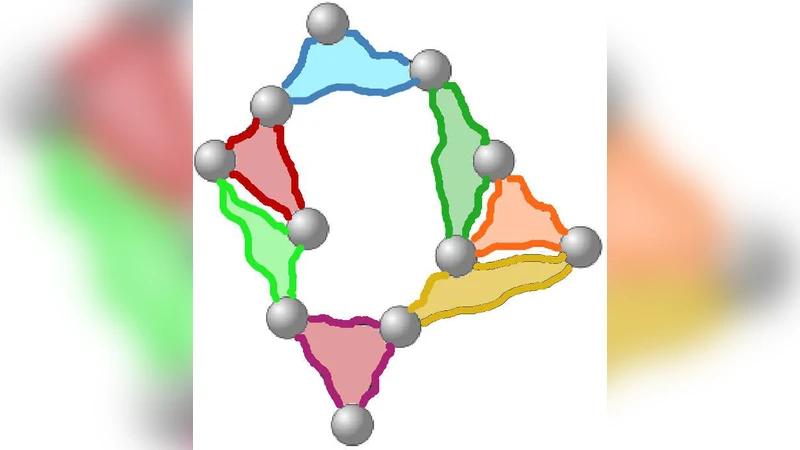
In this Letter we present a new perspective for the study of the Public Goods games on complex networks. The idea of our approach is to consider a realistic structure for the groups in which Public goods games are played. Instead of assuming that the social network of contacts self-defines a group structure with identical topological properties, we disentangle these two interaction patterns so to deal with systems having groups of definite sizes embedded in social networks with a tunable degree of heterogeneity. Surpisingly, this realistic framework, reveals that social heterogeneity may not foster cooperation depending on the game setting and the updating rule.
💡 Research Summary
The paper introduces a novel framework for studying Public Goods Games (PGG) on complex networks by explicitly separating the social contact network from the mesoscopic group structure in which the games are actually played. Traditional works have implicitly identified the contact network with the interaction groups, assuming that every neighbor of a node belongs to the same game group and that group sizes follow the same degree distribution as the underlying network. The authors argue that real collaboration networks consist of many small, densely connected modules (groups) that overlap only weakly, and that individuals typically participate in only a subset of their social contacts when cooperating in a specific task. To capture this, they model the system as a bipartite graph with two node types: individuals and groups. Two probability distributions characterize the structure: P(q), the probability that an individual belongs to q groups, and P(m), the probability that a group contains m individuals.
Network generation proceeds iteratively. Starting from an initial core of m individuals forming the first group, each new individual selects (m‑1) partners among the existing N‑1 nodes to create a new group of size m. The partner‑selection rule is governed by a tunable parameter α. With probability α the newcomer chooses partners uniformly at random (Π_i = 1/(N‑1)), leading to a Poisson‑distributed P(q) and an Erdős‑Rényi (ER) projected network. With probability (1‑α) the newcomer uses preferential attachment based on the current number of groups each candidate belongs to (Π_i ∝ q_i), producing a scale‑free (SF) P(q) ∼ q⁻³ while keeping P(m) a delta function at the chosen m. By setting α = 1 or α = 0 the authors obtain two limiting cases: a homogeneous (ER) social structure and a heterogeneous (SF) one, both with identical, homogeneous group sizes.
The evolutionary dynamics of the PGG are implemented on these bipartite structures. Each individual i participates in all q_i groups it belongs to. In each group the standard linear public‑goods payoff is used: cooperators contribute an amount c, the total contribution is multiplied by an enhancement factor r, and the resulting benefit is divided equally among the m group members. Two cost schemes are examined. In the Fixed Cost per Game (FCG) version each cooperator pays a constant amount z in every group it joins (c_i = z). In the Fixed Cost per Individual (FCI) version the total contribution of a cooperator is fixed (z) and is split evenly among its q_i groups (c_i = z/q_i). After each round, agents update their strategies using a pairwise comparison (replicator) rule: an agent i randomly selects a neighbor j, compares payoffs f_i and f_j, and adopts j’s strategy with probability (f_j‑f_i)/M, where M normalizes by the maximal possible payoff difference for the pair. For FCG an analytical expression for M as a function of q_i and q_j can be derived; for FCI M must be computed numerically.
Simulations are performed on networks of size N = 5000 with group sizes m = 3, 4, 5, fixing z = 1 and varying the normalized enhancement factor r/m from 0 to about 1.5. For each r/m value the system is evolved for 5 × 10⁴ Monte‑Carlo steps, and the average cooperation level ρ_c is measured over the final 10⁴ steps. Results are averaged over 10² independent realizations of both the initial strategy distribution and the network.
Key findings:
-
Homogeneous (ER) networks consistently yield higher cooperation than heterogeneous (SF) networks across all group sizes and both cost schemes. In ER graphs the onset of cooperation occurs around r/m ≈ 0.5, and ρ_c rises sharply to near‑full cooperation as r/m increases.
-
Scale‑free networks display a much slower increase in ρ_c. Although the threshold r/m for the first appearance of cooperators is similar (≈0.5), the subsequent growth is gradual, and for larger groups (m = 4, 5) the final cooperation levels are markedly lower than in ER graphs.
-
The previously reported advantage of SF topologies (e.g., Santos et al., 2008) is shown to be an artefact of conflating social heterogeneity with heterogeneous group sizes. When group sizes are forced to be uniform, the heterogeneity of the contact network alone does not guarantee higher cooperation.
-
Cost scheme matters: Switching to the Fixed Cost per Individual formulation lowers the critical r/m for SF networks (≈0.2), indicating that distributing the contribution across many groups can partially mitigate the disadvantage of heterogeneity. Nevertheless, ER networks still outperform SF networks under this rule.
-
Outcome variability: In SF networks the same parameter set can lead to distinct asymptotic states across realizations—full cooperation, full defection, or a mixed equilibrium—highlighting the sensitivity of dynamics to the specific arrangement of high‑degree nodes within the bipartite structure. ER networks, by contrast, always converge to a single absorbing state (either all‑C or all‑D).
The authors conclude that social heterogeneity is not a universal promoter of cooperation; its effect depends critically on the mesoscopic organization of interaction groups. By disentangling the two layers, the study reveals that realistic group architectures can invert the previously assumed benefit of scale‑free contact patterns. This work underscores the importance of modeling both the macro‑scale contact network and the micro‑scale group topology separately when investigating evolutionary games on complex social systems.
Comments & Academic Discussion
Loading comments...
Leave a Comment