Accretion Onto the Supermassive Black Hole in the High-redshift Radio-loud AGN 0957+561
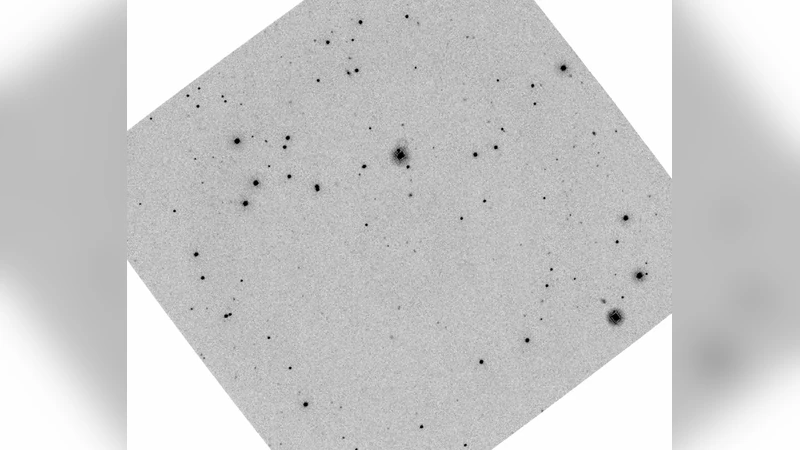
We present the results of our X-ray, UV and optical monitoring campaign of the first gravitationally lensed AGN from late 2009 to mid 2010. The trailing (B) image of the AGN 0957+561 shows the intrinsic continuum variations that were predicted in advance based on observations of the leading (A) image in the gr optical bands. This multiwavelength variability of the B image allows us to carry out a reverberation mapping analysis in the radio-loud AGN 0957+561 at redshift z = 1.41. We find that the U-band and r-band light curves are highly correlated with the g-band record, leading and trailing it by 3 +/- 1 days (U band) and 4 +/- 1 days (r band). These 1-sigma measurements are consistent with a scenario in which flares originated in the immediate vicinity of the supermassive black hole are thermally reprocessed in a standard accretion disk at about 10-20 Schwarzschild radii from the central dark object. We also report that the light curve for the X-ray emission with power-law spectrum is delayed with respect to those in the Ugr bands by about 32 days. Hence, the central driving source can not be a standard corona emitting the observed power-law X-rays. This result is also supported by X-ray reprocessing simulations and the absence of X-ray reflection features in the spectrum of 0957+561. We plausibly interpret the lack of reflection and the 32-day delay as evidence for a power-law X-ray source in the base of the jet at a typical height of about 200 Schwarzschild radii. A central EUV source would drive the variability of 0957+561.
💡 Research Summary
The authors present a multi‑wavelength monitoring campaign of the gravitationally lensed quasar 0957+561, focusing on the trailing (B) image, from late 2009 to mid‑2010. The leading (A) image showed a strong optical flare in late 2008–early 2009; because the two images are separated by a well‑measured lensing time delay of ~14 months, the authors were able to predict that the same intrinsic variability would appear in image B roughly a year later. This prediction proved correct, confirming that the observed variability is intrinsic to the active nucleus rather than caused by microlensing or other external effects.
Observations were carried out in three bands:
- Optical g and r photometry with the Liverpool Robotic Telescope (LRT), yielding 55–58 high‑precision flux measurements per image (≈1 % uncertainties).
- Near‑UV (U‑band) imaging with Swift/UVOT, providing 35 data points.
- X‑ray spectroscopy with Chandra/ACIS‑S3, consisting of 12 evenly spaced (~3 ks) exposures over the same interval.
The X‑ray spectra of both images are well described by a power‑law (photon index Γ≈1.78) plus a very soft black‑body component (kT≈0.08 keV) absorbed only by the Galactic column (N_H≈8.2×10¹⁹ cm⁻²). No excess absorption, Fe Kα line, or other reflection signatures are detected, indicating a lack of a classic X‑ray “corona” that would illuminate the accretion disk.
Time‑lag analysis employed the discrete cross‑correlation function (DCF) and discrete auto‑correlation function (DAF), with Monte‑Carlo resampling (1 000 realizations) to estimate uncertainties. The results are:
- The U‑band light curve leads the g‑band by 3 ± 1 days.
- The r‑band lags the g‑band by 4 ± 1 days. These short lags are consistent with a standard geometrically thin, optically thick Shakura‑Sunyaev accretion disk where reprocessing of high‑energy photons occurs at radii of ~10–20 Schwarzschild radii (R_S) from the black hole.
In stark contrast, the 2–10 keV power‑law X‑ray flux varies with a delay of ~32 days relative to the UV/optical bands. Such a long lag cannot be reconciled with the conventional picture in which a compact X‑ray corona located just above the black hole drives the UV/optical variability through illumination and reprocessing. The absence of reflection features and the long lag instead point to an X‑ray emitting region situated far from the disk, plausibly at the base of the relativistic jet. The authors estimate a height of ~200 R_S for this jet‑base source.
Spectroscopic data from the Nordic Optical Telescope (NOT) confirm that the broad emission lines (C IV, C III], Mg II) that fall within the U, g, and r filters contribute negligibly to the measured flux variations; the variability is dominated by the continuum.
The paper therefore arrives at three major conclusions:
- Even at high redshift (z = 1.41) and in a radio‑loud quasar, the UV/optical variability can be explained by thermal reprocessing in a standard accretion disk, as indicated by the short inter‑band lags.
- The X‑ray variability originates from a distinct region – likely the base of the jet – rather than from a compact corona. This explains both the lack of reflection signatures and the ~30‑day lag.
- Gravitational lensing provides a powerful predictive tool: by monitoring the leading image, one can schedule coordinated multi‑wavelength campaigns for the trailing image, enabling reverberation mapping studies of distant AGN that would otherwise be impossible.
These findings have important implications for our understanding of energy transport in radio‑loud AGN, the geometry of the X‑ray emitting region, and the feasibility of reverberation mapping at cosmological distances. Future work extending this approach to larger samples of lensed quasars could refine the relationship between jet physics, disk reprocessing, and high‑energy emission across cosmic time.
Comments & Academic Discussion
Loading comments...
Leave a Comment