The use of microblogging for field-based scientific research
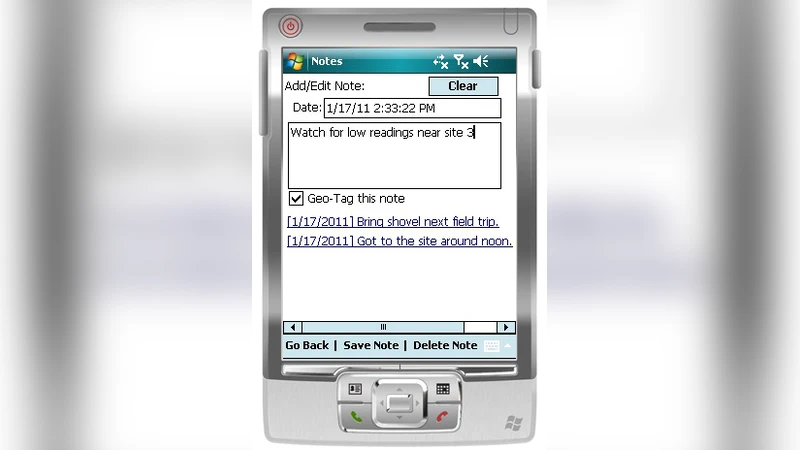
Documenting the context in which data are collected is an integral part of the scientific research lifecycle. In field-based research, contextual information provides a detailed description of scientific practices and thus enables data interpretation and reuse. For field data, losing contextual information often means losing the data altogether. Yet, documenting the context of distributed, collaborative, field-based research can be a significant challenge due to the unpredictable nature of real-world settings and to the high degree of variability in data collection methods and scientific practices of different researchers. In this article, we propose the use of microblogging as a mechanism to support collection, ingestion, and publication of contextual information about the variegated digital artifacts that are produced in field research. We perform interviews with scholars involved in field-based environmental and urban sensing research, to determine the extent of adoption of Twitter and similar microblogging platforms and their potential use for field-specific research applications. Based on the results of these interviews as well as participant observation of field activities, we present the design, development, and pilot evaluation of a microblogging application integrated with an existing data collection platform on a handheld device. We investigate whether microblogging accommodates the variable and unpredictable nature of highly mobile research and whether it represents a suitable mechanism to document the context of field research data early in the scientific information lifecycle.
💡 Research Summary
The paper addresses a persistent problem in field‑based scientific research: the loss or inadequacy of contextual information that accompanies raw data. While modern sensor networks and digital repositories can store massive volumes of data, they often lack the detailed metadata describing how, when, where, and by whom the data were collected. Without such context, data become difficult to interpret, reproduce, or reuse, especially in collaborative, interdisciplinary projects where practices vary widely.
To mitigate this gap, the authors propose using micro‑blogging—short, text‑only posts similar to Twitter “tweets”—as a lightweight mechanism for capturing and disseminating contextual data directly at the point of collection. The study proceeds in three main phases. First, semi‑structured interviews and participant observation were conducted with twelve researchers involved in environmental and urban sensing projects. The interviews revealed that scientists frequently need to note equipment failures, weather changes, location adjustments, and team communications during fieldwork, but existing tools (paper logbooks, ad‑hoc photo annotations) are cumbersome, time‑consuming, and poorly integrated with data repositories.
Second, the authors designed and implemented a mobile micro‑blogging application that integrates with two existing CENS (Center for Embedded Networked Sensing) platforms: SensorBase, which stores raw sensor streams, and the CENS Deployment Center, which holds contextual annotations. The app allows users to compose short text entries, automatically attach GPS coordinates, embed images, and add custom tags. Upon submission, each entry is packaged as a JSON record and simultaneously pushed to both repositories, ensuring that the contextual note is permanently linked to the corresponding raw data.
Third, a pilot evaluation was carried out in two real‑world deployments—a coastal ecological survey and an urban air‑quality monitoring campaign in California. Field teams used the app during routine data collection, typically generating three to five micro‑blog posts per hour, each requiring less than five minutes to compose. Quantitative and qualitative feedback indicated three key benefits: (1) dramatically reduced latency between observation and documentation, preserving near‑real‑time context; (2) enhanced interoperability because plain‑text posts can be ingested by any system without requiring domain‑specific metadata schemas; and (3) increased usability, as researchers can record free‑form narrative details without learning complex metadata entry forms.
The authors also discuss limitations. The 140‑character limit (inherited from Twitter) constrains the amount of detail that can be captured in a single post, necessitating supplemental attachments for complex instrument settings or extensive methodological notes. Privacy concerns arise when location data are broadcast, requiring policy controls or anonymization mechanisms. Moreover, the approach relies on reliable network connectivity, which may be intermittent in remote field sites.
In conclusion, micro‑blogging proves to be a viable, low‑overhead solution for early‑stage contextual data capture in highly mobile, heterogeneous field research environments. It bridges the gap between raw sensor data and the narrative context needed for reproducibility and cross‑disciplinary reuse. Future work should explore automatic summarization, speech‑to‑text conversion, and stronger security features, as well as the development of standardized APIs that allow micro‑blog entries to be seamlessly harvested by a broader ecosystem of scientific data repositories.
Comments & Academic Discussion
Loading comments...
Leave a Comment