Observations of Energetic High Magnetic Field Pulsars with the Fermi Large Area Telescope
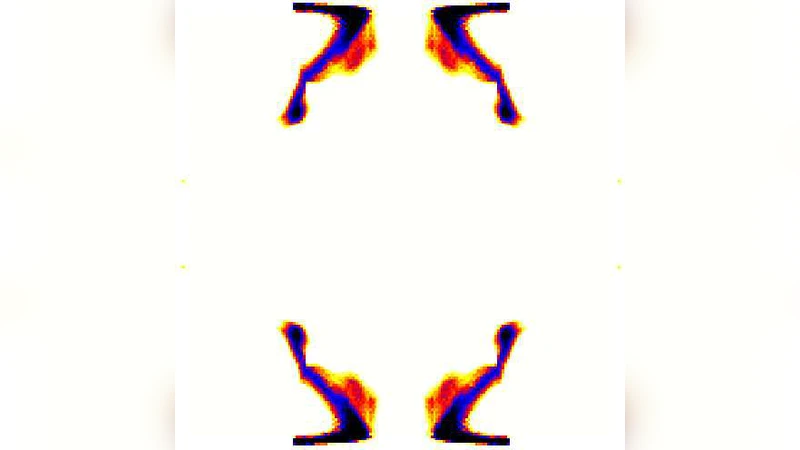
We report the detection of gamma-ray pulsations from the high-magnetic-field rotation-powered pulsar PSR J1119-6127 using data from the Fermi Large Area Telescope. The gamma-ray light curve of PSR J1119-6127 shows a single, wide peak offset from the radio peak by 0.43 pm 0.02 in phase. Spectral analysis suggests a power law of index 1.0 pm 0.3 with an energy cut-off at 0.8 pm 0.2 GeV. The first uncertainty is statistical and the second is systematic. We discuss the emission models of PSR J1119-6127 and demonstrate that despite the object’s high surface magnetic field—near that of magnetars—the field strength and structure in the gamma-ray emitting zone are apparently similar to those of typical young pulsars. Additionally, we present upper limits on the \gam-ray pulsed emission for the magnetically active PSR J1846-0258 in the supernova remnant Kesteven 75 and two other energetic high-B pulsars, PSRs J1718-3718 and J1734-3333. We explore possible explanations for the non-detection of these three objects, including peculiarities in their emission geometry.
💡 Research Summary
This paper presents a systematic investigation of energetic, high‑magnetic‑field (high‑B) rotation‑powered pulsars using data from the Fermi Large Area Telescope (LAT). The authors focus on four pulsars whose surface dipole magnetic fields approach or exceed the quantum‑critical field (B_cr ≈ 4.4 × 10¹³ G): PSR J1119‑6127, PSR J1846‑0258, PSR J1718‑3718, and PSR J1734‑3333. The primary goal is to determine whether such extreme‑field objects display gamma‑ray emission characteristics that differ from those of ordinary young pulsars, thereby probing the connection between high‑B pulsars and magnetars.
Observations and Data Processing
The analysis uses LAT “diffuse” class events collected between 2008 August 4 (MJD 54682) and the end of each timing solution (up to 2010 April). Events with zenith angles > 100° are excluded to suppress Earth‑limb background. Timing ephemerides are derived from extensive radio monitoring (Parkes, Lovell) for the radio‑loud pulsars and from RXTE/PCA X‑ray timing for PSR J1846‑0258. The TEMPO2 software, together with the Fermi‑plugin, provides phase assignments for each photon. An energy‑dependent point‑spread‑function (PSF) cut, θ₆₈(E) ≈ √
Comments & Academic Discussion
Loading comments...
Leave a Comment