Computing Chemical Potential using the Phase Space Multi-histogram Method
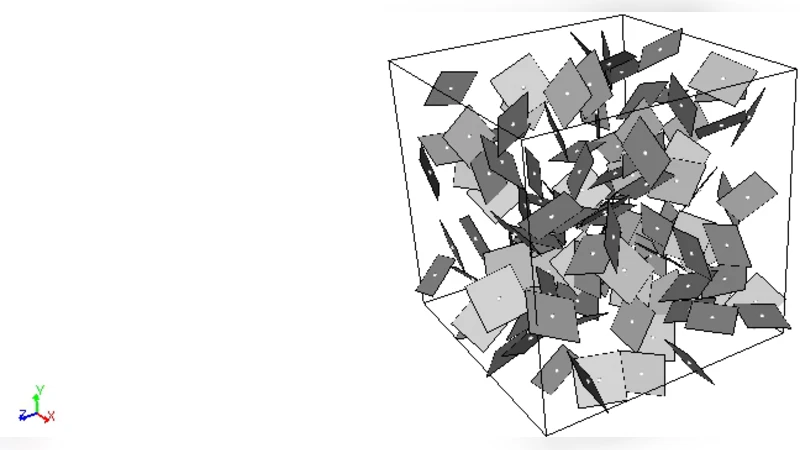
We present a new simulation method to calculate the free energy and the chemical potential of hard particle systems. The method relies on the introduction of a parameter dependent potential to smoothly transform between the hard particle system and the corresponding ideal gas. We applied the method to study the phase transition behavior of monodispersed infinitely thin square platelets. First, we equilibrated the square platelet system for different reduced pressures with a usual isobaric Monte Carlo (MC) simulation and obtained a reduced pressure-chemical potential plot. Then we introduce the parametrized potential to interpolate the system between the ideal gas and the hard particles. After selecting the potential, we performed isochoric MC runs, ranging from the ideal gas to the hard particle limit. Through an iterative procedure, we compute the free energy and the chemical potential of the square platelet system by evaluating the volume of the phase space attributed to the hard particles, and then we find the coexistence pressure of the system. Our method provides an intuitive approach to investigate the phase transitions of hard particle systems.
💡 Research Summary
The paper introduces a novel simulation framework called the Phase Space Multi‑Histogram (PSMH) method for calculating the free energy and chemical potential of hard‑particle systems. Traditional multicanonical techniques struggle with hard‑core interactions because the potential energy is either zero (no overlap) or infinite (overlap), making direct sampling of the energy landscape impractical. To overcome this, the authors define a parameter‑dependent artificial potential U_h = h n_c, where n_c is the number of overlapping particle pairs and h is a tunable interpolation constant. When h → ∞, U_h reduces to the hard‑core potential (overlaps forbidden); when h → 0, overlaps are allowed, reproducing an ideal‑gas limit.
The theoretical foundation starts from canonical and multicanonical ensembles, leading to the definition of a histogram ψ_h(n_c) that records the probability distribution of n_c at a given h. This histogram satisfies ψ_h(n_c) = C_h w(n_c) exp(−β U_{0h}), where w(n_c) is the density of states for a given overlap count and C_h is a normalization constant. By performing simulations at a series of h values and applying the reweighting relation
ψ_{h+Δh}(n_c) = (C_{h+Δh}/C_h) ψ_h(n_c) exp(−Δh n_c),
the authors can iteratively reconstruct w(n_c) across the entire overlap range. The key quantity w(0) represents the phase‑space volume of the pure hard‑particle system; its logarithm yields the free energy via βF ≈ −ln w(0) + ln C_0. The chemical potential follows from βμ = βF/N + p* N(L/D)^3, where p* is the reduced pressure, L the box length, and D the particle size scale.
The computational protocol consists of two stages. First, an isobaric (NPT) Monte Carlo simulation equilibrates the system at several reduced pressures p* to generate an initial pressure‑chemical‑potential curve. Second, an isochoric (NV_h) Monte Carlo simulation is carried out while gradually decreasing h, thereby sampling the histograms ψ_h(n_c). Overlap counts are integer‑valued, and sufficient overlap between adjacent histograms is essential for reliable reweighting. Once the multi‑histogram analysis provides a smooth estimate of w(n_c), the free energy and chemical potential are obtained directly.
The method is applied to a model of 120 infinitely thin square platelets (hard squares with zero thickness). The system is first compressed and then expanded across reduced pressures p* = 0.1–2.0. The authors observe a weak hysteresis around p* ≈ 1.1, indicative of an isotropic‑nematic (I‑N) transition. Histogram analysis yields a minimum of −ln w(n_c) ≈ 325 at n_c = 234, while n_c = 0 gives a higher value, confirming the expected reduction of accessible phase space as overlaps are suppressed. The calculated chemical potential at coexistence is βμ ≈ 4.61, which aligns well with previous grand‑canonical Monte Carlo results by Bates (βμ ≈ 7.3 before volume correction, ≈ 4.1–4.6 after correction). The coexistence reduced densities are g_ρ^NI ≈ 3.85 and g_ρ^IN ≈ 3.87, comparable to experimental measurements on Al(OH)_3 platelet suspensions.
A limitation of the PSMH approach is highlighted: for systems where particle insertion is essentially always rejected (e.g., hard spheres near crystallization), the histograms for different h values do not overlap, preventing accurate reconstruction of w(n_c). Consequently, the method is best suited to anisotropic hard particles (plates, rods, thin disks) where insertion moves remain feasible.
In conclusion, the PSMH method provides an intuitive and computationally straightforward route to bridge the ideal‑gas and hard‑core limits via a tunable overlap potential, enabling accurate determination of free energies and chemical potentials through multi‑histogram reweighting. Its successful application to square platelets demonstrates its utility for studying phase transitions in complex hard‑particle systems, and it offers a promising tool for future investigations of anisotropic colloids and liquid‑crystalline materials.
Comments & Academic Discussion
Loading comments...
Leave a Comment