A search for the near-infrared counterpart of the eclipsing millisecond X-ray pulsar Swift J1749.4-2807
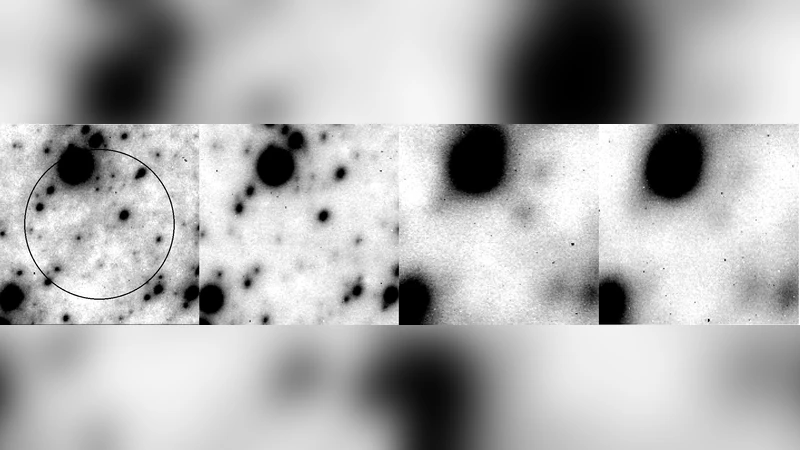
Swift J1749.4-2807 is a transient accreting millisecond X-ray pulsars, the first that displayed X-ray eclipses. Therefore it holds a great potential for accurate mass measurements in a low mass X-ray binary system. The determination of the companion star radial velocity would make it possible to fully resolve the system and to accurately measure the mass of the neutron star based on dynamical measurements. Unfortunately, no optical/NIR counterpart has been identified to date for this system, either in outburst or in quiescence. We performed a photometric study of the field of Swift J1749.4-2807 during quiescence in order to search for the presence of a variable counterpart. The source direction lies on the Galactic plane, making any search for its optical/NIR counterpart challenging. To minimize the effects of field crowding and interstellar extinction, we carried out our observations using the adaptive optics near-infrared imager NACO mounted at the ESO Very Large Telescope. From the analysis of Swift X-ray data obtained during outburst, we derived the most precise (1.6" radius) position for this source. Due to the extreme stellar crowding of the field, 41 sources are detected in our VLT images within the X-ray error circle, with some of them possibly showing variability consistent with the expectations. We carried out the first deep imaging campaign devoted to the search of the quiescent NIR counterpart of Swift J1749.4-2807. Our results allow to provide constraints on the nature of the companion star of this system. Furthermore, they suggest that future phase-resolved NIR observations (performed with large aperture telescopes and adaptive optics) covering the full orbital period of the system are likely to identify the quiescent counterpart of Swift J1749.4-2807, through the measure of its orbital variability, opening the possibility of dynamical studies of this unique source.
💡 Research Summary
Swift J1749.4‑2807 is a transient accreting millisecond X‑ray pulsar (AMXP) that uniquely exhibits X‑ray eclipses, making it an exceptional laboratory for neutron‑star mass determination. The orbital period (8.82 h) and spin period (1.9 ms) are known with high precision from pulse‑timing analyses, and the eclipse geometry constrains the system inclination to 74.4°–77.9°. Consequently, the only missing dynamical ingredient is the radial velocity of the companion star (K₂). Measuring K₂ would allow a full solution of the binary mass function and yield a precise neutron‑star mass, a crucial input for constraining the equation of state of ultra‑dense matter.
The main difficulty in identifying the optical/near‑infrared (NIR) counterpart lies in the source’s location in the Galactic plane, where extreme stellar crowding and heavy interstellar extinction (A_V ≈ 30 mag, N_H ≈ 3 × 10²² cm⁻²) severely limit the depth of conventional imaging. To overcome these obstacles, the authors employed the adaptive‑optics assisted NACO instrument on the ESO Very Large Telescope (VLT) to obtain high‑resolution H‑band (1.65 µm) images. Observations were carried out on 30 and 31 August 2010, deliberately spaced by 0.25 of the orbital period so that the first epoch sampled orbital phase ≈ 0.75 (ascending node) and the second epoch sampled phase ≈ 0.5 (inferior conjunction). If the companion is irradiated by the neutron star, the second epoch should be brighter; if ellipsoidal modulation dominates, the second epoch should be fainter.
Using the Swift/XRT enhanced positions from the 2006 and 2010 outbursts, the authors refined the source coordinates to RA = 17:49:31.83, Dec = ‑28:08:04.7 (90 % confidence radius 1.6″). Within this error circle, 41 NIR sources were detected down to H ≈ 24 mag. PSF photometry was performed on both epochs, and the magnitude differences were plotted as a function of brightness. The scatter increases toward fainter magnitudes, as expected. Only four objects (labelled A–D) display variability exceeding the typical dispersion for their magnitude range (≥ 3σ). Their measured ΔH values are 0.09, 0.27, 0.44 and 0.58 mag respectively, corresponding to the four brightness bins H < 21, 21–22, 22–23 and 23–24. Image subtraction using the ISIS package did not reveal any significant residuals within the error circle, suggesting that any genuine variability is either below the detection threshold or that the true counterpart is fainter than H ≈ 23 mag.
The authors discuss the nature of the companion. From Roche‑lobe geometry, the mean density ⟨ρ⟩ = 113 P_h⁻² g cm⁻³ (with P_h = 8.82 h) implies a companion mass M₂ ≈ 0.8–1.0 M_⊙ if it is a main‑sequence star (spectral type G2V–K0V). An evolved, partially stripped donor could have M₂ ≈ 0.3–0.4 M_⊙, consistent with evolutionary tracks for systems that have undergone a thermal‑timescale mass‑transfer phase. The distance upper limit from a type‑I X‑ray burst is 6.7 ± 1.3 kpc. Assuming this distance and the measured N_H, the expected quiescent H‑band absolute magnitude of a main‑sequence companion would be 13–15 mag, which translates to an apparent magnitude of ≈ 22–23 mag after extinction, i.e. near the detection limit of the present data.
In summary, this work provides the first deep, adaptive‑optics NIR imaging of the Swift J1749.4‑2807 field in quiescence, identifies 41 candidate sources within the refined X‑ray error circle, and highlights four objects with marginally significant variability. The lack of a definitive counterpart suggests that the true companion is either fainter than H ≈ 23 mag or its variability is below the current sensitivity. The authors advocate for future phase‑resolved NIR monitoring with larger telescopes (e.g., ELT, JWST) and improved X‑ray astrometry (e.g., Chandra) to pinpoint the counterpart, obtain K₂ through spectroscopic radial‑velocity measurements, and finally deliver a precise neutron‑star mass for this uniquely eclipsing AMXP.
Comments & Academic Discussion
Loading comments...
Leave a Comment