An X-ray Spectroscopic Study of the Hot Interstellar Medium Toward the Galactic Bulge
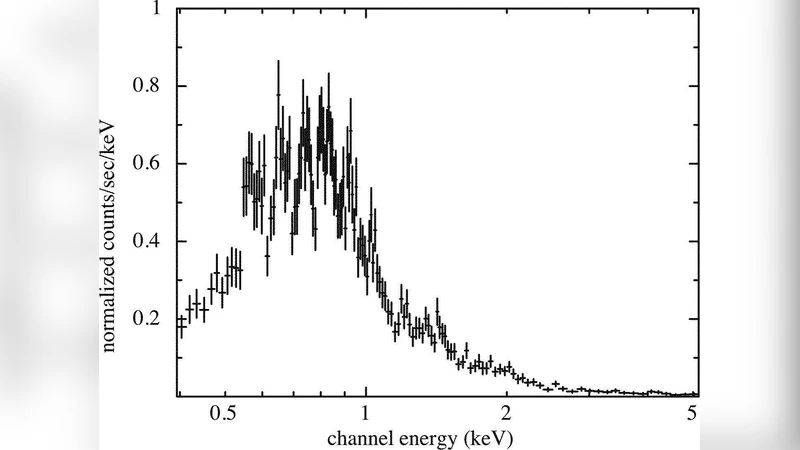
We present a detailed spectroscopic study of the hot gas toward the Galactic bulge along the 4U 1820-303 sight line by a combination analysis of emission and absorption spectra. In addition to the absorption lines of OVII Kalpha, OVII Kbeta, OVIII Kalpha and NeIX Kalpha by Chandra LTGS as shown by previous works, Suzaku detected clearly the emission lines of OVII, OVIII, NeIX and NeX from the vicinity. We used simplified plasma models with constant temperature and density. Evaluation of the background and foreground emission was performed carefully, including stellar X-ray contribution based on the recent X-ray observational results and stellar distribution simulator. If we assume that one plasma component exists in front of 4U1820-303 and the other one at the back, the obtained temperatures are T= 1.7 +/- 0.2 MK for the front-side plasma and T=3.9(+0.4-0.3) MK for the backside. This scheme is consistent with a hot and thick ISM disk as suggested by the extragalactic source observations and an X-ray bulge around the Galactic center.
💡 Research Summary
This paper presents a comprehensive X‑ray spectroscopic investigation of the hot interstellar medium (ISM) toward the Galactic bulge, using the low‑mass X‑ray binary 4U 1820‑303 as a background source. The authors combine high‑resolution absorption data from the Chandra LETG with emission data obtained by Suzaku’s XIS1 detector. The absorption spectrum reveals clear O VII Kα, O VII Kβ, O VIII Kα, and Ne IX Kα lines. By fitting these lines with a single‑temperature, single‑density plasma model, they derive column densities of log N(O VII) ≈ 16.3, log N(O VIII) ≈ 16.4, and log N(Ne IX) ≈ 16.0, and a velocity dispersion of roughly 250 km s⁻¹.
The Suzaku emission spectrum shows bright O VII, O VIII, Ne IX, and Ne X lines (≈ 23.5, 19.0, 10.5, and 6.0 LU respectively). A single‑temperature collisional‑ionization equilibrium (CIE) model cannot reproduce the observed line ratios, prompting the authors to introduce two distinct plasma components along the line of sight. The “front‑side” plasma, located in front of 4U 1820‑303, has a temperature T₁ ≈ 1.7 MK, electron density nₑ ≈ 3 × 10⁻³ cm⁻³, and a scale height of about 1.5 kpc. The “back‑side” plasma, situated behind the source, is hotter with T₂ ≈ 3.9 MK, nₑ ≈ 1 × 10⁻³ cm⁻³, and a larger scale height of roughly 3 kpc.
A careful assessment of foreground and background contributions is a central part of the analysis. The authors first remove contamination from Earth’s atmospheric neutral oxygen and solar‑wind charge exchange (SWCX) by filtering periods of high solar‑wind proton flux. They then model the local hot bubble (LHB) emission, which contributes ≈ 2 LU to the O VII line, and include the contribution from Loop I—a large, old supernova remnant with density ≈ 2.5 × 10⁻³ cm⁻³ and temperature ≈ 4.6 MK. Loop I’s impact on the absorption lines is negligible, but it is accounted for in the emission modeling.
Stellar X‑ray emission is evaluated using the TRILEGAL population synthesis code. Simulations of the stellar content within the Suzaku field of view indicate that unresolved stars add roughly 10 % to the observed line intensities, a level that does not significantly alter the derived plasma parameters.
By simultaneously fitting the absorption and emission spectra with the two‑component plasma model, the authors obtain a self‑consistent picture of the hot ISM toward the bulge. The front‑side component corresponds to a thick, relatively cool disk of hot gas extending a few kiloparsecs above the Galactic plane, while the back‑side component is associated with the X‑ray bulge—a hotter, more extended halo surrounding the Galactic center. The combined mass of these components is on the order of 10⁷ M⊙, and the total X‑ray luminosity is ≈ 2 × 10³⁹ erg s⁻¹.
These findings reinforce earlier ROSAT All‑Sky Survey (RASS) results that identified an X‑ray bulge and suggest that the hot gas in the inner Galaxy is not a single homogeneous medium but rather a stratified structure with distinct temperature and density layers. Moreover, the study demonstrates the power of joint absorption–emission analyses to break the degeneracy between density and path length that plagues pure emission studies. The methodology and results provide a valuable benchmark for future investigations of Galactic and extragalactic hot gas, including comparisons with observations of background quasars and other bright X‑ray sources.
Comments & Academic Discussion
Loading comments...
Leave a Comment