Reconstructing an Icosahedral Virus from Single-Particle Diffraction Experiments
The first experimental data from single-particle scattering experiments from free electron lasers (FELs) are now becoming available. The first such experiments are being performed on relatively large objects such as viruses, which produce relatively low-resolution, low-noise diffraction patterns in so-called “diffract-and-destroy” experiments. We describe a very simple test on the angular correlations of measured diffraction data to determine if the scattering is from an icosahedral particle. If this is confirmed, the efficient algorithm proposed can then combine diffraction data from multiple shots of particles in random unknown orientations to generate a full 3D image of the icosahedral particle. We demonstrate this with a simulation for the satellite tobacco necrosis virus (STNV), the atomic coordinates of whose asymmetric unit is given in Protein Data Bank entry 2BUK.
💡 Research Summary
The paper presents a practical framework for reconstructing the three‑dimensional structure of an icosahedral virus from single‑particle diffraction data collected at X‑ray free‑electron lasers (FELs). The authors first address the experimental context: FEL pulses are extremely bright and ultrashort, allowing a “diffract‑and‑destroy” measurement in which a particle is destroyed after a single diffraction snapshot. Because each particle arrives in a random, unknown orientation, conventional approaches require determining the orientation of every diffraction pattern, a computationally intensive step that also suffers from low hit rates.
To overcome these limitations, the authors propose a two‑stage method that exploits the high symmetry of many viruses. In the first stage, they compute angular correlations C₂(q, q′, Δφ) across many diffraction patterns. Each pattern is angularly Fourier‑transformed on each resolution ring, and the product of a ring’s Fourier components with its complex conjugate (followed by an inverse transform) yields C₂. Averaging C₂ over thousands of shots dramatically improves the signal‑to‑noise ratio, because the noise averages out as √N while the coherent signal adds linearly.
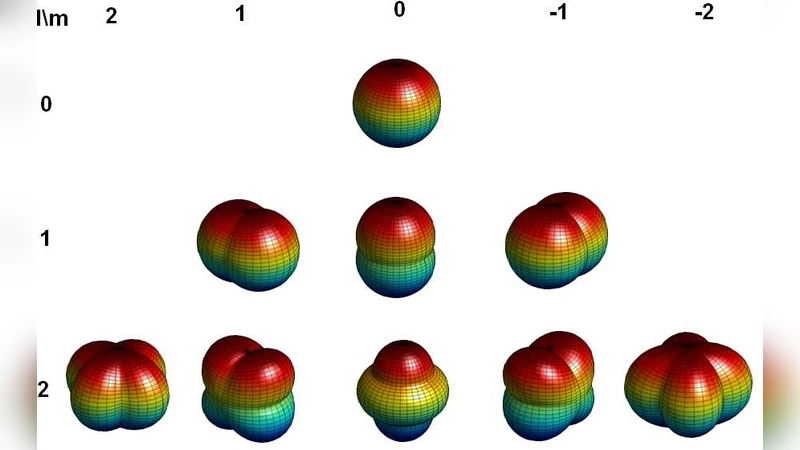
The key theoretical insight is that for particles possessing icosahedral symmetry, the three‑dimensional intensity distribution I(q, θ, φ) can be expanded not in the full set of spherical harmonics Yₗᵐ, but in a much smaller basis of icosahedral harmonics Jₗ(θ, φ). These harmonics exist only for even angular‑momentum orders l = 0, 6, 10, 12, 16, 18, 20, 22, 24, 26, 28, 30 (up to l = 30 in practice). Each Jₗ is a fixed linear combination of real spherical harmonics (RSHs) Sₗᵐ with coefficients aₗᵐ that are known analytically and satisfy a normalization ∑ₘ aₗᵐ² = 1.
The angular correlation function can be expressed as
C₂(q, q′, Δφ) = Σₗ Fₗ(q, q′, Δφ) Bₗ(q, q′),
where the kernel Fₗ is a known function involving Legendre polynomials and experimental geometry, while Bₗ(q, q′) = Σₘ Iₗᵐ*(q) Iₗᵐ(q′) contains the unknown spherical‑harmonic coefficients of the intensity. When icosahedral symmetry is imposed, the coefficients factorize: Iₗᵐ(q) = gₗ(q) aₗᵐ, leading to Bₗ(q, q′) = gₗ(q) gₗ(q′). Consequently, the diagonal elements Bₗ(q, q) give |gₗ(q)|² directly from the measured correlations.
The remaining unknowns are the signs of the real numbers gₗ(q). Because only a finite set of l values is allowed, the sign problem reduces to a combinatorial search over 2¹² ≈ 4 000 possibilities for each resolution shell. Physical constraints—such as non‑negative intensities and continuity of the reconstructed volume—allow the correct sign pattern to be identified unambiguously. Once the signed gₗ(q) are known, the full 3D intensity is reconstructed via
I(q, θ, φ) = Σₗ |gₗ(q)| sign
Comments & Academic Discussion
Loading comments...
Leave a Comment