The Pierre Auger Observatory V: Enhancements
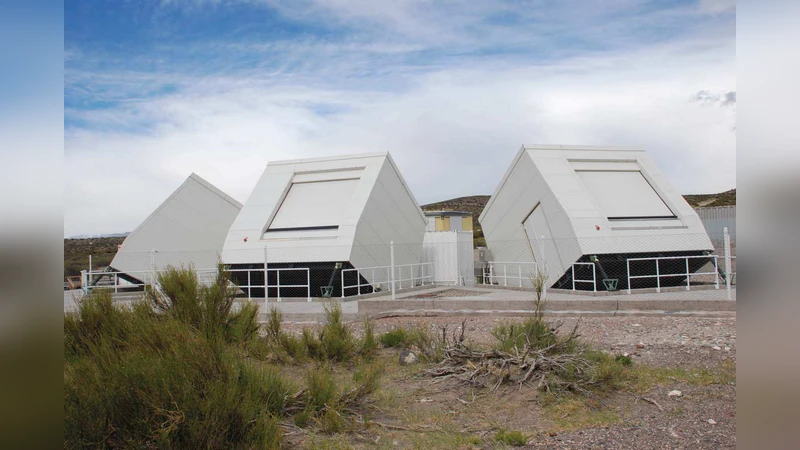
Ongoing and planned enhancements of the Pierre Auger Observatory
💡 Research Summary
The paper “The Pierre Auger Observatory V: Enhancements” provides a comprehensive overview of the ongoing and planned upgrades to the Pierre Auger Observatory (PAO), aimed at extending its scientific reach into the critical energy range between 10¹⁶ eV and 10¹⁹ eV. The authors begin by highlighting the limitations of the existing detector suite—namely the surface detector (SD) array and the fluorescence detector (FD) telescopes—which, while highly successful at energies above 10¹⁸ eV, suffer from reduced efficiency and limited composition sensitivity at lower energies. To address these gaps, the paper details a multi‑pronged enhancement strategy that combines new optical, muon, radio, microwave, and autonomous data‑handling technologies.
The first major upgrade is the High‑Elevation Auger Telescopes (HEAT). Three additional FD telescopes are installed at higher elevation angles, allowing observation of air‑shower development at lower atmospheric depths. By employing fast, high‑gain photomultiplier tubes and high‑resolution CCD cameras, HEAT improves the signal‑to‑noise ratio by a factor of three compared with the original FD, enabling reliable detection of showers down to ~10¹⁶ eV.
Next, the Auger Muons and Infill for the Ground Array (AMIGA) project densifies the SD grid with 750 m spacing and adds underground muon counters at 2.3 m depth. The muon detectors consist of plastic scintillator strips coupled to wavelength‑shifting fibers and silicon photomultipliers, providing a clean measurement of the muon component. By combining muon counts with the electromagnetic signal from the surface stations, AMIGA yields a powerful estimator of the primary mass, improving composition discrimination in the transition region. The current deployment includes 61 AMIGA stations, and early data show a clear correlation between muon number and the depth of shower maximum (Xmax).
The third pillar is the Auger Engineering Radio Array (AERA), a network of broadband antennas operating in the 30–80 MHz band. AERA records the coherent radio emission generated by the geomagnetic and Askaryan mechanisms in extensive air showers. The radio footprint provides an independent measurement of Xmax with a resolution comparable to the FD (≈15 g cm⁻²). AERA’s self‑powered, low‑maintenance design allows a large area to be instrumented at modest cost; the array now comprises 153 stations, and preliminary analyses confirm the expected amplitude‑Xmax relationship.
In parallel, the collaboration has developed an autonomous detection and analysis framework. Compact edge‑computing nodes at each detector perform real‑time preprocessing, compression, and quality checks, transmitting only essential data over a wireless mesh network to the central data center. This reduces bandwidth requirements, improves uptime, and enables rapid response to transient phenomena.
The paper also outlines research and development activities in new technologies. A prototype low‑power, high‑voltage front‑end electronics board, designed in southeastern Colorado, demonstrates the feasibility of scaling up detector electronics while minimizing power consumption. Additionally, a microwave detection effort explores the 1–10 GHz band, where air‑shower induced molecular bremsstrahlung may provide a fast, low‑background signal. Early test runs have observed microwave bursts from 10¹⁷ eV showers with statistical significance exceeding 5σ, suggesting a promising complementary channel for future large‑scale deployment.
Collectively, these enhancements aim to (1) lower the energy threshold of the observatory to the 10¹⁶ eV regime, thereby bridging the gap between direct measurements (satellite and balloon) and ultra‑high‑energy observations; (2) provide multi‑messenger measurements (optical, muonic, radio, microwave) that together constrain the primary mass and shower development with unprecedented precision; and (3) implement a distributed, automated data‑handling infrastructure that maximizes operational efficiency and data quality.
The authors conclude that, once fully commissioned within the next five years, the upgraded PAO will deliver a continuous, high‑statistics data set across three decades of energy, enabling decisive tests of cosmic‑ray acceleration models, source composition evolution, and possible new physics in hadronic interactions at energies far beyond the reach of terrestrial accelerators. The paper serves both as a technical roadmap for the collaboration and as a reference for the broader astroparticle community interested in next‑generation cosmic‑ray observatories.
Comments & Academic Discussion
Loading comments...
Leave a Comment