The reinforcing influence of recommendations on global diversification
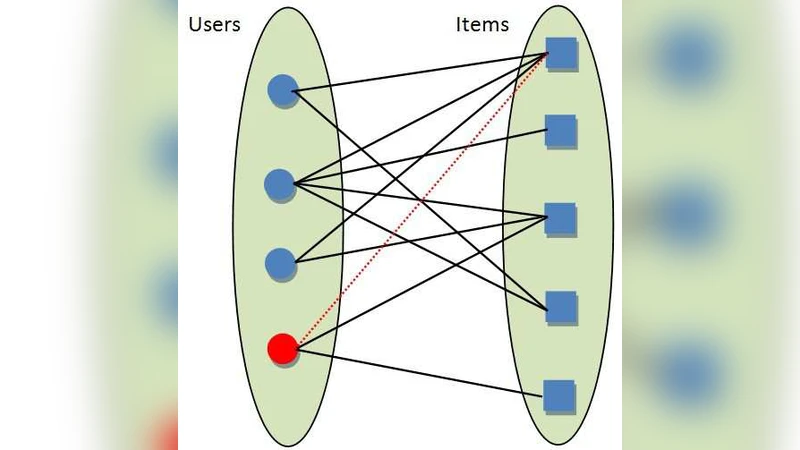
Recommender systems are promising ways to filter the overabundant information in modern society. Their algorithms help individuals to explore decent items, but it is unclear how they allocate popularity among items. In this paper, we simulate successive recommendations and measure their influence on the dispersion of item popularity by Gini coefficient. Our result indicates that local diffusion and collaborative filtering reinforce the popularity of hot items, widening the popularity dispersion. On the other hand, the heat conduction algorithm increases the popularity of the niche items and generates smaller dispersion of item popularity. Simulations are compared to mean-field predictions. Our results suggest that recommender systems have reinforcing influence on global diversification.
💡 Research Summary
The paper investigates how different recommendation algorithms shape the global distribution of item popularity, using the Gini coefficient as a quantitative measure of dispersion. Starting from a random bipartite user‑item network, the authors simulate successive recommendation rounds in which the top‑K items suggested by an algorithm are assumed to be selected, and the network is updated accordingly. Three representative algorithms are examined: (1) a local diffusion approach (LDA), which spreads recommendation weight along the immediate neighborhood of items already chosen by a user; (2) classic collaborative filtering (CF), which computes prediction scores from user‑user similarity and item‑item co‑selection frequencies; and (3) a heat‑conduction (HC) method, which treats each item as a “temperature” that exchanges heat with connected users, thereby allowing low‑popularity (niche) items to gradually acquire higher recommendation scores.
The Gini coefficient G is calculated after each round; a higher G indicates that a few items dominate the total selection count, while a lower G reflects a more equitable distribution. Simulation results show that both LDA and CF amplify the “rich‑get‑richer” dynamics: once an item becomes popular, the algorithms preferentially recommend it again, causing G to rise steadily. This reinforcement effect leads to a widening gap between hot and cold items, potentially reducing overall market diversity. In contrast, the HC algorithm consistently yields smaller G values. By diffusing “heat” across the network, HC raises the visibility of niche items, flattening the popularity curve and promoting a more balanced ecosystem.
To explain these observations analytically, the authors develop a mean‑field approximation. The model treats the network as characterized by average degree ⟨k⟩, number of users N, and number of items M, and derives expected selection probabilities p_i for each item under each algorithm. For LDA and CF, p_i scales roughly with the current popularity of item i, leading to a positive feedback loop that drives G upward. For HC, p_i depends primarily on the global average temperature rather than individual popularity, granting low‑popularity items a baseline chance of being recommended. The mean‑field predictions match the simulation data closely, confirming that the observed divergence in G is rooted in the intrinsic update rules of the algorithms.
The discussion highlights practical implications. While LDA and CF may maximize short‑term user satisfaction and revenue by repeatedly surfacing popular items, they risk eroding long‑term diversity, suppressing the emergence of new content, and making the platform vulnerable to homogenization. HC, although potentially less effective at immediate click‑through rates, fosters a healthier content ecosystem, encouraging exploration and sustaining user engagement over longer horizons. The authors argue that platform designers should incorporate diversity metrics such as the Gini coefficient into objective functions, balancing accuracy with equitable exposure.
In conclusion, the study demonstrates that recommendation systems exert a reinforcing influence on global diversification: algorithms based on local diffusion or collaborative filtering tend to concentrate popularity, whereas heat‑conduction‑style methods disperse it. The findings call for a more nuanced approach to recommender design, one that explicitly accounts for the systemic impact on item diversity. Future work is suggested on dynamic feedback loops, heterogeneous user behavior, and empirical validation across domains such as music streaming, news feeds, and e‑commerce.
Comments & Academic Discussion
Loading comments...
Leave a Comment