Whither Does the Sun Rove?
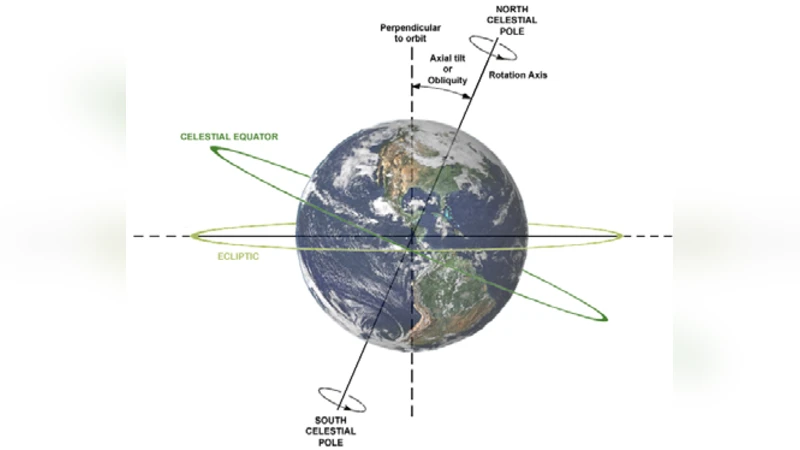
If one asked some friends where on the horizon they should expect to see the sunrise, half of the answers would be “in the east”. Of course, something analogous would happen with the sunset and the west. However, sunrise and sunset virtually never occur at these cardinal points. In fact, those answers correctly describe observations only during the equinoxes, when either autumn or spring begin. Once we recall this, the next natural question to ask ourselves is: how far from the east (or from the west) the rising (or setting) Sun is located for a given latitude of the observer and for a given day of the year. In this paper we supply some simple tools to easily visualize the angular (southward or northward) departure of the rising and setting Sun on the horizon from the east-west direction in a pictorial way, without the need of mathematics. These tools have proven a valuable resource in teaching introductory physics and astronomy courses.
💡 Research Summary
The paper “Whither Does the Sun Rove?” addresses a common misconception that the Sun always rises exactly in the east and sets exactly in the west. In reality, this only happens on the two equinoxes each year; on all other days the sunrise and sunset points are displaced northward or southward depending on the observer’s latitude and the Sun’s declination. The author first reviews the geometry of the celestial sphere: the Earth’s rotation axis points toward the celestial poles, the celestial equator is the projection of Earth’s equator, and the Sun’s daily path is always parallel to this equatorial plane. Because the Earth’s axial tilt is 23.5°, the Sun’s declination varies between +23.5° (June solstice) and –23.5° (December solstice) over the course of a year.
For an observer on the equator the effect is straightforward: at the solstices the sunrise and sunset points are displaced by exactly 23.5° toward the north (June) or south (December). As latitude increases, the horizon tilts relative to the Sun’s diurnal circles, causing the displacement to become larger and the sunrise/sunset azimuths to move closer to the north or south cardinal points. At 60° N, for example, the Sun may rise and set nearer the north or south direction than the east–west line, especially near the solstices.
Rather than deriving the azimuth analytically with spherical trigonometry, the author proposes a simple, visual “sunrise‑sunset dial” consisting of two overlaid figures (Figures 5 and 6). Figure 5 is a circular dial marked with latitude graduations from 0° to 90° and three straight lines representing the equinox trajectory (vertical) and the two solstice trajectories (tilted left for June, right for December). Figure 6 is a transparent sheet bearing a movable arrow that indicates the observer’s latitude; the arrow’s base line corresponds to the equinox path, while the two slanted lines correspond to the solstices. By rotating the arrow to the desired latitude, the intersections of the arrow with the solstice lines give the angular deviation of sunrise and sunset from due east or west. This tool allows students to quickly estimate the azimuthal shift for any latitude and any day of the year without performing calculations.
The dial also illustrates special cases. At the Tropics of Cancer and Capricorn (23.5° N/S) the June (or December) solstice Sun passes directly overhead, so the Sun’s path includes the zenith only once per year. Observers at lower latitudes see the Sun pass through the zenith twice a year, while observers at higher latitudes never see it. At the Arctic and Antarctic circles (≈66.5° N/S) the dial shows that during the winter solstice sunrise and sunset coincide at the same point on the horizon (north for the Arctic, south for the Antarctic), producing a polar night. Conversely, during the opposite solstice the Sun never sets, producing the midnight‑sun phenomenon. At the poles (90°) the arrow lies horizontally, indicating six months of continuous daylight followed by six months of continuous night. The author notes that atmospheric refraction and the Sun’s finite angular size slightly modify these idealized durations.
In the final remarks the author emphasizes that the dial serves as a pedagogical bridge: it makes the qualitative relationship between latitude, declination, and sunrise/sunset azimuth tangible, while also highlighting the limitations of planar approximations. Students who wish to obtain precise azimuths must eventually turn to spherical geometry, providing a natural segue into more advanced mathematical treatment. The paper thus contributes a low‑cost, low‑technology visual aid that can be readily incorporated into introductory physics and astronomy courses to improve conceptual understanding and stimulate interest in the quantitative aspects of celestial mechanics.
Comments & Academic Discussion
Loading comments...
Leave a Comment