Efficient Energy Transport in Photosynthesis: Roles of Coherence and Entanglement
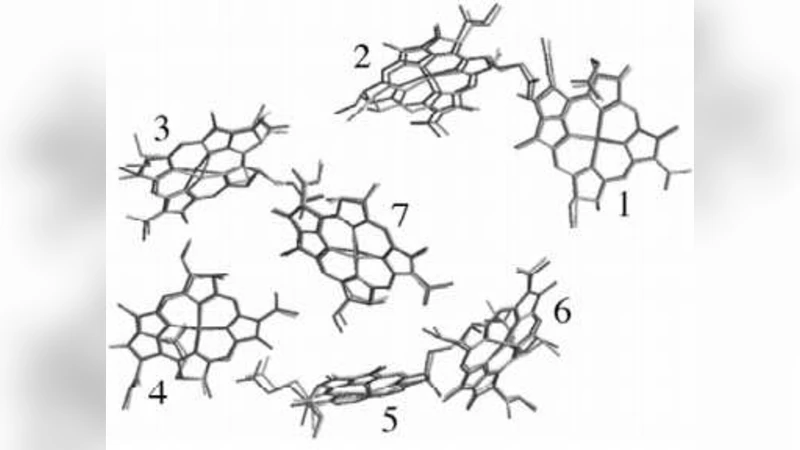
Recently it has been discovered—contrary to expectations of physicists as well as biologists—that the energy transport during photosynthesis, from the chlorophyll pigment that captures the photon to the reaction centre where glucose is synthesised from carbon dioxide and water, is highly coherent even at ambient temperature and in the cellular environment. This process and the key molecular ingredients that it depends on are described. By looking at the process from the computer science view-point, we can study what has been optimised and how. A spatial search algorithmic model based on robust features of wave dynamics is presented.
💡 Research Summary
The paper reviews recent experimental findings that energy transfer in photosynthetic light‑harvesting complexes exhibits long‑lived quantum coherence even at ambient temperature. Two‑dimensional electronic spectroscopy on the Fenna‑Matthews‑Olson (FMO) complex and on marine algae antennae has revealed oscillatory off‑diagonal signals persisting for several hundred femtoseconds, indicating that excitonic states remain phase‑coherent far longer than would be expected from a simple random‑walk model. The authors argue that this coherence, rather than entanglement, is the essential resource for the near‑perfect (>95 %) conversion efficiency of sunlight into chemical energy.
From a computer‑science perspective they map the physical process onto a spatial search problem. In a spatial search algorithm, an amplitude distribution over many sites evolves by local transfers between neighboring sites and is amplified at a marked target through a phase‑inversion “oracle”. The optimal solution requires relativistic dispersion, which is naturally provided by wave propagation but not by diffusive processes.
To illustrate how such an algorithm could be realized in a biological system, the authors propose a simple model of coupled harmonic oscillators. The N pigment molecules are represented as N identical oscillators arranged in a linear chain (or a more general network) with nearest‑neighbour coupling that mimics dipole‑dipole interactions. A side‑branch oscillator attached to the chain acts as the reaction‑centre “storage cavity”. Energy injected at one end propagates as a wave packet, transfers amplitude to neighbours, and upon reaching the target oscillator experiences a phase flip (the oracle). Repeated reflections and transfers concentrate the wave’s amplitude (i.e., its energy) at the target, exactly as Grover’s quantum search concentrates probability amplitude.
The paper distinguishes coherence from entanglement: coherence is the preservation of relative phases among components of a superposition, while entanglement refers to non‑factorisable correlations between subsystems. In the photosynthetic context, the relevant degrees of freedom are the charge‑density (ψ*ψ) associated with dipolar excitations, which retain phase information far longer than the electronic wave‑function itself. Consequently, the system operates in a “decoherence‑free subspace” of the full quantum Hilbert space, where classical wave modes survive environmental noise with only modest damping.
The authors further argue that wave‑based computation is intrinsically more robust than full quantum computation because decoherence rates for phase are typically much higher than damping rates for amplitude. A wave computer can implement the same Hilbert‑space dynamics using N classical modes rather than log₂N qubits, trading spatial resources for stability. This makes the wave‑algorithm model plausible for a molecular assembly that cannot afford the delicate error‑correction required of a quantum processor.
Finally, the paper discusses biological implications. The irregular geometry of real antenna complexes (e.g., seven pigments in FMO with non‑central reaction centre) still supports multiple transport pathways, and the wave‑search mechanism naturally exploits these redundancies. The dipole‑dipole coupling provides the necessary vibrational motion of the polarization cloud, while the protein scaffold isolates the vibrational phase from rapid electronic decoherence. The authors suggest that natural selection may have tuned the coupling strengths, oscillator frequencies, and network topology to achieve near‑optimal wave‑search performance, thereby explaining the extraordinary photosynthetic efficiency.
In conclusion, the work proposes that photosynthetic energy transport can be understood as a wave‑based spatial search algorithm that leverages long‑lived coherence, robust against environmental disturbances, and that this insight could guide the design of artificial light‑harvesting devices and nanoscale energy‑transfer systems.
Comments & Academic Discussion
Loading comments...
Leave a Comment