Traces of Radioactive I-131 in Rain Water and Milk Samples in Romania
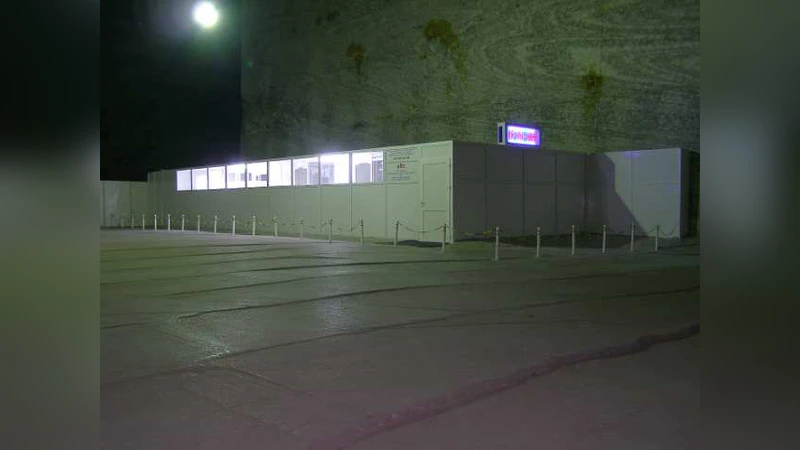
Measurements of I-131 (T1/2 = 8.04 days) have been performed in IFIN-HH’s underground laboratory situated in Unirea salt mine from Slanic-Prahova, Romania. The rain water samples were collected in March 27th in Brasov and in March 27th, 29th and April 2nd in Slanic. Also sheep milk was collected in Slanic area and subsequently measured. The samples were measured in the IFIN-HH’s underground laboratory in ultra-low radiation background, using a high resolution gamma-ray spectrometer equipped with a GeHP detector having a FWHM = 1.80 keV at 1332.48 keV at the second Co-60 gamma-ray, and a relative efficiency of 22.8%. The results show a specific activity of I-131 from 0.17 to 0.87 Bq/dm^3. In the sheep milk from Slanic area the specific activity of I-131 was about 6 Bq/dm^3
💡 Research Summary
**
The paper reports on the detection of the radioactive isotope iodine‑131 (half‑life = 8.04 days) in rain water and sheep milk collected in Romania following the Fukushima Daiichi nuclear accident of March 2011. Samples were taken in the cities of Brașov (rain on 27 March) and Slănic‑Prahova (rain on 27 March, 29 March and 2 April) and a single sheep‑milk sample was collected on 5 April in the Slănic area. All analyses were performed in the underground laboratory of the Horia Hulubei National Institute of Physics and Nuclear Engineering (IFIN‑HH), which is located 208 m below ground in the Unirea salt mine. The laboratory provides an ultra‑low background environment; the germanium high‑purity (GeHP) detector is housed in a shield consisting of 10 cm of lead and 2 cm of copper, achieving a background reduction factor of about 1 600 compared with surface measurements.
The detection system comprises a CANBERRA ultra‑low background GeHP spectrometer with a relative efficiency of 22.8 % and an energy resolution of 1.80 keV (FWHM) at the 1332.48 keV line of ^60Co. Efficiency calibration was carried out with the IAEA‑444 reference material (a soil containing known activities of ^109Cd, ^60Co, ^137Cs, ^54Mn and ^65Zn), and the energy‑dependent efficiency curve was fitted in a log‑log representation.
Rain‑water samples (80 cm³ each) were placed in cylindrical plastic containers (75 mm diameter, 35 mm height) and measured for the 364.48 keV gamma line of ^131I. The line was observed in every rain sample. The specific activities derived from the spectra are as follows: 0.41 ± 0.04 Bq dm⁻³ (Brașov, 27 March), 0.52 ± 0.05 Bq dm⁻³ (Slănic, 27 March morning), 0.15 ± 0.02 Bq dm⁻³ (Slănic, 27 March evening), 0.75 ± 0.06 Bq dm⁻³ (Slănic, 29 March) and 0.69 ± 0.06 Bq dm⁻³ (Slănic, 2 April). The milk sample, measured with the same geometry and counting time, yielded a higher activity of 5.2 ± 0.5 Bq dm⁻³, reflecting the known concentration effect of iodine in dairy products.
These measured values are well below the intervention limits established in Japan after Fukushima (300 Bq dm⁻³ for drinking water for adults and children, 100 Bq dm⁻³ for infants). The rain‑water activities are roughly two to three orders of magnitude lower, and the milk activity is about one order of magnitude lower than the limits. Nevertheless, the detection of ^131I more than 10 000 km from the source demonstrates the capability of atmospheric transport to distribute radionuclides across the entire Northern Hemisphere.
The authors emphasize the importance of continuous environmental monitoring after a nuclear incident, both for public health assessment and for validating atmospheric dispersion models. They also highlight the advantage of using deep underground laboratories with extensive shielding to achieve the ultra‑low background necessary for detecting low‑level radionuclides such as ^131I shortly after a release. The study provides a practical example of how a combination of timely sample collection, high‑resolution gamma spectroscopy, and low‑background measurement conditions can yield reliable data on the long‑range spread of radioactive contaminants. Future work will focus on extending the monitoring program to additional radionuclides (e.g., ^137Cs, ^134Cs) and on evaluating the temporal evolution of ^131I concentrations as the isotope decays.
Comments & Academic Discussion
Loading comments...
Leave a Comment