Networks of gravitational wave detectors and three figures of merit
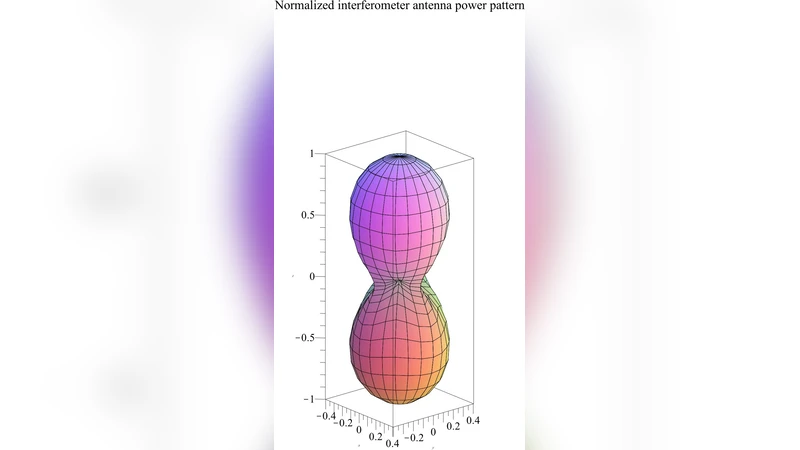
This paper develops a general framework for studying the effectiveness of networks of interferometric gravitational wave detectors and then uses it to show that enlarging the existing LIGO-VIRGO network with one or more planned or proposed detectors in Japan (LCGT), Australia, and India brings major benefits, including much larger detection rate increases than previously thought… I show that there is a universal probability distribution function (pdf) for detected SNR values, which implies that the most likely SNR value of the first detected event will be 1.26 times the search threshold. For binary systems, I also derive the universal pdf for detected values of the orbital inclination, taking into account the Malmquist bias; this implies that the number of gamma-ray bursts associated with detected binary coalescences should be 3.4 times larger than expected from just the beaming fraction of the gamma burst. Using network antenna patterns, I propose three figures of merit that characterize the relative performance of different networks… Adding {\em any} new site to the planned LIGO-VIRGO network can dramatically increase, by factors of 2 to 4, the detected event rate by allowing coherent data analysis to reduce the spurious instrumental coincident background. Moving one of the LIGO detectors to Australia additionally improves direction-finding by a factor of 4 or more. Adding LCGT to the original LIGO-VIRGO network not only improves direction-finding but will further increase the detection rate over the extra-site gain by factors of almost 2, partly by improving the network duty cycle… Enlarged advanced networks could look forward to detecting three to four hundred neutron star binary coalescences per year.
💡 Research Summary
The paper presents a unified analytical framework for evaluating the performance of networks of interferometric gravitational‑wave detectors under the simplifying assumptions that all detectors have identical sensitivity, identical duty cycles, and uncorrelated Gaussian noise. By separating the detector‑specific scaling (the “visibility distance”) from the purely geometric antenna pattern, the author shows that the relative performance of any two networks observing the same source population is independent of the detailed waveform or source physics.
Two universal probability density functions are derived. First, the distribution of detected signal‑to‑noise ratios (SNR) follows a ρ⁻⁴ law above the detection threshold ρ_min, implying that the most probable SNR of the first detected event will be 1.26 ρ_min, the median will be 2¹⁄³ ρ_min, and the mean will be 1.5 ρ_min. Second, for binary coalescences the observed distribution of orbital inclination angles is also universal, peaking near ±30°, and leads to the prediction that the number of gamma‑ray bursts (GRBs) associated with detected binaries will be 3.4 times larger than expected from the beaming fraction alone.
To quantify network performance the author introduces three figures of merit (FoMs):
-
Triple Detection Rate (3DR) – the expected rate at which a network (or any of its sub‑networks of three or more separated detectors) can detect events, incorporating both the accessible detection volume (∝ visibility distance³) and the duty cycle of the individual interferometers.
-
Sky Coverage (SC) – the fraction of the celestial sphere over which the network’s antenna pattern exceeds 1/√2 of its maximum, providing a measure of isotropy.
-
Localization Accuracy (LA) – the average sky‑position error ellipse area obtained from coherent triangulation and polarization reconstruction, reflecting how precisely a network can pinpoint a source.
Applying these FoMs to realistic configurations, the paper compares the current LIGO‑Virgo network with several plausible extensions: adding the Japanese LCGT detector, moving one LIGO instrument to Australia, and installing a detector in India. The results show that any additional site roughly doubles to quadruples the 3DR because coherent analysis can suppress spurious coincidences and exploit redundancy. Relocating a LIGO detector to Australia improves sky localization by a factor of four or more, while the inclusion of LCGT yields an extra ~2× increase in detection rate beyond the simple “extra‑site” gain, partly due to improved duty cycle. A full four‑site network (LIGO‑Virgo + LCGT + Australia + India) reduces the typical error‑ellipse area by a factor of seven and boosts the detection rate by another 2.4× relative to the three‑site baseline.
The author estimates that such an enlarged advanced network could observe 300–400 neutron‑star binary coalescences per year, opening the era of routine gravitational‑wave astronomy. The analytical approach provides quick, model‑independent insight into how network geometry, detector uptime, and coherent data analysis combine to determine scientific yield, offering a practical tool for future planning and cost‑benefit assessments of new detector sites.
Comments & Academic Discussion
Loading comments...
Leave a Comment