A Catalog of Chandra X-ray Sources in the Carina Nebula
We present a catalog of ~14,000 X-ray sources observed by the ACIS instrument on the Chandra X-ray Observatory within a 1.42 square degree survey of the Great Nebula in Carina, known as the Chandra Carina Complex Project (CCCP). This study appears in a Special Issue of the ApJS devoted to the CCCP. Here, we describe the data reduction and analysis procedures performed on the X-ray observations, including calibration and cleaning of the X-ray event data, point source detection, and source extraction. The catalog appears to be complete across most of the field to an absorption-corrected total-band luminosity of ~10^{30.7} erg/s for a typical low-mass pre-main sequence star. Counterparts to the X-ray sources are identified in a variety of visual, near-infrared, and mid-infrared surveys. The X-ray and infrared source properties presented here form the basis of many CCCP studies of the young stellar populations in Carina.
💡 Research Summary
The paper presents the Chandra Carina Complex Project (CCCP) catalog, a comprehensive list of approximately 14,000 X‑ray point sources detected across a 1.42 deg² region encompassing the Great Nebula in Carina. The authors describe in detail the data reduction, source detection, extraction, and multi‑wavelength counterpart identification procedures that underpin the catalog, providing a foundation for numerous subsequent studies of the young stellar populations in this massive star‑forming complex.
Observations and Data Preparation
The CCCP consists of 38 ACIS‑I pointings obtained between 2004 and 2010, totaling 1.2 Ms of exposure time. All event files were reprocessed with the latest calibration database (CALDB 3.4.2 for event processing and CALDB 4.1.1 for auxiliary products). A bifurcated cleaning strategy was employed to mitigate instrumental background, especially the “afterglow” phenomenon where groups of events appear at nearly identical detector locations in consecutive frames. Heavily‑cleaned data were used for source detection, while lightly‑cleaned data were retained for photometric extraction to avoid discarding genuine source photons from bright objects.
Source Detection
Two complementary detection algorithms were applied to each pointing. First, the standard CIAO tool wavdetect was run on three energy bands (0.5–2 keV, 2–7 keV, 0.5–7 keV) and four pixel scales, generating an initial list of candidate sources. Second, a Lucy‑Richardson deconvolution was performed on the full 0.5–8 keV band, tiled into 1.5′ × 1.5′ regions where the Chandra point‑spread function (PSF) is approximately constant; peaks in the deconvolved images were added to the candidate list. No external (optical/IR) priors were used in the detection stage.
Extraction and Validation
All candidates were processed with the ACIS Extract (AE) package. For each source, AE selected a subset of the available observations that minimized positional uncertainty (for astrometry) or maximized detection significance (for source existence). The detection significance is quantified by the probability of the no‑source hypothesis (ProbNoSrc) computed separately for the total, soft, and hard bands; a source is retained if SrcCounts ≥ 3 and the minimum ProbNoSrc < 0.01. Iterative pruning and re‑extraction continued until no further candidates fell below this threshold.
Photometric quantities (net counts, median photon energy, apparent photon flux, and apparent energy flux) are provided for the total (0.5–8 keV), soft (0.5–2 keV), and hard (2–8 keV) bands. Net counts and their 68 % confidence intervals are derived using the CIAO aprates tool. The catalog also lists exposure‑corrected effective areas (MeanEffectiveArea) and background scaling factors, enabling users to reconstruct calibrated fluxes.
Multi‑wavelength Counterparts
Positions were cross‑matched with visual, near‑infrared (2MASS, VISTA), and mid‑infrared (Spitzer) surveys. Matching radii were chosen based on the positional error circles, and statistical assessments of false‑match probabilities were performed. Counterpart information includes photometry, source classifications (e.g., pre‑main‑sequence star, OB star, Wolf‑Rayet star), and flags indicating ambiguous matches.
Completeness and Reliability
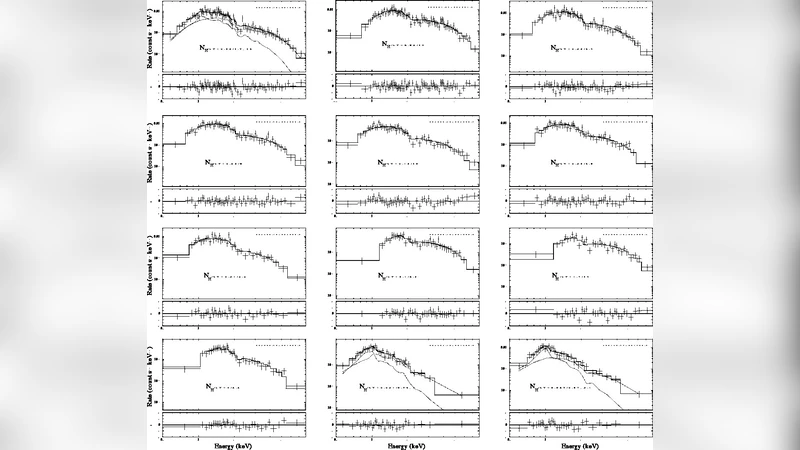
The catalog is essentially complete for typical low‑mass pre‑main‑sequence stars down to an absorption‑corrected total‑band luminosity of ~10^30.7 erg s⁻¹ (≈ 0.5 M⊙ at the distance of Carina). The authors separate sources into “primary” (ProbNoSrc min < 0.003) and “tentative” (0.003 < ProbNoSrc min < 0.01) subsets to convey reliability. High‑quality spectra (≥ 500 net counts) are available for only a few dozen sources, most of which are known or candidate OB or Wolf‑Rayet stars; these are discussed in companion CCCP papers.
Scientific Impact
The CCCP catalog provides the most extensive X‑ray view of the Carina Nebula to date, revealing the spatial distribution of young stellar clusters, isolated groups, and massive stars. It serves as the primary X‑ray dataset for subsequent investigations of stellar ages, mass functions, feedback effects, and the interaction between massive stars and the surrounding interstellar medium. The rigorous data‑processing pipeline—particularly the dual‑cleaning approach, combined detection strategy, and AE‑based extraction—offers a template for future large‑scale Chandra surveys of complex star‑forming regions.
In summary, this work delivers a meticulously vetted X‑ray source catalog, complete with photometric, spectroscopic, and multi‑wavelength counterpart information, and establishes a robust methodological framework that will underpin a broad range of astrophysical studies of the Carina Nebula and similar massive star‑forming complexes.
Comments & Academic Discussion
Loading comments...
Leave a Comment