Near-infrared jet emission in the microquasar XTE J1550-564
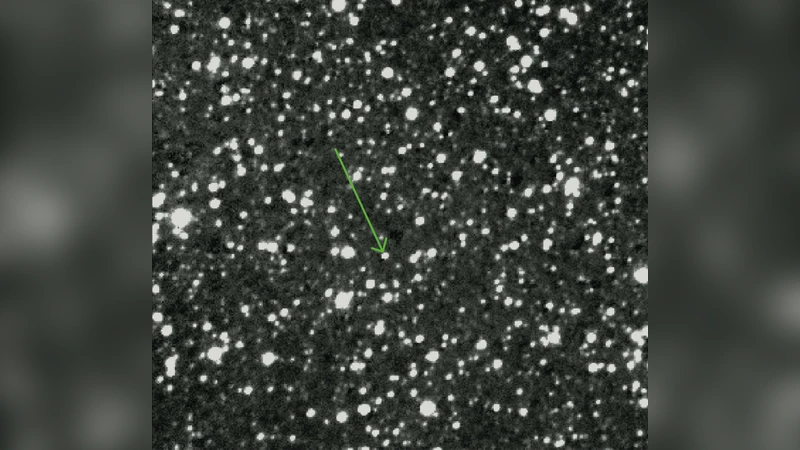
Context: Microquasars are accreting Galactic sources that are also observed to launch relativistic jets. A key signature of the ejection is non-thermal radio emission. The level of this jet component at high frequencies is still poorly constrained. Aims: The X-ray binary and microquasar black hole candidate XTE J1550-564 exhibited a faint X-ray outburst in April 2003 during which it stayed in the X-ray low/hard state. We took optical and near-infrared (NIR) observations with the ESO/NTT telescope during this outburst to disentangle the various contributions to the spectral energy distribution (SED) and investigate the presence of a jet component. Methods: Photometric and spectroscopic observations allowed us to construct an SED and also to produce a high time-resolution lightcurve. Results: The SED shows an abrupt change of slope from the NIR domain to the optical. The NIR emission is attributed to non-thermal synchrotron emission from the compact, self-absorbed jet that is known to be present in the low/hard state. This is corroborated by the fast variability, colours, lack of prominent spectral features and evidence for intrinsic polarisation. The SED suggests the jet break from the optically thick to the thin regime occurs in the NIR. Conclusions: The simultaneous optical-NIR data allow an independent confirmation of jet emission in the NIR. The transition to optically thin synchrotron occurs at NIR frequencies or below, which leads to an estimated characteristic size greater than 2x10^8cm and magnetic field less than 5T for the jet base, assuming a homogeneous one-zone synchrotron model.
💡 Research Summary
The paper presents a detailed multi‑wavelength study of the microquasar XTE J1550‑564 during its faint 2003 outburst, which remained in the low/hard X‑ray state. Using the ESO New Technology Telescope (NTT) at La Silla, the authors obtained simultaneous optical (B, V, R, I, Z) and near‑infrared (J, H, Kₛ) photometry, rapid Kₛ‑band light curves with a time resolution of ~3 seconds, low‑resolution NIR spectroscopy (0.95–2.52 µm), and optical spectroscopy. Standard IRAF reduction procedures were applied, and photometric calibration was performed with Persson NIR standards and PG optical standards. Interstellar extinction was estimated from a Chandra‑derived hydrogen column density N_H = 0.88 × 10²² cm⁻², yielding A_V ≈ 4.9 mag; extinction at each wavelength was computed using the Cardelli law.
The resulting spectral energy distribution (SED) shows a clear break between the NIR and optical regimes. After dereddening, the NIR points follow a relatively flat (or slightly rising) power‑law with spectral index α ≈ +0.3 (F_ν ∝ ν⁻α), while the optical points follow a steeply falling power‑law with α ≈ ‑1.3. This abrupt change of slope cannot be explained by a single thermal component; instead, the NIR emission is interpreted as optically thin synchrotron radiation from the compact, self‑absorbed jet that is known to exist in the low/hard state. The optical emission is consistent with the Rayleigh‑Jeans tail of a multicolour accretion‑disk blackbody, i.e., thermal radiation from the outer disk.
Additional evidence for a jet origin in the NIR includes: (1) rapid variability in the Kₛ light curve (≈ 0.1 mag fluctuations on a few‑second timescale), characteristic of internal jet turbulence or shock acceleration; (2) the detection of intrinsic linear polarization in the Kₛ band (reported in a companion paper), indicating ordered magnetic fields typical of synchrotron sources; (3) the lack of strong spectral lines in both optical and NIR spectra, which would be expected from a stellar or disk contribution.
Assuming a homogeneous one‑zone synchrotron model, the authors locate the jet spectral break (transition from optically thick to thin) near the H‑band (∼1.6 µm) or possibly at longer wavelengths in the mid‑infrared. Using standard synchrotron relations, the break frequency ν_break ≈ 10¹⁴ Hz implies a characteristic emitting region size R > 2 × 10⁸ cm and a magnetic field strength B < 5 Tesla at the jet base. These constraints are consistent with a relatively large, weakly magnetized jet base during a low‑luminosity hard state.
The paper also places the NIR data in a broader context by comparing with archival radio measurements from the 2002 mini‑outburst (which had a similar X‑ray flux) and with the simultaneous ASM X‑ray count rate. The extrapolation of the flat/inverted radio spectrum to NIR frequencies matches the observed NIR flux, while the extrapolation of the X‑ray power‑law (photon index ≈ 1.6) to lower frequencies aligns with the optical data, reinforcing the picture of a broadband jet contribution spanning radio to NIR.
In conclusion, the authors provide compelling, multi‑faceted evidence that the NIR emission of XTE J1550‑564 during its 2003 low/hard outburst is dominated by synchrotron radiation from a compact jet. The detection of a spectral break in the NIR, together with rapid variability and intrinsic polarization, offers a rare direct probe of jet physics at frequencies higher than the traditional radio domain. This work demonstrates that even modest X‑ray outbursts can reveal jet signatures, and it underscores the importance of simultaneous optical–NIR observations for disentangling jet, disk, and companion contributions in microquasars. Future coordinated campaigns extending into the mid‑infrared and radio bands will be essential to pinpoint the exact break frequency and to refine models of particle acceleration and magnetic field structure in these relativistic outflows.
Comments & Academic Discussion
Loading comments...
Leave a Comment