Review on latest progress on Supergiant Fast X-ray Transients and future direction
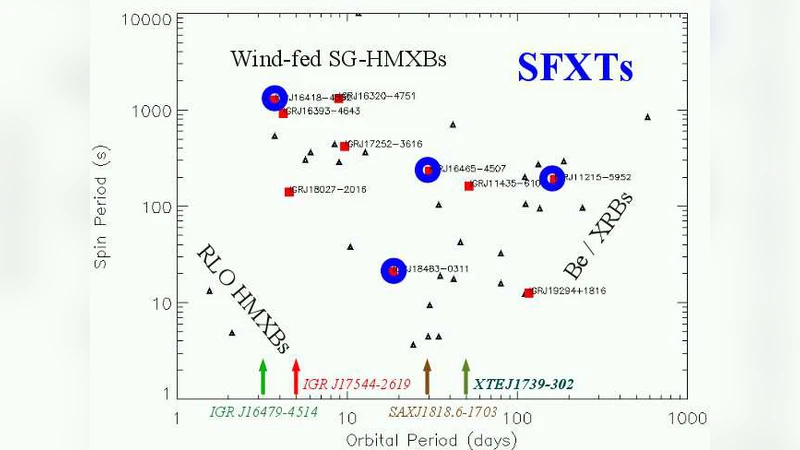
In the recent years, the discovery of a new class of Galactic transients with fast and bright flaring X-ray activity, the Supergiant Fast X-ray Transients, has completely changed our view and comprehension of massive X-ray binaries. These objects display X-ray outbursts which are difficult to be explained in the framework of standard theories for the accretion of matter onto compact objects, and could represent a dominant population of X-ray binaries. I will review their main observational properties (neutron star magnetic field, orbital and spin period, long term behavior, duty cycle, quiescence and outburst emission), which pose serious problems to the main mechanisms recently proposed to explain their X-ray behavior. I will discuss both present results and future perspectives with the next generation of X-ray telescopes.
💡 Research Summary
Supergiant Fast X‑ray Transients (SFXTs) have emerged over the past decade as a distinct class of high‑mass X‑ray binaries that defy the conventional picture of steady wind‑fed accretion onto a neutron star. Their defining phenomenology consists of brief (hundreds to a few thousand seconds) outbursts reaching luminosities of 10³⁶–10³⁸ erg s⁻¹, interspersed with long periods of quiescence or low‑level emission (10³¹–10³³ erg s⁻¹). The duty cycle is typically below one percent, indicating that the majority of the time the system is in a suppressed state.
Observationally, SFXTs display a wide range of neutron‑star spin periods (∼5 s to >2000 s) and orbital periods (∼3 d to >30 d), with a few extreme cases such as IGR J17544‑2619 that combine a 4.9 h orbit with a 71 s spin. The companion stars are O/B supergiants losing mass at rates of 10⁻⁶–10⁻⁵ M⊙ yr⁻¹ through fast (∼1000–2000 km s⁻¹) winds. Magnetic field estimates, inferred from indirect arguments, lie in the 10¹²–10¹³ G range, although direct cyclotron line detections remain scarce.
Three principal theoretical frameworks have been advanced to explain the rapid, high‑contrast variability:
-
Clumpy wind accretion – dense, stochastic wind clumps intermittently feed the neutron star. While this model naturally produces sporadic flares, the observed flare rate exceeds what is expected from standard wind‑clumping statistics, and the spectral evolution (hardening, appearance of electron‑positron pair signatures) cannot be reproduced by a simple density jump.
-
Magnetospheric gating (magnetic barrier) – the Alfvén radius oscillates around the corotation radius due to variations in wind density and neutron‑star spin. When the magnetosphere expands beyond corotation, accretion is halted; when it contracts, a sudden inflow triggers a flare. This scenario accounts for the correlation between spin period and flare duration, but struggles to explain the extreme hard X‑ray tails (>20 keV) observed during outbursts and the rapid disappearance of Fe Kα absorption during quiescence.
-
Transitional propeller – the neutron star alternates between a propeller regime (centrifugal inhibition) and a direct‑accretion regime as the instantaneous mass‑capture rate fluctuates. This model reproduces the abrupt switch between high and low luminosity states and the low equivalent width of iron lines in quiescence, yet the lack of a clear orbital‑phase dependence of flares suggests that additional geometry‑dependent effects (e.g., anisotropic wind streams or phase‑locked clumps) are at play.
Multi‑wavelength campaigns have added further constraints. Optical/IR spectroscopy refines the wind parameters of the supergiant donors, while radio monitoring has occasionally detected transient synchrotron emission coincident with X‑ray flares, hinting at particle acceleration in the magnetospheric boundary. High‑energy γ‑ray observatories (e.g., Fermi‑LAT, H.E.S.S.) have reported marginal detections of >100 MeV photons simultaneous with the brightest X‑ray outbursts, suggesting that magnetic reconnection or shock acceleration may contribute to the emission budget.
Looking ahead, the next generation of X‑ray facilities—XRISM with its high‑resolution Resolve spectrometer and Athena’s X‑IFU—will enable precise measurements of line profiles (Fe Kα, Ni Kα) and, crucially, the search for cyclotron resonance scattering features that would directly determine the neutron‑star magnetic field. Continuous monitoring with wide‑field instruments (e.g., eROSITA, SVOM) will improve flare statistics and allow a robust assessment of any orbital‑phase modulation. Coordinated observations across the electromagnetic spectrum (SKA, LSST, CTA) will probe the temporal relationship between X‑ray flares, radio jets, and γ‑ray bursts, testing whether SFXTs host transient relativistic outflows.
On the theoretical side, fully three‑dimensional magnetohydrodynamic simulations that couple realistic, anisotropic supergiant winds with a rotating, magnetized neutron star are required. Radiative transfer post‑processing will be essential to compare simulated spectra with the observed hard‑X‑ray tails and pair‑production signatures. By narrowing the parameter space (wind clump size distribution, magnetic field strength, spin period), these models can be confronted with the forthcoming high‑precision data.
If SFXTs indeed represent a substantial fraction (potentially >10 %) of the Galactic high‑mass X‑ray binary population, they will reshape our understanding of massive binary evolution, wind accretion physics, and the end‑states of massive stars. The synergy of next‑generation observatories and advanced simulations promises to resolve the long‑standing puzzles of SFXTs and to establish them as laboratories for extreme accretion physics in the strong‑gravity, strong‑magnetic‑field regime.
Comments & Academic Discussion
Loading comments...
Leave a Comment