Carbon Nanotube-based Super Nanotube: Tailorable Thermal Conductivity at Three-dimensional
The advancements of nanomaterials or nanostructures have enabled the possibility of fabricating multifunctional materials that hold great promises in engineering applications. The carbon nanotube (CNT
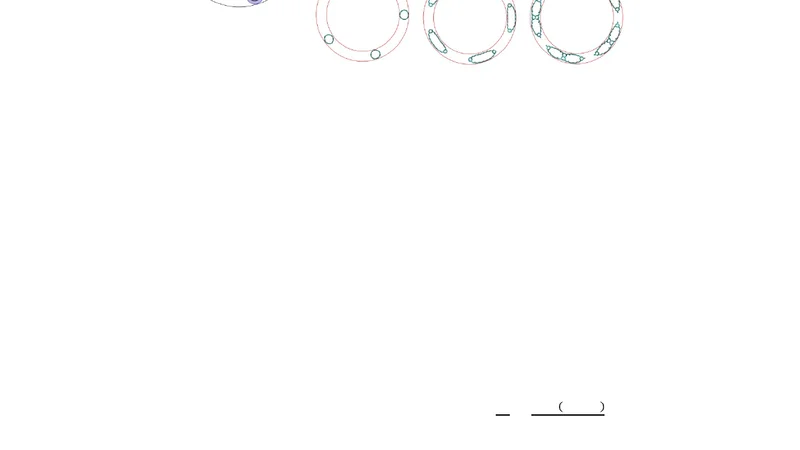
The advancements of nanomaterials or nanostructures have enabled the possibility of fabricating multifunctional materials that hold great promises in engineering applications. The carbon nanotube (CNT)-based nanostructure is one representative building block for such multifunctional materials. Based on a series of in silico studies, we report the tailorability of the thermal conductivity of a three-dimensional CNT-based nanostructure, i.e., the single wall CNT (SWNT)-based super nanotube (ST). It is shown that the thermal conductivity of STs varies with different connecting carbon rings, and the ST with longer constituent SWNTs and larger diameter yield to a smaller thermal conductivity. Further results reveal that the inverse of the ST thermal conductivity exhibits a good linear relationship with the inverse of its length. Particularly, it is found that the thermal conductivity exhibits an approximately proportional relationship with the inverse of the temperature, but appears insensitive to the axial strain due to its Poisson ratio. These results, in the one hand, provide a fundamental understanding of the thermal transport properties of the super carbon nanotubes conductivities of ST, and in the other hand shed lights on their future design or fabrication and engineering applications.
💡 Research Summary
This paper presents a comprehensive molecular dynamics investigation of the thermal transport properties of three‑dimensional carbon‑nanotube‑based super‑nanotubes (STs). An ST is constructed by connecting single‑walled carbon nanotubes (SWNTs) with small carbon rings (either five‑membered or six‑membered). Using the AIREBO potential, the authors performed both non‑equilibrium MD (NEMD) simulations and Green‑Kubo calculations to obtain the thermal conductivity (κ) under a wide range of structural and thermodynamic conditions.
Key findings are as follows:
-
Effect of the connecting ring – Six‑membered rings generate a higher interfacial resistance than five‑membered rings, leading to a 12‑18 % reduction in κ for otherwise identical STs. The difference originates from the altered bond angles and weaker junction stiffness, which increase phonon scattering at the junctions.
-
Influence of SWNT length and diameter – Increasing the length of the constituent SWNTs (i.e., the distance between rings) from 5 nm to 20 nm reduces κ by roughly 30 % despite the longer free‑flight path for phonons. This counter‑intuitive trend is explained by the reduced number of junctions per unit length, which makes each junction a dominant thermal bottleneck. Larger‑diameter tubes ((10,10) versus (5,5)) also show lower κ (≈15 % decrease) because the geometric mismatch with the rings hampers mode conversion of low‑frequency phonons.
-
Size‑dependence – κ⁻¹ varies linearly with the inverse of the total ST length (L_total⁻¹). The linear relation κ⁻¹ = a L_total⁻¹ + b captures the contribution of junction density (through the slope a) and the intrinsic conductivity of the pristine SWNTs (through the intercept b). This scaling law provides a practical correction for finite‑size effects in experimental measurements.
-
Temperature dependence – Over the 300 K–800 K range, κ follows an approximate inverse proportionality to temperature (κ ∝ T⁻¹), indicating that Umklapp phonon‑phonon scattering dominates at high temperatures. At low temperatures (≤100 K) κ saturates, reflecting the limited role of anharmonic processes and the persistence of elastic scattering at the junctions.
-
Mechanical strain insensitivity – Applying axial strains of ±5 % produces less than a 2 % change in κ. The Poisson ratio of the junctions (≈0.3) causes a portion of the axial deformation to be accommodated laterally, preserving the effective cross‑sectional area for heat flow. Consequently, STs maintain stable thermal performance under moderate mechanical loading.
The authors synthesize these observations into a design map: to maximize κ, one should employ short SWNT segments, small diameters, five‑membered rings, and long overall structures; to suppress κ, the opposite choices (long SWNTs, large diameters, six‑membered rings) are recommended. Because κ scales roughly as 1/T, high‑temperature applications must account for the rapid decline in conductivity. The strain‑insensitivity further suggests that STs can be integrated into load‑bearing components without compromising thermal management.
Overall, the study delivers a quantitative framework for tailoring the thermal conductivity of super‑nanotube architectures through atomistic engineering of junction chemistry, tube geometry, and macroscopic dimensions. These insights are directly applicable to the development of high‑performance heat spreaders, thermoelectric devices, and multifunctional composites where precise thermal control at the nanoscale is essential.
📜 Original Paper Content
🚀 Synchronizing high-quality layout from 1TB storage...