The X-Ray Polarization Signature of Quiescent Magnetars: Effect of Magnetospheric Scattering and Vacuum Polarization
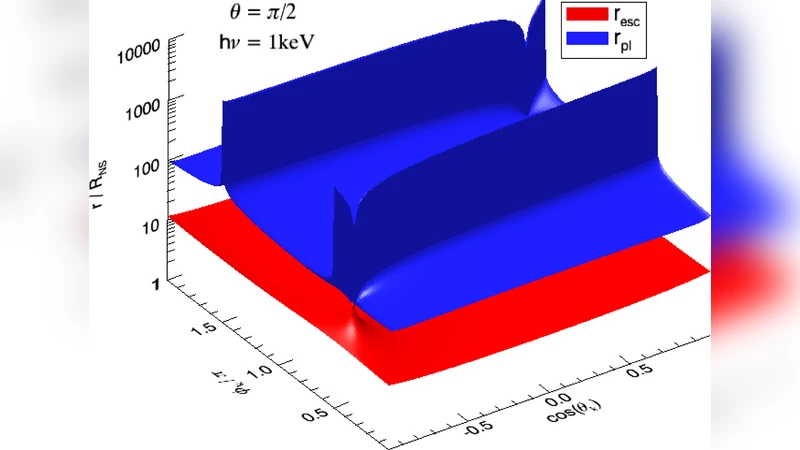
In the magnetar model, the quiescent non-thermal soft X-ray emission from Anomalous X-ray Pulsars and Soft-Gamma Repeaters is thought to arise from resonant comptonization of thermal photons by charges moving in a twisted magnetosphere. Robust inference of physical quantities from observations is difficult, because the process depends strongly on geometry and current understanding of the magnetosphere is not very deep. The polarization of soft X-ray photons is an independent source of information, and its magnetospheric imprint remains only partially explored. In this paper we calculate how resonant cyclotron scattering would modify the observed polarization signal relative to the surface emission, using a multidimensional Monte Carlo radiative transfer code that accounts for the gradual coupling of polarization eigenmodes as photons leave the magnetosphere. We employ a globally-twisted, self-similar, force-free magnetosphere with a power-law momentum distribution, assume a blackbody spectrum for the seed photons, account for general relativistic light deflection close to the star, and assume that vacuum polarization dominates the dielectric properties of the magnetosphere. The latter is a good approximation if the pair multiplicity is not much larger than unity. Phase-averaged polarimetry is able to provide a clear signature of the magnetospheric reprocessing of thermal photons and to constrain mechanisms generating the thermal emission. Phase-resolved polarimetry, in addition, can characterize the spatial extent and magnitude of the magnetospheric twist angle at ~100 stellar radii, and discern between uni- or bidirectional particle energy distributions, almost independently of every other parameter in the system. We discuss prospects for detectability with GEMS.
💡 Research Summary
The paper investigates how resonant cyclotron scattering (RCS) in a twisted magnetosphere and vacuum birefringence shape the X‑ray polarization of quiescent magnetars. The authors extend a multidimensional Monte‑Carlo radiative‑transfer code originally developed by Fernández & Thompson (2007) to include full Stokes propagation, general‑relativistic light bending, and the gradual coupling of the ordinary and extraordinary polarization eigenmodes as photons escape the magnetosphere.
The magnetospheric geometry is modeled with the self‑similar, force‑free, globally‑twisted dipole solution of Thompson et al. (2002). The twist is parameterized either by the net twist angle Δφ_NS between the northern and southern magnetic footpoints or by the index p that interpolates between a pure dipole (p = 1) and a split monopole (p = 0). The current density follows from the twist and is tied to a particle population whose momentum distribution is a simple power law, f(γβ) ∝ (γβ)^{−α}, with α = −2, a minimum velocity β_min = 0, and a variable maximum Lorentz factor γ_max. Both unidirectional (electrons flowing from one magnetic pole to the other) and bidirectional (electron‑positron plasma) charge flows are considered, allowing the authors to explore the impact of charge sign on the scattering and polarization.
Resonant scattering is treated using the exact resonant cross‑section, which includes the relativistic Doppler shift ω_D = ω_c γ (1 − β μ) and the polarization‑dependent overlap factors |e_±|² for left‑ and right‑handed circular modes. The optical depth τ_res is computed by integrating over the particle momentum distribution and accounting for the spatial variation of the magnetic field. The authors improve upon earlier work by pulling the average particle velocity |β̄| out of the integral, which simplifies the expression without altering the physical outcome.
A crucial aspect of the study is the treatment of vacuum polarization. Assuming the pair multiplicity is of order unity, the dielectric tensor is dominated by QED vacuum effects, which dictate that the ordinary (O) and extraordinary (X) modes couple gradually as the photon propagates outward. The code follows this adiabatic‑to‑non‑adiabatic transition, allowing the generation of a circular Stokes V component that would be missed in a fixed‑mode approximation.
General relativistic light bending in a Schwarzschild spacetime is incorporated, so photon trajectories near the stellar surface are correctly deflected, altering the local emission angles and thus the scattering geometry. This effect is essential for accurate phase‑resolved predictions.
The simulation suite explores a wide parameter space: magnetic field strengths B_pole ≈ 10^{14}–10^{15} G, twist angles Δφ_NS = 0–π, γ_max = 10–10³, and observer geometry (inclination α and viewing angle ζ). Results show that phase‑averaged polarization degree (PD) rises from ~10 % for untwisted fields to ~30 % for Δφ_NS ≈ π, reflecting the increased number of scatterings that preferentially populate the O‑mode. Phase‑resolved PD and polarization angle (PA) exhibit strong modulation with rotation phase. In the bidirectional charge case, the PA flips by ~180° around half‑phase, a signature of opposite circular polarization contributions from electrons and positrons. In the unidirectional case, PA varies smoothly and PD is generally lower. Increasing γ_max enhances scattering optical depth, raising PD until saturation occurs when the magnetosphere becomes optically thick to resonant scattering.
The authors also compare vacuum‑dominated propagation with a hypothetical plasma‑dominated regime. When plasma contributions become significant, the mode‑coupling radius moves inward, reducing PD and suppressing the circular component, but such conditions require a pair multiplicity far exceeding unity, which the present model deliberately avoids.
Finally, the paper assesses detectability with the proposed Gravity and Extreme Magnetism Small Explorer (GEMS) mission. For several bright magnetar candidates (e.g., 4U 0142+61, 1E 1841‑045, SGR 1900+14), the predicted PD lies between 5 % and 20 % in the 2–10 keV band. With an assumed Minimum Detectable Polarization of ~1 % for a 10⁶ s exposure, GEMS could measure both phase‑averaged and phase‑resolved polarization for these sources, thereby constraining Δφ_NS, γ_max, and the charge flow direction independently of spectral fitting.
In conclusion, the study demonstrates that X‑ray polarimetry offers a powerful, largely geometry‑independent probe of magnetar magnetospheres. By jointly modeling resonant scattering, vacuum birefringence, and relativistic light bending, the authors provide a framework that can translate future polarization measurements into quantitative constraints on magnetic twist, particle energetics, and plasma composition. Further work incorporating higher pair multiplicities and more realistic surface emission models will refine these predictions and fully exploit the diagnostic potential of upcoming X‑ray polarimeters.
Comments & Academic Discussion
Loading comments...
Leave a Comment