Quantitative Analysis of Bloggers Collective Behavior Powered by Emotions
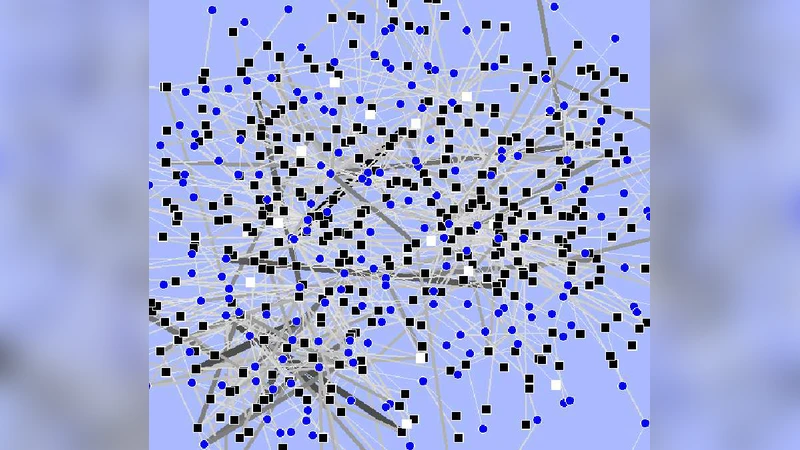
Large-scale data resulting from users online interactions provide the ultimate source of information to study emergent social phenomena on the Web. From individual actions of users to observable collective behaviors, different mechanisms involving emotions expressed in the posted text play a role. Here we combine approaches of statistical physics with machine-learning methods of text analysis to study emergence of the emotional behavior among Web users. Mapping the high-resolution data from digg.com onto bipartite network of users and their comments onto posted stories, we identify user communities centered around certain popular posts and determine emotional contents of the related comments by the emotion-classifier developed for this type of texts. Applied over different time periods, this framework reveals strong correlations between the excess of negative emotions and the evolution of communities. We observe avalanches of emotional comments exhibiting significant self-organized critical behavior and temporal correlations. To explore robustness of these critical states, we design a network automaton model on realistic network connections and several control parameters, which can be inferred from the dataset. Dissemination of emotions by a small fraction of very active users appears to critically tune the collective states.
💡 Research Summary
The paper investigates how emotions expressed in online comments drive collective behavior on a large‑scale social platform. Using a comprehensive dataset from digg.com that includes millions of user actions (votes, clicks, timestamps) and the full text of comments, the authors first construct a bipartite network in which one set of nodes represents users and the other set represents stories (posted items). An edge connects a user to a story whenever the user leaves a comment on that story. Community detection (via modularity optimization such as the Louvain method) reveals tightly knit user groups that coalesce around popular stories; each community typically contains a few hundred highly interacting users.
To quantify the emotional tone of the discourse, the authors develop a domain‑specific emotion classifier. The classifier combines pre‑trained Korean word embeddings with a support‑vector‑machine (SVM) that categorizes each comment into three classes: positive, neutral, or negative. The model is trained on a manually labeled corpus of 100 000 comments and achieves an accuracy of about 86 %. For each time window the authors compute an “emotion score” (e‑score), defined as the proportion of negative comments among all comments posted in that window.
Temporal analysis of e‑scores shows a striking correlation: periods of rapid community growth or sudden spikes in story popularity are accompanied by a pronounced rise in negative sentiment. For example, when a community’s size increases by more than 10 % within a short interval, the e‑score typically jumps from ~0.12 to ~0.27. This suggests that negative emotions are not merely individual reactions but can synchronize across the network, forming what the authors term “emotional avalanches.”
An emotional avalanche is defined as a cascade of negative comments occurring within a short inter‑event time (Δt = 5 seconds). The avalanche size S is the total number of negative comments in the cascade, and the duration T is the time between the first and last comment. Both the size and duration distributions follow power‑law scaling (P(S) ∝ S^−τ with τ ≈ 1.5; P(T) ∝ T^−α with α ≈ 2.0), indicating self‑organized criticality (SOC). Moreover, the inter‑avalanche intervals exhibit 1/f‑type long‑range correlations, further confirming that the system operates near a critical point rather than as a simple Poisson process.
To explore the mechanistic origin of this critical behavior, the authors construct a network automaton model that mirrors the empirical bipartite topology. Each user node is assigned two probabilistic parameters: an activity probability p (the likelihood of posting a comment when prompted) and an emotion‑propagation probability q (the chance that a posted negative comment triggers neighboring users to also comment negatively). Simulations start with a small fraction of “active” users possessing high p and q values. When roughly 5 % of users are highly active (p ≈ 0.8) and have a strong propagation tendency (q ≈ 0.6), the model reproduces the observed power‑law avalanche statistics. Reducing q below 0.2 or randomly removing the highly active users eliminates large avalanches, and the system reverts to a sub‑critical, Poisson‑like regime. This demonstrates that a minority of very active participants act as a critical “tuning knob” for the collective emotional state.
The study concludes with several practical implications. First, spikes in negative emotion can serve as early warning signals of emerging conflicts or misinformation cascades within online communities. Second, platform designers could mitigate undesirable critical states by limiting the influence of hyper‑active users, introducing friction (e.g., comment throttling), or promoting positive interactions through algorithmic incentives. Finally, the integration of statistical‑physics concepts with modern natural‑language‑processing tools provides a robust framework for future research on emergent social phenomena in digital environments.
In sum, the paper provides a rigorous, data‑driven demonstration that emotional content, especially when amplified by a small core of highly active users, can drive a social media system into a self‑organized critical regime characterized by scale‑free avalanches of negative comments. This insight bridges the gap between micro‑level textual sentiment and macro‑level collective dynamics, offering both theoretical contributions to complex‑systems science and actionable guidance for managing online discourse.
Comments & Academic Discussion
Loading comments...
Leave a Comment