On The Origin Of The Mass-Metallicity Relation For GRB Host Galaxies
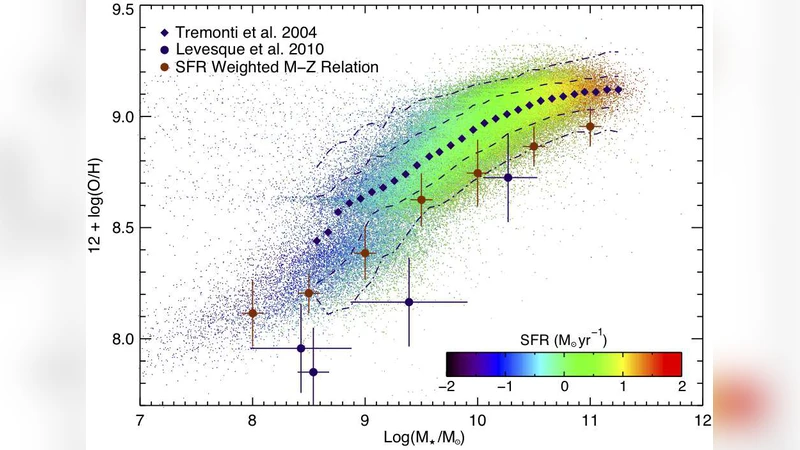
We investigate the nature of the mass-metallicity (M-Z) relation for long gamma-ray burst (LGRB) host galaxies. Recent studies suggest that the M-Z relation for local LGRB host galaxies may be systematically offset towards lower metallicities relative to the M-Z relation defined by the general star forming galaxy (SDSS) population. The nature of this offset is consistent with suggestions that low metallicity environments may be required to produce high mass progenitors, although the detection of several GRBs in high-mass, high-metallicity galaxies challenges the notion of a strict metallicity cut-off for host galaxies that are capable of producing GRBs. We show that the nature of this reported offset may be explained by a recently proposed anti-correlation between the star formation rate (SFR) and the metallicity of star forming galaxies. If low metallicity galaxies produce more stars than their equally massive, high-metallicity counterparts, then transient events that closely trace the SFR in a galaxy would be more likely to be found in these low metallicity, low mass galaxies. Therefore, the offset between the GRB and SDSS defined M-Z relations may be the result of the different methods used to select their respective galaxy populations, with GRBs being biased towards low metallicity, high SFR, galaxies. We predict that such an offset should not be expected of transient events that do not closely follow the star formation history of their host galaxies, such as short duration GRBs and SN Ia, but should be evident in core collapse SNe found through upcoming untargeted surveys.
💡 Research Summary
The paper revisits the reported offset of the mass‑metallicity (M‑Z) relation for long‑duration gamma‑ray burst (LGRB) host galaxies relative to the relation defined by the general star‑forming galaxy population in the Sloan Digital Sky Survey (SDSS). Using consistent measurements of stellar mass and gas‑phase oxygen abundance for both SDSS galaxies and a sample of local LGRB hosts, the authors confirm that LGRB hosts lie systematically below the SDSS M‑Z curve by roughly 0.2–0.4 dex at a given mass. While this has traditionally been interpreted as evidence for a metallicity threshold required to produce the massive progenitors of LGRBs, the discovery of several bursts in high‑mass, high‑metallicity systems challenges a strict cut‑off.
To resolve this tension, the authors invoke a recently proposed anti‑correlation between star‑formation rate (SFR) and metallicity at fixed stellar mass. Observational studies have shown that, for galaxies of the same mass, those with lower metal content tend to have higher gas fractions and consequently higher specific SFRs. In other words, low‑metallicity galaxies form more stars per unit mass than their metal‑rich counterparts.
Because LGRBs trace recent star formation very closely, the probability of observing an LGRB in a galaxy is proportional to its SFR. Therefore, a sample of LGRBs will be biased toward galaxies that, at a given mass, have the highest SFRs – precisely the low‑metallicity systems identified by the SFR‑Z anti‑correlation. The apparent offset in the M‑Z plane is thus a selection effect rather than a direct physical requirement for low metallicity.
The authors formalize this idea by combining an empirical SFR‑Z relation with the SDSS stellar‑mass function, deriving an expected distribution of LGRB host metallicities. The model reproduces the observed offset without invoking any hard metallicity limit. Moreover, the framework yields clear, testable predictions: transient events that do not follow the instantaneous SFR—such as short‑duration GRBs (thought to arise from compact binary mergers) and Type Ia supernovae (originating from older stellar populations)—should not exhibit a systematic M‑Z offset. In contrast, core‑collapse supernovae, which also trace recent star formation, are expected to show a similar low‑metallicity bias when identified in untargeted, wide‑field surveys (e.g., ZTF, LSST).
In summary, the paper reinterprets the LGRB host M‑Z offset as a consequence of the SFR‑metallicity anti‑correlation, emphasizing that the observed bias stems from the way host galaxies are selected rather than from an intrinsic metallicity threshold for LGRB production. This perspective unifies the apparently contradictory observations of LGRBs in both low‑ and high‑metallicity environments and provides a roadmap for future observational tests using diverse transient populations.
Comments & Academic Discussion
Loading comments...
Leave a Comment