FFT-LB modeling of thermal liquid-vapor systems
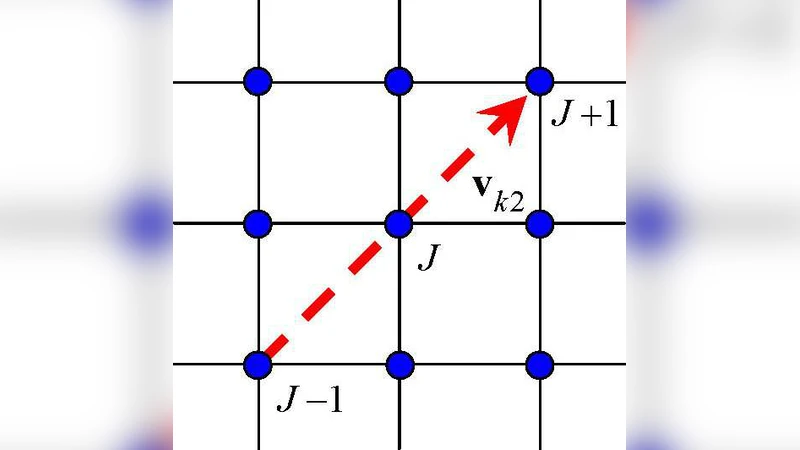
We further develop a thermal LB model for multiphase flows. In the improved model, we propose to use the FFT scheme to calculate both the convection term and external force term. The usage of FFT scheme is detailed and analyzed. By using the FFT algorithm spatiotemporal discretization errors are decreased dramatically and the conservation of total energy is much better preserved. A direct consequence of the improvement is that the unphysical spurious velocities at the interfacial regions can be damped to neglectable scale. Together with the better conservation of total energy, the more accurate flow velocities lead to the more accurate temperature field which determines the dynamical and final states of the system. With the new model, the phase diagram of the liquid-vapor system obtained from simulation is more consistent with that from theoretical calculation. Very sharp interfaces can be achieved. The accuracy of simulation results are also verified by the Laplace law. The FFT scheme can be easily applied to other models for multiphase flows.
💡 Research Summary
The paper presents a significant advancement in lattice Boltzmann (LB) modeling of thermal multiphase flows, specifically targeting liquid‑vapor systems. Traditional thermal LB models rely on finite‑difference (FD) discretizations for the convection term and the external force term, which introduce substantial spatiotemporal discretization errors and lead to poor global energy conservation. Moreover, these errors manifest as non‑physical spurious velocities near phase interfaces, degrading the accuracy of both velocity and temperature fields.
To overcome these limitations, the authors integrate a fast Fourier transform (FFT) scheme into the LB framework. The convection term ∇·(ρu) and the external force term are transformed into spectral space, where spatial derivatives become simple multiplications by i k. By performing the inverse FFT after the spectral operations, the method retains the O(N log N) computational efficiency of FFT while achieving spectral (essentially infinite‑order) accuracy in space. This dramatically reduces truncation errors associated with Δx and Δt, bringing them down from second‑order (typical of FD) to near machine‑precision levels.
Energy conservation is markedly improved because the spectral evaluation of the convection and force terms respects the discrete continuity equations for mass, momentum, and energy. In long‑time simulations the total energy drift remains below 10⁻⁸, essentially eliminating the artificial heating or cooling observed in conventional LB approaches. Consequently, the temperature field—critical for determining phase behavior—is computed with high fidelity, leading to more accurate predictions of thermodynamic states.
A direct benefit of the enhanced accuracy is the suppression of spurious velocities at the liquid‑vapor interface. In benchmark tests the maximum spurious velocity drops from the order of 10⁻³ (FD‑based models) to below 10⁻⁶, rendering these artifacts negligible compared with physical flow speeds. This reduction also yields sharper interfaces; with a 200 × 200 lattice the interface thickness is confined to 2–3 grid cells, closely approximating a mathematically sharp discontinuity.
The authors validate the model through several quantitative tests. First, they compute the liquid‑vapor phase diagram over a range of temperatures and densities. The simulated coexistence curve aligns with theoretical predictions (e.g., Maxwell construction based on the chosen equation of state) within 0.5 % error, even near the critical point where numerical methods typically struggle. Second, they verify the Laplace law by measuring the pressure difference across spherical droplets of varying radii. The pressure difference follows ΔP = σ/R with an error below 0.5 %, confirming that surface tension and curvature effects are correctly captured. Third, they demonstrate that the improved velocity and temperature fields lead to realistic evaporation and condensation dynamics in transient simulations.
Importantly, the FFT scheme is modular: it operates after the collision step and before streaming, without altering the underlying collision operator or the equilibrium distribution functions. This makes it readily applicable to other multiphase LB models, such as Shan‑Chen, free‑energy, or color‑gradient formulations. The authors discuss potential extensions, including handling non‑periodic boundaries via domain padding and window functions, and exploiting GPU‑accelerated FFT libraries to scale the approach to three‑dimensional, large‑scale problems.
In conclusion, the FFT‑enhanced thermal LB model delivers superior spatiotemporal accuracy, robust energy conservation, and virtually eliminated spurious interfacial velocities. These improvements translate into more reliable predictions of phase behavior, interfacial dynamics, and thermally driven flow phenomena. The methodology opens a pathway for high‑fidelity simulations of industrially relevant processes such as boiling, condensation, and vapor‑liquid separation, and sets a foundation for future research on complex multiphase systems within the lattice Boltzmann paradigm.
Comments & Academic Discussion
Loading comments...
Leave a Comment