Efficiency of autonomous soft nano-machines at maximum power
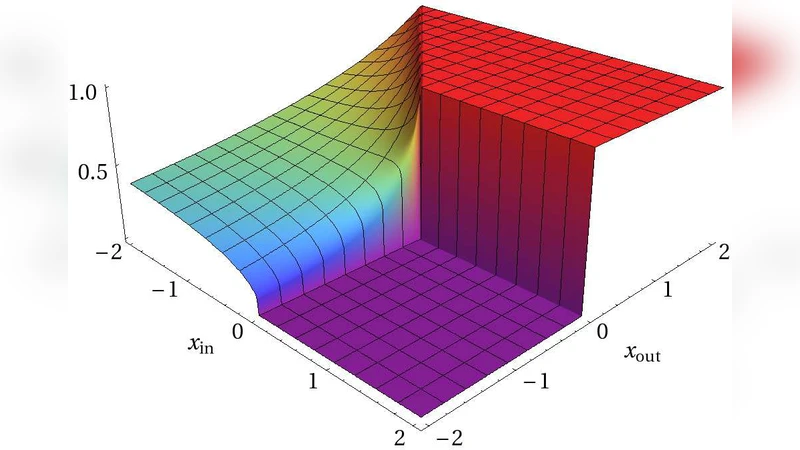
We consider nano-sized artificial or biological machines working in steady state enforced by imposing non-equilibrium concentrations of solutes or by applying external forces, torques or electric fields. For unicyclic and strongly coupled multicyclic machines, efficiency at maximum power is not bounded by the linear response value 1/2. For strong driving, it can even approach the thermodynamic limit 1. Quite generally, such machines fall in three different classes characterized, respectively, as “strong and efficient”, “strong and inefficient”, and “balanced”. For weakly coupled multicyclic machines, efficiency at maximum power has lost any universality even in the linear response regime.
💡 Research Summary
The paper investigates the thermodynamic efficiency of nano‑sized artificial and biological machines that operate in a steady state maintained by non‑equilibrium solute concentrations or by external forces, torques, or electric fields. By modelling these machines as stochastic networks of chemical transitions, the authors distinguish between unicyclic (single‑loop) machines and multicyclic machines, and further separate the latter into strongly coupled and weakly coupled configurations.
For unicyclic machines, the classic linear‑response result that the efficiency at maximum power (EMP) equals one half (η = ½) is recovered when the driving forces are small. However, when the driving becomes strong enough to push the system beyond the linear regime, the current–force relationship becomes nonlinear, and the EMP can exceed ½, approaching the Carnot limit η = 1 in the extreme strong‑driving limit. This occurs because the entropy production can be minimized while the output work is maximized, a situation that is not captured by linear response theory.
Strongly coupled multicyclic machines are those in which several cycles share common transition states, effectively forming a single composite cycle. The analysis shows that these machines behave similarly to the unicyclic case: the EMP is not bounded by ½ and can reach values arbitrarily close to unity under sufficiently strong driving. Importantly, the authors identify three distinct operational classes for such machines:
- Strong and efficient – high driving combined with low irreversible losses, yielding EMP near 1.
- Strong and inefficient – strong driving but large internal dissipation, resulting in low EMP despite the high input power.
- Balanced – a compromise where driving strength and dissipation are comparable, giving intermediate EMP values.
These classes provide a practical taxonomy for designing nano‑machines with targeted performance characteristics.
In contrast, weakly coupled multicyclic machines consist of cycles that are only loosely connected; each cycle contributes independently to the overall flux. In this regime, even in the linear‑response limit, the EMP does not collapse to a universal value such as ½. Instead, the EMP depends sensitively on the specific network topology, the distribution of transition rates, and the relative strengths of the various driving forces. Numerical simulations demonstrate that EMP can vary widely—from as low as 0.2 to as high as 0.9—showing that no universal bound exists for weakly coupled systems. Consequently, the design of such machines requires a detailed, case‑by‑case optimization of each cycle’s parameters.
The paper’s key insights can be summarized as follows:
- Driving strength matters – Strong non‑equilibrium driving can push the EMP far beyond the linear‑response bound, even up to the thermodynamic limit.
- Coupling topology is crucial – Strong coupling between cycles restores a degree of universality (the possibility of high EMP), while weak coupling destroys it, leading to highly system‑specific efficiencies.
- Classification guides design – The three‑class scheme for strongly coupled machines helps engineers choose whether to prioritize maximal efficiency, maximal power, or a balanced trade‑off.
- Beyond linear response – The relationship between power output and efficiency is intrinsically nonlinear for realistic nano‑machines; optimization must therefore employ nonlinear thermodynamic frameworks rather than rely on linear‑response approximations.
Overall, the study provides a comprehensive theoretical framework for assessing and optimizing the performance of autonomous soft nano‑machines at maximum power. It highlights that, contrary to earlier expectations, the EMP is not universally limited to ½ and can be tuned—through appropriate choice of driving forces and network coupling—to approach the ideal limit of unity. This has significant implications for the design of high‑efficiency molecular motors, synthetic nanorobots, and bio‑inspired energy‑conversion devices.
Comments & Academic Discussion
Loading comments...
Leave a Comment