The Distribution of Coalescing Compact Binaries in the Local Universe: Prospects for Gravitational-Wave Observations
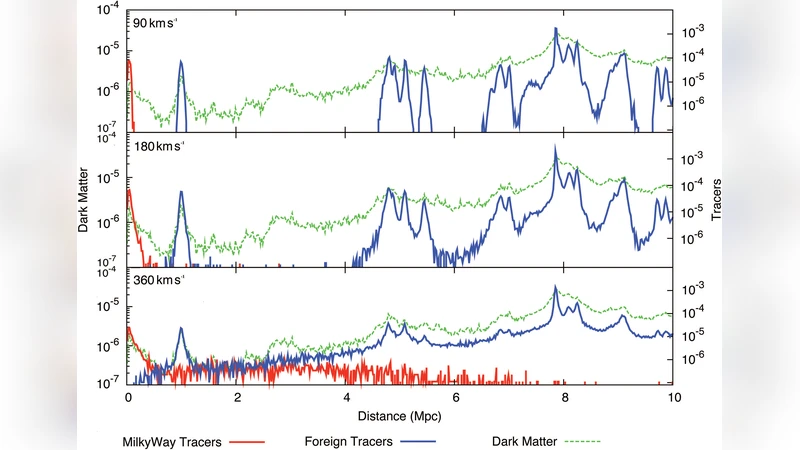
Merging compact binaries are the most viable and best studied candidates for gravitational wave (GW) detection by the fully operational network of ground-based observatories. In anticipation of the first detections, the expected distribution of GW sources in the local universe is of considerable interest. Here we investigate the full phase space distribution of coalescing compact binaries at $z = 0$ using dark matter simulations of structure formation. The fact that these binary systems acquire large barycentric velocities at birth (“kicks”) results in merger site distributions that are more diffusely distributed with respect to their putative hosts, with mergers occurring out to distances of a few Mpc from the host halo. Redshift estimates based solely on the nearest galaxy in projection can, as a result, be inaccurate. On the other hand, large offsets from the host galaxy could aid the detection of faint optical counterparts and should be considered when designing strategies for follow-up observations. The degree of isotropy in the projected sky distributions of GW sources is found to be augmented with increasing kick velocity and to be severely enhanced if progenitor systems possess large kicks as inferred from the known population of pulsars and double compact binaries. Even in the absence of observed electromagnetic counterparts, the differences in sky distributions of binaries produced by disparate kick-velocity models could be discerned by GW observatories, within the expected accuracies and detection rates of advanced LIGO–in particular with the addition of more interferometers.
💡 Research Summary
The paper investigates how the spatial distribution of coalescing compact binaries (neutron‑star–neutron‑star, black‑hole–neutron‑star, and black‑hole–black‑hole systems) in the local universe (z ≈ 0) is shaped by the natal “kick” velocities imparted at binary formation. Using a large‑scale ΛCDM dark‑matter N‑body simulation that reproduces the present‑day cosmic web, the authors embed synthetic binary systems within the gravitational potentials of halos representing galaxies, groups, and clusters. Three kick‑velocity models are explored: low (∼50 km s⁻¹), medium (∼150 km s⁻¹) and high (∼300 km s⁻¹), with random directions. The binaries are then evolved for a typical inspiral time (10⁸–10⁹ yr) under the influence of the host halo’s potential, and the three‑dimensional merger locations are recorded.
Key findings are: (1) High kicks dramatically broaden the merger‑site distribution. In the high‑kick scenario roughly 30 % of mergers occur beyond 10 kpc from the centre of their host galaxy, and a non‑negligible fraction can be displaced by up to 1–2 Mpc, effectively in inter‑galactic space. This contrasts sharply with the often‑assumed picture that mergers trace the stellar light of their host. (2) Because of these large offsets, estimating the source distance from the projected nearest galaxy can be severely biased. Gravitational‑wave (GW) detectors that rely on galaxy‑catalog cross‑matching may therefore mis‑identify the true host or assign an incorrect redshift. (3) The projected sky distribution becomes increasingly isotropic as the kick velocity rises. Low‑kick binaries cluster around the positions of massive halos, while high‑kick binaries appear almost uniformly spread over the sky. When multiple interferometers (LIGO‑Hanford, LIGO‑Livingston, Virgo, KAGRA, and future detectors) are combined, the typical localisation error of a few square degrees is sufficient to distinguish statistically between the different kick models given the expected detection rates of advanced LIGO. (4) Large physical offsets are advantageous for electromagnetic (EM) follow‑up. With the merger occurring far from bright galactic nuclei, faint optical/infrared kilonova signatures suffer less background contamination, making deep, wide‑field surveys (e.g., LSST, ZTF, JWST) more effective. (5) The authors argue that future high‑sensitivity GW observatories (Advanced LIGO +, Einstein Telescope, Cosmic Explorer) together with next‑generation radio facilities (SKA, ngVLA) will provide the event statistics needed to constrain the natal‑kick distribution and, by extension, binary‑evolution physics.
Methodologically, the study demonstrates a practical pipeline: (i) generate a realistic dark‑matter halo catalogue at z = 0; (ii) populate each halo with a population of compact binaries drawn from a prescribed star‑formation history; (iii) assign kicks drawn from the three velocity distributions; (iv) integrate the orbits in the static halo potentials; and (v) analyse the resulting merger‑site statistics. The authors also discuss limitations, such as neglecting baryonic potentials, dynamical friction, and possible changes in the host halo over the inspiral time, but argue that the dominant effect on large‑scale offsets is the initial kick.
In conclusion, the paper provides a quantitative framework linking natal kicks to the observable sky distribution of GW sources. It highlights that the assumption “GW events occur near the nearest galaxy” is oversimplified, especially if kicks are as large as those inferred from pulsar proper motions. The work has direct implications for GW data analysis (host‑galaxy association, redshift estimation), EM follow‑up strategies (field‑of‑view, depth), and for astrophysical inference on binary formation channels. By showing that advanced GW detector networks can statistically differentiate between kick models, the study paves the way for using GW observations as a probe of stellar‑evolution physics in the local universe.
Comments & Academic Discussion
Loading comments...
Leave a Comment