Orbital Period Determinations for Four SMC Be/X-ray Binaries
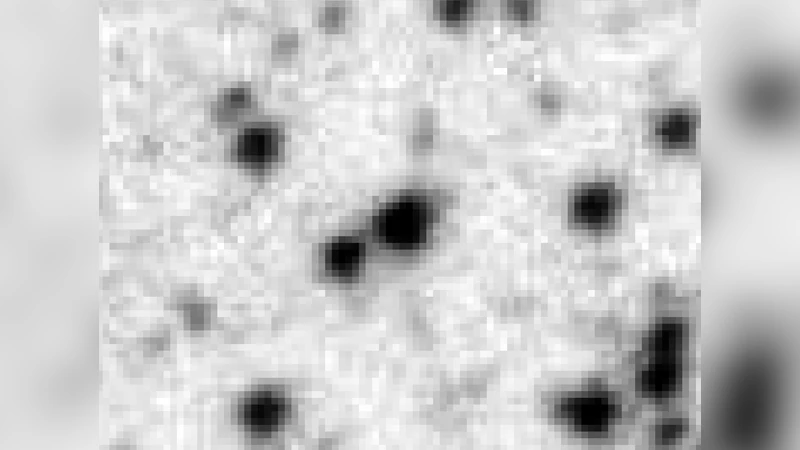
We present an optical and X-ray study of four Be/X-ray binaries located in the Small Magellanic Cloud (SMC). OGLE I-band data of up to 11 years of semi-continuous monitoring has been analysed for SMC X-2, SXP172 and SXP202B, providing both a measurement of the orbital period (Porb = 18.62, 68.90, and 229.9 days for the pulsars respectively) and a detailed optical orbital profile for each pulsar. For SXP172 this has allowed a direct comparison of the optical and X-ray emission seen through regular RXTE monitoring, revealing that the X-ray outbursts precede the optical by around 7 days. Recent X-ray studies by XMM-Newton have identified a new source in the vicinity of SXP15.3 raising doubt on the identification of the optical counterpart to this X-ray pulsar. Here we present a discussion of the observations that led to the proposal of the original counterpart and a detailed optical analysis of the counterpart to the new X-ray source, identifying a 21.7 d periodicity in the OGLE I-band data. The optical characteristics of this star are consistent with that of a SMC Be/X-ray binary. However, this star was rejected as the counterpart to SXP15.3 in previous studies due to the lack of H{\alpha} emission.
💡 Research Summary
This paper presents a comprehensive optical and X‑ray investigation of four Be/X‑ray binaries (BeXRBs) located in the Small Magellanic Cloud (SMC). Using up to eleven years of semi‑continuous I‑band monitoring from the OGLE‑IV project, the authors performed Lomb‑Scargle, Phase Dispersion Minimization, and epoch‑folding analyses to extract robust orbital periods. They determined Porb = 18.62 days for SMC X‑2, 68.90 days for SXP 172, and 229.9 days for SXP 202B, and constructed detailed optical orbital profiles for each system.
For SXP 172, simultaneous RXTE monitoring revealed a striking phase offset: X‑ray outbursts consistently precede the optical maximum by roughly seven days. This lag is interpreted as the time required for the Be star’s circumstellar disc to replenish after a rapid mass‑transfer episode that triggers the X‑ray flare, after which the disc re‑establishes and the system brightens optically. The long‑period system SXP 202B shows a more gradual, multi‑peaked optical modulation, suggesting a complex, possibly warped disc geometry.
The paper also revisits the identification of the optical counterpart to SXP 15.3. Recent XMM‑Newton observations uncovered a new X‑ray source near the previously known pulsar, casting doubt on the historic counterpart assignment. The authors examined the OGLE light curve of the newly proposed counterpart and identified a 21.7‑day periodicity, together with colour‑magnitude behaviour typical of SMC Be stars. Although earlier studies rejected this star because Hα emission was not detected, the authors argue that Hα can be highly variable and that the lack of detection at a single epoch does not preclude Be‑star status.
Methodologically, the study aligns irregularly sampled optical data with continuous X‑ray monitoring by applying weighted averages and window‑function corrections, enabling precise phase‑lag measurements. The authors also discuss limitations, notably the scarcity of contemporaneous spectroscopy (especially Hα) to confirm disc presence and the modest sample size, which restricts broader statistical conclusions.
Overall, the work advances our understanding of the interplay between Be‑star disc dynamics and neutron‑star accretion in SMC BeXRBs. The clear X‑ray‑optical lag in SXP 172 provides a rare observational benchmark for theoretical models of disc truncation and replenishment. The re‑evaluation of SXP 15.3’s counterpart underscores the necessity of multi‑wavelength, time‑resolved observations—particularly high‑resolution spectroscopy—to reliably identify and characterize BeXRB systems. Future campaigns combining dense optical monitoring, regular X‑ray coverage, and simultaneous spectroscopic snapshots will be essential to map the full cycle of disc growth, mass transfer, and X‑ray outburst in these exotic binaries.
Comments & Academic Discussion
Loading comments...
Leave a Comment