Induced Rotation in 3D Simulations of Core Collapse Supernovae: Implications for Pulsar Spins
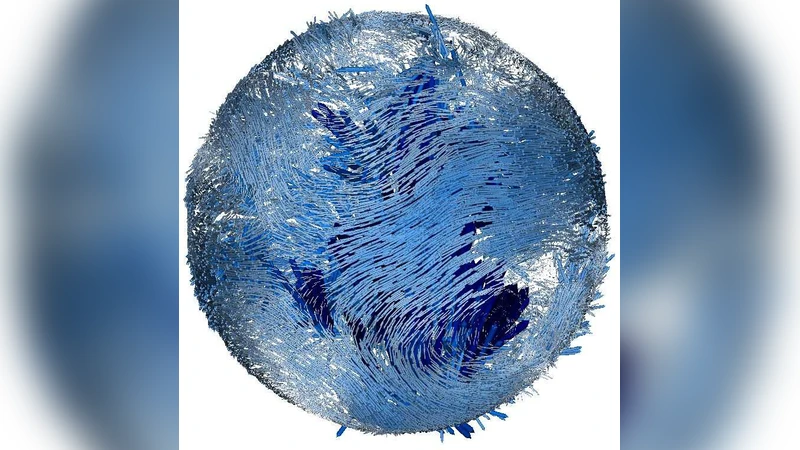
It has been suggested that the observed rotation periods of radio pulsars might be induced by a non-axisymmetric spiral-mode instability in the turbulent region behind the stalled supernova bounce shock, even if the progenitor core was not initially rotating. In this paper, using the three-dimensional AMR code CASTRO with a realistic progenitor and equation of state and a simple neutrino heating and cooling scheme, we present a numerical study of the evolution in 3D of the rotational profile of a supernova core from collapse, through bounce and shock stagnation, to delayed explosion. By the end of our simulation ($\sim$420 ms after core bounce), we do not witness significant spin up of the proto-neutron star core left behind. However, we do see the development before explosion of strong differential rotation in the turbulent gain region between the core and stalled shock. Shells in this region acquire high spin rates that reach $\sim$$150,$ Hz, but this region contains too little mass and angular momentum to translate, even if left behind, into rapid rotation for the full neutron star. We find also that much of the induced angular momentum is likely to be ejected in the explosion, and moreover that even if the optimal amount of induced angular momentum is retained in the core, the resulting spin period is likely to be quite modest. Nevertheless, induced periods of seconds are possible.
💡 Research Summary
This paper investigates whether a non‑rotating massive star can acquire significant spin during core‑collapse supernova (CCSN) evolution solely through the growth of a non‑axisymmetric spiral mode associated with the standing accretion shock instability (SASI). The authors perform a state‑of‑the‑art three‑dimensional simulation using the CASTRO adaptive‑mesh‑refinement (AMR) hydrodynamics code. Their setup improves on earlier work (Blondin & Mezzacappa 2007; Blondin & Shaw 2007) by (1) starting from a realistic 15 M⊙ red‑supergiant progenitor that collapses self‑consistently, (2) employing a full nuclear equation of state (Shen et al. 1998) rather than a simple γ‑law, (3) including a simplified neutrino heating/cooling scheme and electron capture based on Liebendörfer (2005), and (4) keeping the entire proto‑neutron star (PNS) on the computational grid throughout collapse, bounce, post‑bounce delay, and explosion phases.
The computational domain spans 10 000 km on a side with three levels of refinement, achieving ~0.5 km resolution in the inner 200 km. The simulation follows the system for ~420 ms after bounce, during which a neutrino‑driven explosion develops around 200–250 ms post‑bounce. Angular momentum is tracked by integrating the three Cartesian components within concentric spherical shells.
Key findings are as follows:
-
Global Angular Momentum Conservation – The total angular momentum remains essentially zero (conserved to better than 1 %) throughout the run, confirming that any spin generated is a redistribution rather than an injection.
-
Spin‑up in the Gain Region – Between roughly 60 km and 250 km (the turbulent gain region behind the stalled shock) the spiral SASI mode induces coherent rotational flows. Shells in this zone reach spin frequencies of ≈150 Hz (periods of 6–7 ms). The sign of the angular momentum flips initially but later settles into a more uniform direction. This confirms the existence of the spiral mode predicted by earlier idealized studies.
-
Insufficient Mass and Angular Momentum – The high‑frequency region contains only 0.01–0.03 M⊙ of material, corresponding to a very modest total angular momentum. Consequently, even though the local spin is high, the integrated angular momentum that could be transferred to the PNS is tiny.
-
Proto‑Neutron Star Spin Remains Slow – The innermost ≲10 km, which constitutes the actual PNS core, shows negligible spin‑up. By the end of the simulation its rotation period is 5–10 seconds, far longer than typical birth periods inferred for pulsars (tens of milliseconds to a few hundred milliseconds).
-
Ejection of Angular Momentum – As the explosion proceeds, the angular‑momentum‑rich material in the gain region is expelled outward with the shock. The authors explore “mass‑cut” scenarios (1.2–1.6 M⊙) to estimate the residual spin if some of this angular momentum were to fall back. Even in the most optimistic case (mass cut ≈1.53 M⊙) the resulting neutron‑star period is ≈1.2 seconds; more realistic cuts yield periods of several seconds to tens of seconds.
-
Direction of Residual Angular Momentum – The orientation of the net angular momentum vector varies only modestly for mass cuts between 1.2 and 1.4 M⊙, but shows larger changes for higher cuts, indicating that the final spin axis is not strongly constrained by the SASI‑induced flow.
The authors conclude that while the SASI spiral mode can generate locally rapid rotation in the post‑shock gain region, the limited mass and angular momentum involved, together with the fact that most of it is expelled, prevent the formation of a rapidly rotating neutron star in a non‑rotating progenitor. Therefore, the observed distribution of pulsar birth periods cannot be explained solely by this mechanism; additional sources of angular momentum—such as pre‑collapse stellar rotation, fallback accretion, or magnetic torques—must be invoked. This work thus refines earlier optimistic estimates and underscores the importance of realistic physics (full EOS, neutrino processes, inclusion of the PNS) in assessing angular‑momentum transport during core‑collapse supernovae.
Comments & Academic Discussion
Loading comments...
Leave a Comment