Eruptive Outflow Phases of Massive Stars
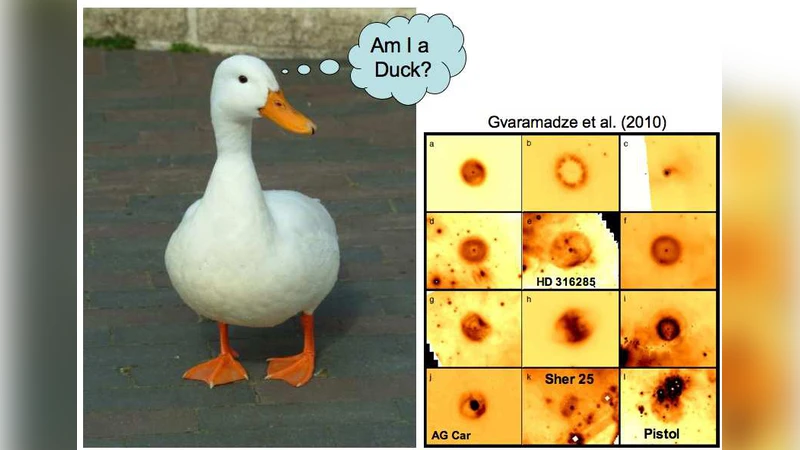
I review recent progress on understanding eruptions of unstable massive stars, with particular attention to the diversity of observed behavior in extragalatic optical transient sources that are generally associated with giant eruptions of luminous blue variables (LBVs). These eruptions are thought to represent key mass loss episodes in the lives of massive stars. I discuss the possibility of dormant LBVs and implications for the duration of the greater LBV phase and its role in stellar evolution. These eruptive variables show a wide range of peak luminosity, decay time, expansion speeds, and progenitor luminosity, and in some cases they have been observed to suffer multiple eruptions. This broadens our view of massive star eruptions compared to prototypical sources like Eta Carinae, and provides important clues for the nature of the outbursts. I also review and discuss some implications about the possible physical mechanisms involved, although the cause of the eruptions is not yet understood.
💡 Research Summary
The paper provides a comprehensive review of recent advances in our understanding of eruptive mass‑loss episodes in massive, unstable stars, focusing especially on luminous blue variables (LBVs) and the diverse class of extragalactic optical transients that are now commonly linked to giant LBV eruptions. Historically, the field has been dominated by a few archetypal objects—most famously Eta Carinae—whose extreme luminosities, long‑lasting outbursts, and high‑velocity ejecta set the benchmark for what an LBV eruption could look like. However, modern time‑domain surveys have uncovered a much broader phenomenology. The newly identified transients display a wide range of peak absolute magnitudes (corresponding to luminosities from ~10⁶ to 10⁸ L⊙), decay timescales that span weeks to several years, expansion velocities from a few hundred to nearly a thousand kilometres per second, and progenitor luminosities that imply initial stellar masses ranging from ~20 M⊙ up to >100 M⊙. Some objects have even been observed to erupt more than once, suggesting that the LBV phase can be episodic rather than a single, monolithic event.
The author argues that this diversity forces a re‑evaluation of the traditional LBV paradigm. First, the observed continuum of properties implies that no single physical trigger can account for all eruptions. Instead, multiple mechanisms—radiation‑pressure‑driven super‑winds, sub‑supernova explosions caused by internal instabilities, binary mass‑transfer or common‑envelope interactions, and sudden changes in core rotation or nuclear burning rates—may operate either independently or in concert. Second, the concept of “dormant LBVs” is introduced to explain stars that spend long intervals in a quiescent state before being re‑activated by a trigger such as a change in angular momentum distribution, a close periastron passage in an eccentric binary, or a surface opacity shift. This dormant phase can significantly extend the overall duration of the LBV stage, with important consequences for stellar evolution models that currently treat LBV activity as a brief, terminal phase.
The review also examines the implications of massive eruptive mass loss for the later life of the star. Large‑scale ejection of several solar masses can dramatically reduce the core mass that ultimately collapses, thereby influencing whether the star ends its life as a Type IIn supernova, a stripped‑envelope event, or even avoids a supernova altogether and collapses directly to a black hole. Moreover, the cumulative effect of repeated LBV eruptions may enrich the surrounding interstellar medium with processed material, affecting galactic chemical evolution.
In terms of theory, the paper surveys the leading models but emphasizes that none yet reproduces the full suite of observed characteristics. Radiation‑hydrodynamic simulations have succeeded in generating high‑velocity winds but struggle to produce the observed rapid luminosity spikes. Hydrodynamic shock models can mimic the light‑curve shapes but often predict ejecta masses or velocities that are inconsistent with spectroscopic measurements. Binary interaction models naturally explain multi‑eruption behavior and asymmetric ejecta, yet they require fine‑tuned orbital parameters. The author concludes that a hybrid approach—combining radiative driving, internal stellar instabilities, and binary dynamics—offers the most promising path forward.
Finally, the paper outlines future observational and theoretical directions. Systematic, long‑term monitoring of candidate LBVs across the electromagnetic spectrum, high‑resolution spectroscopy during outburst, and spatially resolved imaging of ejecta will be essential to constrain eruption timescales, geometry, and composition. On the modeling side, three‑dimensional radiation‑magnetohydrodynamic simulations that incorporate realistic opacities and binary gravitational potentials are needed to test the viability of combined mechanisms. By bridging the gap between observation and theory, the community can move toward a unified picture of how massive stars shed a substantial fraction of their mass in violent, eruptive episodes, and how these episodes shape the final fate of the most massive stars in the universe.
Comments & Academic Discussion
Loading comments...
Leave a Comment