Virtual Observatory based identification of AX J194939+2631 as a new cataclysmic variable
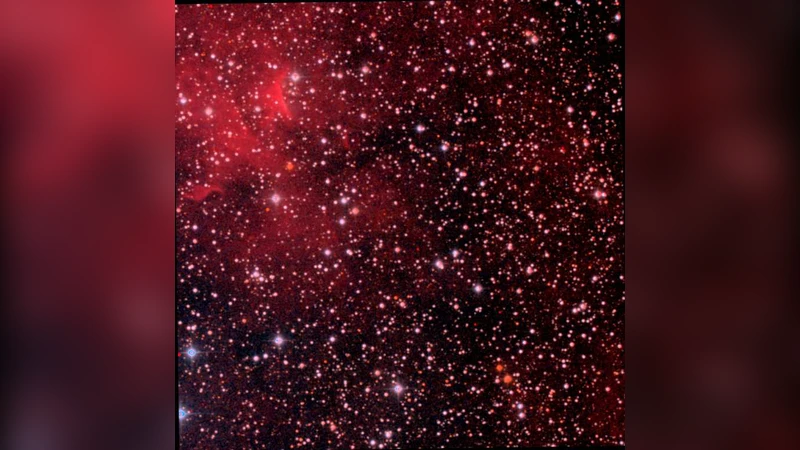
We report the discovery of a new cataclysmic variable (CV) among unidentified objects from the ASCA Galactic Plane Survey made using the Virtual Observatory data mining. First, we identified AX J194939+2631 with IPHAS J194938.39+263149.2, the only prominent H-alpha emitter among 400 sources in a 1 arcmin field of the IPHAS survey, then secured as a single faint X-ray source found in an archival Chandra dataset. Spectroscopic follow-up with the 3.5-m Calar Alto telescope confirmed its classification as a CV, possibly of magnetic nature. Our analysis suggests that AX J194939+2631 is a medium distance system (d ~ 0.6 kpc) containing a late-K or early-M type dwarf as a secondary component and a partially disrupted accretion disc revealed by the double-peaked H-alpha line. However, additional deep observations are needed to confirm our tentative classification of this object as an intermediate polar.
💡 Research Summary
The authors present a comprehensive discovery and characterization of a previously unidentified X‑ray source, AX J194939+2631, from the ASCA Galactic Plane Survey, using a Virtual Observatory (VO) driven multi‑wavelength data mining approach. The initial challenge was the relatively large positional uncertainty of the ASCA detection (≈1 arcmin), which encompasses roughly 400 optical objects in the IPHAS (Isaac Newton Telescope Photometric Hα Survey) catalogue. By exploiting the IPHAS Hα photometry, the team isolated a single strong Hα emitter, IPHAS J194938.39+263149.2, as the most plausible counterpart.
To confirm the X‑ray association, archival Chandra observations were examined. The high‑resolution (≈0.5″) Chandra imaging revealed a solitary, faint X‑ray point source precisely coincident with the IPHAS object, thereby reducing the positional ambiguity and establishing a firm X‑ray/optical match.
Subsequent optical spectroscopy with the 3.5‑m Calar Alto telescope (using the TWIN spectrograph) provided decisive evidence for a cataclysmic variable (CV) nature. The spectrum displays strong Balmer emission (notably Hα and Hβ), a prominent He II λ4686 line, and the C III/N III blend, all hallmarks of accretion‑powered systems. The Hα profile is double‑peaked, indicating a rotating accretion disc that is partially disrupted, a feature often seen in magnetic CVs. The relative strength of He II suggests high‑temperature plasma and possible magnetically channeled accretion, pointing toward an intermediate polar (IP) classification.
Photometric colour analysis, combining IPHAS and 2MASS data, yields an estimated distance of ~0.6 kpc. The secondary star’s spectral characteristics are consistent with a late‑K to early‑M dwarf (≈K7–M1), implying a low‑mass companion typical of short‑period CVs.
While the current dataset convincingly identifies AX J194939+2631 as a CV, the magnetic nature remains tentative. The authors recommend further investigations: long‑baseline optical photometry to detect spin/orbital modulations, high‑resolution X‑ray spectroscopy (e.g., with XMM‑Newton or NuSTAR) to measure plasma temperatures and absorption, and polarimetric studies to directly probe magnetic fields.
In summary, this work demonstrates the power of VO‑enabled cross‑matching of archival surveys to resolve unidentified X‑ray sources, and it adds a new member to the Galactic CV population. AX J194939+2631 appears to be a relatively nearby system (≈0.6 kpc) with a partially disrupted disc, double‑peaked Hα emission, and spectral signatures suggestive of an intermediate polar, pending confirmation by deeper, targeted observations.
Comments & Academic Discussion
Loading comments...
Leave a Comment