Electron-Ion Interaction Effects in Attosecond Time-Resolved Photoelectron Spectra
Photoionization by attosecond (as) extreme ultraviolet (xuv) pulses into the laser-dressed continuum of the ionized atom is commonly described in strong-field approximation (SFA), neglecting the Coulo
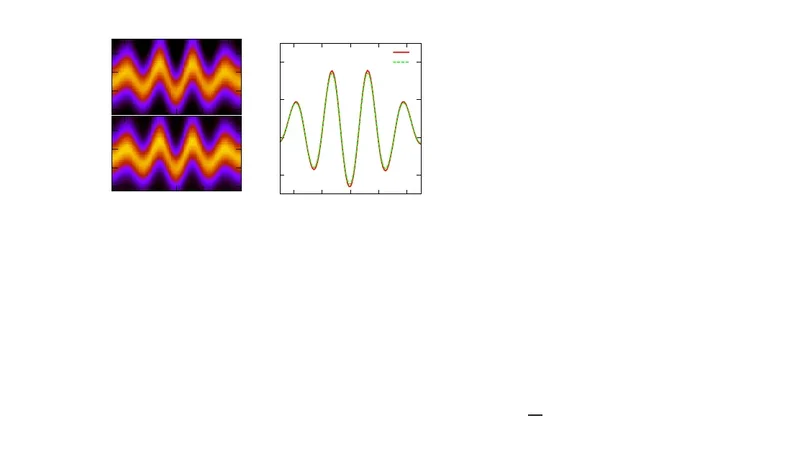
Photoionization by attosecond (as) extreme ultraviolet (xuv) pulses into the laser-dressed continuum of the ionized atom is commonly described in strong-field approximation (SFA), neglecting the Coulomb interaction between the emitted photoelectron (PE) and residual ion. By solving the time-dependent Sch"{o}dinger equation (TDSE), we identify a temporal shift $\delta \tau$ in streaked PE spectra, which becomes significant at small PE energies. Within an eikonal approximation, we trace this shift to the combined action of Coulomb and laser forces on the released PE, suggesting the experimental and theoretical scrutiny of their coupling in streaked PE spectra. The initial state polarization effect by the laser pulse on the xuv streaked spectrum is also examined.
💡 Research Summary
The paper investigates how the interaction between a liberated photoelectron and its parent ion influences attosecond streaked photoelectron spectra, a regime traditionally described by the strong‑field approximation (SFA) that neglects the Coulomb potential. By numerically solving the three‑dimensional time‑dependent Schrödinger equation (TDSE) for a single‑active‑electron atom subjected simultaneously to an extreme‑ultraviolet (XUV) attosecond pulse and a near‑infrared (NIR) dressing field, the authors reveal a systematic temporal shift δτ of the streaked spectral peak. This shift becomes pronounced for low‑energy electrons (≈30 eV or less) and can reach 10–30 as, a magnitude that exceeds the typical experimental timing resolution and therefore cannot be ignored in precision attosecond metrology.
To interpret the TDSE findings, the authors develop an eikonal approximation that treats the electron’s wavefunction as a rapidly varying phase factor multiplied by a slowly varying envelope. The phase accumulates contributions from both the laser vector potential and the Coulomb potential of the residual ion. In this framework, the electron’s trajectory experiences a combined “Coulomb‑laser coupling”: while the NIR field accelerates or decelerates the electron, the long‑range Coulomb force adds an extra, time‑dependent momentum that effectively advances or delays the electron’s release time. The resulting effective emission time t₀ + δτ reproduces the TDSE‑observed shift, and the model predicts the correct dependence of δτ on electron kinetic energy, laser intensity, and wavelength.
The study also examines the role of laser‑induced polarization of the bound initial state. By incorporating the laser‑driven dipole response into the TDSE, the authors find that initial‑state polarization modestly modifies the overall photoelectron yield (by a few percent) and slightly reshapes the angular distribution, but it contributes negligibly to the observed temporal shift. Consequently, the dominant source of δτ is the Coulomb‑laser coupling rather than bound‑state dressing.
These results have several important implications. First, they demonstrate that SFA‑based analyses of attosecond streaking experiments can lead to systematic timing errors when low‑energy electrons are used, which is common in studies of photoemission delays and electron dynamics in solids. Second, the eikonal model offers a computationally inexpensive yet accurate tool for correcting such errors, bridging the gap between full TDSE simulations and analytic approximations. Third, the findings suggest that future experiments aiming at sub‑10‑as resolution must either operate at higher photoelectron energies, where the Coulomb effect diminishes, or explicitly include Coulomb‑laser coupling in their data analysis pipelines.
In conclusion, the paper provides a clear, quantitative demonstration that the residual Coulomb interaction, when combined with the dressing laser field, induces a measurable temporal shift in attosecond streaked spectra. By validating an eikonal description against exact TDSE calculations and by showing that initial‑state polarization plays a secondary role, the authors establish a robust framework for interpreting and correcting streaking measurements across a wide range of atomic, molecular, and condensed‑matter systems. This work therefore advances both the theoretical understanding and the experimental precision of attosecond time‑resolved spectroscopy.
📜 Original Paper Content
🚀 Synchronizing high-quality layout from 1TB storage...