Coronal mass ejections as expanding force-free structures
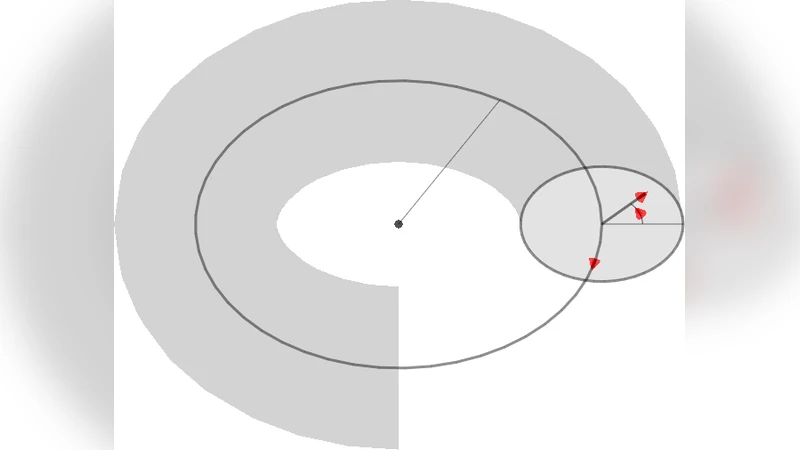
We mode Solar coronal mass ejections (CMEs) as expanding force-fee magnetic structures and find the self-similar dynamics of configurations with spatially constant \alpha, where {\bf J} =\alpha {\bf B}, in spherical and cylindrical geometries, expanding spheromaks and expanding Lundquist fields correspondingly. The field structures remain force-free, under the conventional non-relativistic assumption that the dynamical effects of the inductive electric fields can be neglected. While keeping the internal magnetic field structure of the stationary solutions, expansion leads to complicated internal velocities and rotation, induced by inductive electric field. The structures depends only on overall radius R(t) and rate of expansion \dot{R}(t) measured at a given moment, and thus are applicable to arbitrary expansion laws. In case of cylindrical Lundquist fields, the flux conservation requires that both axial and radial expansion proceed with equal rates. In accordance with observations, the model predicts that the maximum magnetic field is reached before the spacecraft reaches the geometric center of a CME.
💡 Research Summary
The paper presents a self‑similar expansion model for solar coronal mass ejections (CMEs) in which the internal magnetic field remains force‑free, i.e., the current density J is proportional to the magnetic field B through a spatially constant factor α (∇×B = α B). By adopting the classic force‑free solutions—spheromaks for spherical geometry and Lundquist fields for cylindrical geometry—the authors embed a time‑dependent scale factor R(t) that represents the overall radius of the ejecta and its expansion rate \dot R(t). The magnetic field is re‑expressed as a function of the dimensionless coordinate ξ = r/R(t), so that the spatial structure of the stationary solution is preserved while the entire configuration expands self‑similarly.
In the non‑relativistic limit the induced electric field E = −(1/c)∂A/∂t (with A the vector potential) is assumed to be weak enough that the Lorentz force E×B can be neglected. Consequently the force‑free condition continues to hold throughout the expansion. However, the induced electric field does generate internal plasma motions. The velocity field decomposes into a radial component v_r = (\dot R/R) r, representing uniform expansion, and an azimuthal component v_φ that arises from the inductive electric field. For the spheromak case v_φ scales as α R · \dot R times a Bessel‑function‑derived profile, implying a systematic rotation of the plasma about the expansion centre. This rotation naturally explains the non‑radial flow patterns observed in in‑situ CME measurements.
For the cylindrical Lundquist configuration, flux conservation imposes that the axial length L(t) and the radius R(t) must increase at the same rate (L ∝ R). Under this constraint the axial field B_z ∝ J_0(αξ) and the azimuthal field B_φ ∝ J_1(αξ) retain their Bessel‑function forms while the overall scale expands. The model predicts that the magnetic field measured by a spacecraft crossing the CME will reach its maximum before the spacecraft reaches the geometric centre, because the expanding structure causes the central field to weaken while the outer layers are still being traversed. This behaviour matches observations from ACE, WIND, and STEREO, where peak magnetic fields are often recorded ahead of the nominal centre crossing.
Mathematically, the authors substitute the scaling ansatz into Maxwell’s equations and the force‑free condition, reducing the problem to ordinary differential equations in ξ that are identical to those of the static solutions. The only time‑dependent quantities are R(t) and \dot R(t), allowing the model to accommodate any prescribed expansion law (e.g., power‑law, exponential) without altering the internal field geometry.
The paper discusses several limitations. The assumption of a spatially uniform α neglects possible gradients that could develop during CME evolution, especially in highly sheared or kink‑unstable structures. The neglect of plasma pressure, kinetic effects, and interaction with the ambient solar wind restricts the applicability to early‑stage, magnetically dominated expansions. Moreover, the non‑relativistic treatment may break down for very fast CMEs where inductive electric fields become comparable to magnetic fields.
Despite these caveats, the work provides a compact analytical framework that captures key CME features—self‑similar expansion, internal rotation, and the timing of magnetic field peaks—without resorting to full 3‑D magnetohydrodynamic simulations. The authors suggest future extensions to include variable α, pressure‑balanced force‑free states, and coupling to solar‑wind drag, as well as systematic validation against a large statistical set of in‑situ CME observations.
Comments & Academic Discussion
Loading comments...
Leave a Comment