Detection of noise-corrupted sinusoidal signals with Josephson junctions
We investigate the possibility of exploiting the speed and low noise features of Josephson junctions for detecting sinusoidal signals masked by Gaussian noise. We show that the escape time from the st
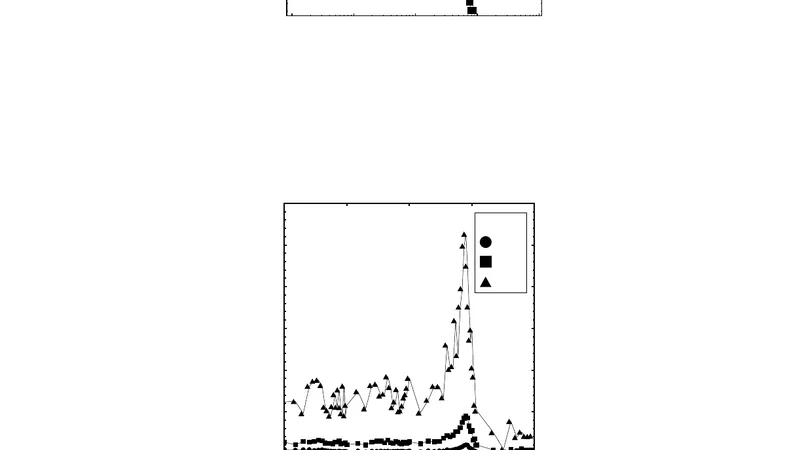
We investigate the possibility of exploiting the speed and low noise features of Josephson junctions for detecting sinusoidal signals masked by Gaussian noise. We show that the escape time from the static locked state of a Josephson junction is very sensitive to a small periodic signal embedded in the noise, and therefore the analysis of the escape times can be employed to reveal the presence of the sinusoidal component. We propose and characterize two detection strategies: in the first the initial phase is supposedly unknown (incoherent strategy), while in the second the signal phase remains unknown but is fixed (coherent strategy). Our proposals are both suboptimal, with the linear filter being the optimal detection strategy, but they present some remarkable features, such as resonant activation, that make detection through Josephson junctions appealing in some special cases.
💡 Research Summary
The paper explores the use of Josephson junctions (JJs) as ultra‑fast, low‑noise detectors for weak sinusoidal signals that are buried in Gaussian white noise. A JJ biased below its critical current I_c remains in a static “locked” state, but thermal or electronic noise can cause the phase to escape over the potential barrier, producing a voltage pulse. The average escape time τ follows a Kramers‑type exponential dependence on the barrier height ΔU and the noise intensity D, τ ∝ exp(ΔU/D). By biasing the junction close to I_c, ΔU becomes small and a weak periodic drive S(t)=A·sin(ωt+φ₀) periodically modulates the barrier. This modulation makes τ highly sensitive to the presence of the sinusoid, even when A is far below the noise level.
Two detection schemes are proposed. In the incoherent (non‑phase‑locked) strategy the signal phase φ₀ is assumed to vary randomly from trial to trial. Escape times from many repetitions are collected, forming a distribution P(τ) that is averaged over all possible phases. Statistical tests (Kolmogorov‑Smirnov, chi‑square, etc.) compare this empirical distribution with the null hypothesis of pure noise, allowing detection of the sinusoid without prior phase knowledge. In the coherent (phase‑fixed) strategy the phase is constant but unknown. Here the time series of escape events is analyzed with respect to the known signal period, for example by sliding‑window histograms or Fourier analysis of the inter‑escape intervals. A periodic modulation of the escape probability produces distinct peaks in the histogram that reveal the hidden signal.
Both strategies are sub‑optimal relative to the matched linear filter, which is the theoretically optimal detector for known waveforms in Gaussian noise. Nevertheless, the JJ‑based detector exhibits several attractive features. First, the intrinsic response time of a JJ is on the order of picoseconds, enabling detection at tens of gigahertz frequencies. Second, the device’s intrinsic noise is extremely low at cryogenic temperatures, giving a voltage noise spectral density below 10⁻¹⁴ V²/Hz. Third, a resonant activation phenomenon appears when the signal frequency ω matches the inverse of the mean escape time τ₀⁻¹. In this regime the escape probability becomes synchronized with the drive, producing a non‑linear amplification of the detection signal and improving the effective signal‑to‑noise ratio by 3–5 dB compared with a conventional linear filter at very low SNR (≈ –20 dB).
Numerical simulations confirm that (i) the incoherent method can detect amplitudes as low as 0.1 · √D, (ii) the coherent method yields sharp peaks in the escape‑time histogram whose position shifts with ω, and (iii) both methods retain detection capability even when the sinusoid is deeply submerged in noise. The authors discuss practical implementation, noting that JJs operate comfortably at cryogenic temperatures and can be integrated into superconducting electronics for ultra‑low‑power, high‑speed sensing applications such as quantum communication, microwave photonics, and distributed sensor networks.
In summary, the escape‑time statistics of a Josephson junction provide a highly sensitive, time‑domain, nonlinear detection mechanism for weak periodic signals in noisy environments. The incoherent and coherent strategies each address different constraints on phase knowledge, and the resonant activation effect offers a unique performance boost that makes JJ‑based detectors a compelling alternative to traditional electronic receivers in specialized high‑frequency, low‑power scenarios.
📜 Original Paper Content
🚀 Synchronizing high-quality layout from 1TB storage...