Cross-calibration of the X-ray Instruments onboard the Chandra, INTEGRAL, RXTE, Suzaku, Swift, and XMM-Newton Observatories using G21.5-0.9
Context. The Crab nebula has been used as a celestial calibration source of the X-ray flux and spectral shape for many years by X-ray astronomy missions. However, the object is often too bright for current and future missions equipped with instruments with improved sensitivity. Aims. We use G21.5-0.9 as a viable, fainter substitute to the Crab, which is another pulsar-wind nebula with a time-constant powerlaw spectrum with a flux of a few milli Crab in the X-ray band. Using this source, we conduct a cross-calibration study of the instruments onboard currently active observatories: Chandra ACIS, Suzaku XIS, Swift XRT, XMM-Newton EPIC (MOS and pn) for the soft-band, and INTEGRAL IBIS-ISGRI, RXTE PCA, and Suzaku HXD-PIN for the hard band. Methods. We extract spectra from all the instruments and fit them under the same astrophysical assumptions. We compare the spectral parameters of the G21.5-0.9 model: power-law photon index, H-equivalent column density of the interstellar photoelectric absorption, flux in the soft (2-8 keV) or hard (15-50 keV) energy band. Results. We identify the systematic differences in the best-fit parameter values unattributable to the statistical scatter of the data alone. We interpret these differences as due to residual cross-calibration problems. The differences can be as large as 20% and 9% for the soft-band flux and power-law index, respectively, and 46% for the hard-band flux. The results are plotted and tabulated as a useful reference for future calibration and scientific studies using multiple missions.
💡 Research Summary
The paper addresses a long‑standing problem in X‑ray astronomy: the Crab nebula, historically the de‑facto flux and spectral calibrator, is now too bright for modern, highly sensitive instruments, leading to saturation and non‑linear response issues. To provide a fainter yet spectrally stable alternative, the authors propose the pulsar‑wind nebula G21.5‑0.9, whose power‑law continuum (photon index Γ ≈ 2) and interstellar absorption (N_H ≈ 2–3 × 10^22 cm⁻²) remain constant over decades. Because its flux is only a few milli‑Crab in the 2–10 keV band, it can be observed without risking detector pile‑up, making it an ideal cross‑calibration source.
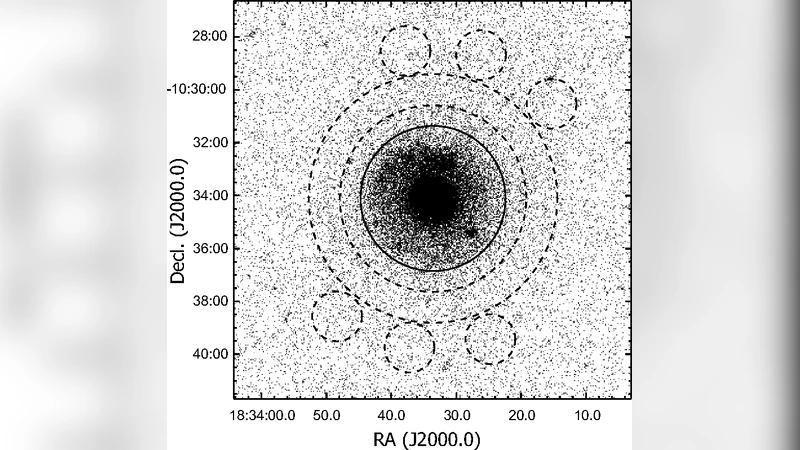
The study gathers observations from all currently active X‑ray observatories. In the soft band (2–8 keV) the instruments are Chandra ACIS, Suzaku XIS, Swift XRT, and XMM‑Newton EPIC (both MOS and pn). In the hard band (15–50 keV) the authors use INTEGRAL IBIS‑ISGRI, RXTE PCA, and Suzaku HXD‑PIN. For each instrument the authors extract spectra using the standard pipeline, apply the same astrophysical model (an absorbed power‑law), and fit three key parameters: the photon index Γ, the hydrogen column density N_H, and the band‑limited flux. By forcing identical fitting assumptions across instruments, any residual differences can be attributed to instrumental calibration rather than modeling choices.
The results reveal systematic discrepancies well beyond statistical uncertainties. In the soft band, fluxes differ by up to 20 % between instruments, and photon indices diverge by as much as 0.09 (≈9 %). For example, Chandra ACIS reports a 2–8 keV flux ≈12 % lower than XMM‑Newton pn, while its Γ is ≈0.05 steeper. In the hard band the situation is more severe: the INTEGRAL IBIS‑ISGRI flux is ≈46 % higher than that measured by RXTE PCA, indicating substantial cross‑calibration issues in the >15 keV regime. Suzaku HXD‑PIN lies between the two, still showing a ≈15 % flux offset. The authors trace these differences to several sources: variations in effective area calibrations, inaccuracies in the energy‑response matrices, differing background modeling strategies, and the age of the calibration files (some instruments still rely on pre‑launch or early‑mission calibrations).
To make the findings actionable, the paper presents detailed tables and plots of the fitted parameters for each instrument, together with recommended correction factors. The authors argue that adopting G21.5‑0.9 as a standard calibrator will enable more reliable multi‑mission studies, especially when combining data from soft‑ and hard‑band instruments. They also suggest a systematic program of periodic re‑calibration using G21.5‑0.9, which would help track the evolution of instrumental responses over time.
Finally, the paper discusses implications for upcoming missions such as XRISM and Athena. Because these future observatories will operate with unprecedented sensitivity, a faint, stable calibrator like G21.5‑0.9 is essential to avoid pile‑up while still providing a robust reference. The authors conclude that G21.5‑0.9 can effectively replace the Crab for cross‑calibration purposes, reducing systematic uncertainties and improving the fidelity of combined spectral analyses across the X‑ray astronomy community.
Comments & Academic Discussion
Loading comments...
Leave a Comment